





Getting documents notarized online takes about 15 minutes from start to finish. No driving to a bank, no scheduling around office hours, no waiting in line. An online notary connects you with a licensed notary public through secure video chat, verifies your identity digitally, and notarizes your documents electronically. Here's exactly how the process works and what you need to get started.
What Is an Online Notary?
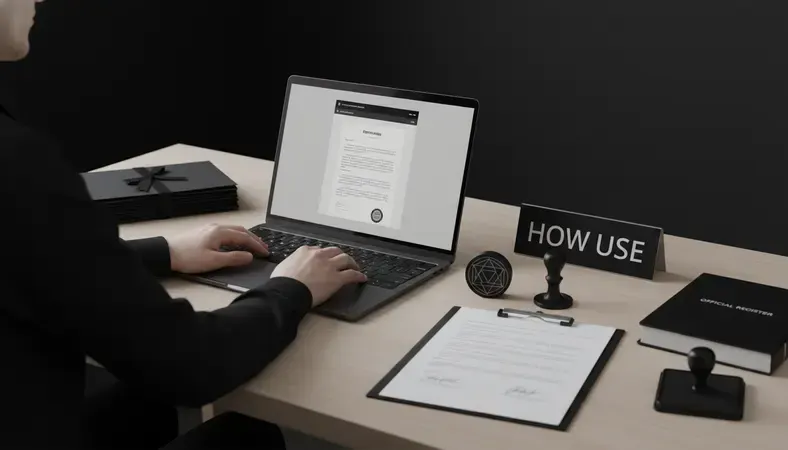
An online notary is a licensed notary public who performs notarizations through secure video conferencing technology instead of in-person meetings. Also called Remote Online Notarization (RON), this process uses digital identity verification, audio-video recording, and electronic signatures to create legally binding notarized documents.
The notary verifies your identity through multiple digital checks, watches you sign the document via video call, and applies their electronic seal to complete the notarization. The entire session is recorded and stored securely for legal compliance.
Key Insight: Online notarization is legally recognized in 45 U.S. states and the District of Columbia, with the same legal weight as traditional in-person notarization.
How Does Online Notarization Work?
The online notarization process follows strict legal protocols to ensure document security and signer verification. Here's what happens during a typical session:
Identity Verification Phase:
The system performs multiple checks to confirm you are who you claim to be. This includes credential analysis of your government-issued ID, knowledge-based authentication questions based on your personal records, and biometric verification comparing your live image to your ID photo.
Document Review:
The notary examines your document to ensure it's complete and ready for notarization. They verify all required fields are filled out and that you understand what you're signing.
Video Notarization:
During the live video session, the notary confirms your identity, ensures you're signing willingly without coercion, and witnesses your electronic signature. They then apply their electronic notarial seal and signature to complete the process.
Secure Storage:
The entire session is recorded and stored with tamper-evident technology. You receive your notarized document immediately, while the recording and certificate are maintained for legal compliance.
Is Online Notarization Legal?
Yes, online notarization is legally valid and binding in 45 U.S. states plus Washington D.C. These jurisdictions have passed specific legislation authorizing Remote Online Notarization and establishing security requirements.
States That Allow Online Notarization
| Region | States | Key Requirements |
|---|---|---|
| Fully Legal | Texas, Virginia, Florida, Nevada, and 41 others | Complete RON legislation with security standards |
| Limited Recognition | New York, California | Temporary or restricted online notarization |
| Traditional Only | Connecticut, Rhode Island, South Carolina | In-person notarization required |
Documents notarized online in approved states are recognized across all 50 states under interstate commerce laws. A document notarized online in Texas, for example, is legally valid when filed in California or any other state.
The legal framework requires specific security measures including identity verification, audio-video recording, tamper-evident technology, and electronic journal keeping. These requirements often exceed the security standards of traditional paper notarization.
Online Notary vs Traditional Notary
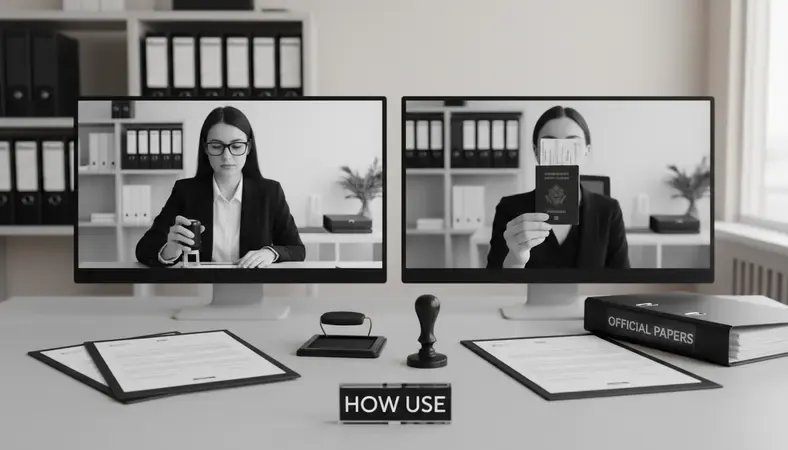
The fundamental difference lies in convenience and security technology, not legal validity. Both methods produce legally binding notarized documents.
Speed and Convenience:
Traditional notarization requires scheduling, travel, and in-person meetings during business hours. Online notarization is available 24/7 with sessions starting within minutes.
Security Measures:
Traditional notarization relies on physical ID checks and in-person observation. Online notarization uses multi-factor identity verification, biometric matching, knowledge-based authentication, and tamper-evident digital seals.
Cost Comparison:
Traditional notarization typically costs $5-15 per signature but may involve travel time and scheduling delays. Online notarization ranges from $15-35 per document but includes comprehensive identity verification and permanent digital storage.
Document Types:
Both methods handle the same document types, though some states restrict certain high-stakes documents like wills or real estate deeds to in-person notarization only.
Why It Matters: Online notarization often provides stronger identity verification than traditional methods, using multiple authentication factors instead of just visual ID inspection.
What Documents Can Be Notarized Online?
Most common documents are eligible for online notarization, with some state-specific restrictions for certain high-value transactions.
Commonly Accepted Documents:
* Power of Attorney forms: Healthcare directives, financial powers of attorney
* Real estate documents: Mortgage documents, refinancing papers, property transfers
* Business contracts: Partnership agreements, vendor contracts, employment documents
* Legal affidavits: Sworn statements, witness affidavits, identity confirmations
* Financial documents: Loan applications, bank account authorizations, investment forms
* Personal documents: Travel consent forms, name change affidavits, insurance claims
State-Specific Restrictions:
Some states exclude certain documents from online notarization. Wills and estate planning documents may require in-person notarization in conservative jurisdictions. Real estate closings have mixed acceptance, with some states requiring traditional notarization for property deeds.
Document Requirements:
Your document must be in digital format (PDF preferred), contain all necessary information before the session, and include proper notarial certificate language. The notary cannot provide legal advice or help complete blank sections.
How Much Does Online Notarization Cost?
Online notarization pricing varies by provider and document complexity, typically ranging from $15-35 per document.
Pricing Breakdown by Service Type
| Service Level | Price Range | What's Included | Best For |
|---|---|---|---|
| Basic Notarization | $15-25 | Single document, standard verification | Simple affidavits, forms |
| Premium Service | $25-35 | Multiple documents, priority scheduling | Real estate, business contracts |
| Bulk/Business | $20-30 each | Volume discounts, dedicated support | Law firms, businesses |
Additional Fees:
Some platforms charge extra for rush services ($5-10), additional signers on the same document ($10-15 per person), or premium customer support. International signers may face higher fees due to enhanced verification requirements.
Cost Comparison:
While online notarization costs more per signature than traditional notarization, it eliminates travel time, parking fees, and scheduling delays. For urgent documents or remote signers, the convenience premium often justifies the higher cost.
How to Get a Document Notarized Online
Getting your document notarized online involves three main phases: preparation, identity verification, and the notarization session itself.
Step 1: Prepare Your Document and Technology
Document Preparation:
Upload your document in PDF format to the notarization platform. Ensure all required fields are completed except for your signature and the notarial certificate section. Review the document for accuracy since changes cannot be made during the session.
Technology Setup:
Test your internet connection, webcam, and microphone before the session. Use a computer or tablet with a stable internet connection rather than a smartphone for the best experience. Clear your browser cache and close unnecessary programs to prevent technical issues.
Required Items:
Gather a government-issued photo ID (driver's license, passport, or state ID card), have good lighting in your workspace, and prepare a quiet environment free from distractions.
Step 2: Complete Identity Verification
Credential Analysis:
The system photographs your ID and analyzes security features like holograms, fonts, and formatting to detect fraudulent documents. This process takes 2-3 minutes and happens automatically.
Knowledge-Based Authentication:
You'll answer 3-5 multiple choice questions based on your personal history, such as previous addresses, loan amounts, or associated phone numbers. These questions come from public records and credit databases.
Biometric Verification:
Take a live selfie that the system compares to your ID photo using facial recognition technology. Some platforms also require you to move your head or blink to prove you're a live person rather than a photograph.
Step 3: Join the Video Notarization Session
Session Start:
The notary will greet you and confirm your identity using the verification results. They'll explain the document type and ensure you understand what you're signing.
Document Review:
The notary reviews your document for completeness and proper notarial certificate language. They cannot provide legal advice but will ensure the document is ready for notarization.
Signing and Sealing:
You'll electronically sign the document while the notary watches via video. The notary then applies their electronic seal and signature, completing the notarization. The entire process typically takes 10-15 minutes.
Completion:
You receive your notarized document immediately via email or platform download. The notary maintains a digital journal entry and session recording for legal compliance.
Common Questions About Online Notary
Is my personal information secure during online notarization?
Yes, reputable online notary platforms use bank-level encryption to protect your data. All video sessions are encrypted during transmission and stored with tamper-evident technology. Your personal information is protected under the same privacy laws that govern traditional notarization, with additional digital security measures.
The identity verification process accesses only the minimum information needed to confirm your identity. Knowledge-based questions come from existing public records, and biometric data is used only for verification, not storage.
Can I notarize documents for someone else online?
No, you cannot sign documents on behalf of another person during online notarization. Each signer must appear personally on the video call with their own ID and complete their own identity verification.
For documents requiring multiple signatures, each person must join the session individually or simultaneously if the platform supports multiple participants. Power of attorney documents must be signed by the principal (the person granting power), not the attorney-in-fact.
What happens if my internet connection fails during the session?
Most platforms allow you to rejoin the session if disconnected, provided the interruption is brief. The notary will pause the process and wait for you to reconnect. If the connection cannot be restored, you may need to restart the session with a new notary.
To prevent issues, test your connection beforehand and use a wired internet connection when possible. Have a backup device ready in case your primary device fails.
Are online notarized documents accepted by all institutions?
Most banks, courts, and government agencies accept online notarized documents from states with proper RON legislation. However, some conservative institutions may still prefer traditional notarization, particularly for high-value transactions.
When in doubt, contact the receiving institution beforehand to confirm their acceptance of online notarized documents. International use may require additional authentication like an apostille.
How long are online notarization records kept?
State laws typically require notaries to maintain electronic journals and session recordings for 5-10 years. The exact retention period varies by state, with some requiring permanent storage for certain document types.
You can usually access your notarized documents and session recordings through the platform for at least one year after notarization. Download and save important documents to your own storage for long-term access.
The Bottom Line
Online notarization transforms a traditionally cumbersome process into a quick, secure digital experience. With proper preparation and a reliable internet connection, you can get documents notarized in minutes rather than hours or days.
Get your documents notarized at BlueNotary — complete identity verification and notarization in under 15 minutes with licensed notaries available 24/7. Ready to get started? Visit BlueNotary to learn more.