




Last updated: May 2026
A notary public is a state-commissioned official who witnesses signatures, verifies identities, and prevents fraud on legal documents like deeds, powers of attorney, and affidavits. "Notary of republic" is a common misspelling of "notary public" — the correct legal term used throughout the United States. This guide explains what notaries public do, when you need one, how to become one, and how to find notary services both in-person and online.
What Is a Notary of Republic?
"Notary of republic" is a frequent misspelling of notary public — the correct legal term used throughout the United States. You'll also see it written as "notary notary republic" or "notary notary public" in search engines, all pointing to the same role.
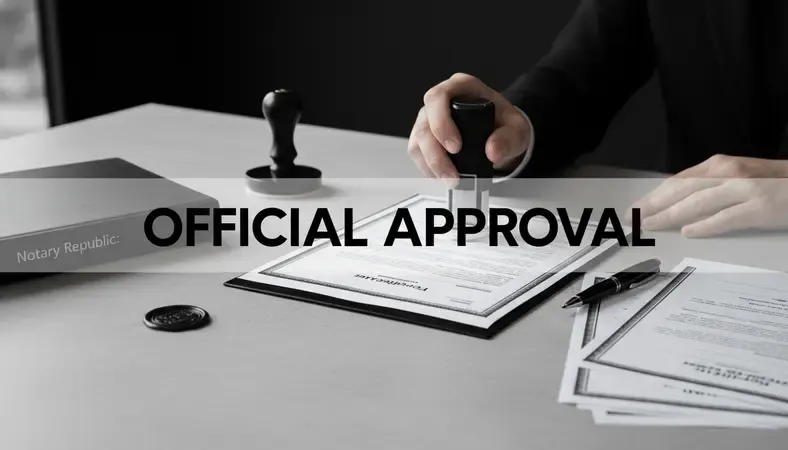
A notary public is a state-commissioned official authorized to perform specific legal acts. Their primary job is to serve as an impartial witness when important documents are signed. They verify the signer's identity, confirm the person is signing voluntarily, and apply their official seal to the document.
Think of a notary public as a fraud prevention checkpoint. Before your signature carries legal weight on a deed, power of attorney, or affidavit, a notary confirms you are who you say you are.
According to the National Notary Association, there are approximately 4.4 million active notaries across the United States — one of the largest groups of licensed officials in the country.
Notary of Republic vs. Other Notary Types
Not all notaries are the same. Once you understand the differences, you'll know exactly which one you need.
Comparison of Notary Types in the U.S.
| Notary Type | Where They Operate | How Signing Happens | Best For |
|---|---|---|---|
| Traditional Notary Public | In person, at a physical location | Wet ink signature in front of notary | Everyday documents, local signings |
| Mobile Notary | Travels to the signer's location | Wet ink signature in person | Clients who can't travel |
| Remote Online Notary (RON) | Entirely online via video | Electronic signature, digital seal | Out-of-state signers, urgent needs |
| Notario Público | Latin American legal systems | Varies by country | International civil law matters |
A quick note on that last row: in many Latin American countries, a notario público (sometimes confused with the American "notary of republic") is a highly trained attorney with broad legal authority. That role is entirely different from a U.S. notary public, who is not required to be a lawyer.
For most Americans searching "notary of republic," a traditional notary public or a remote online notary (RON) is what they actually need.
What Can a Notary of Republic Do?
A notary public has a defined set of powers — and equally defined limits.
What a notary public can do:
- Acknowledge signatures — Confirm that you signed a document willingly and that you are who you claim to be.
- Administer oaths and affirmations — Swear in witnesses for affidavits or depositions.
- Certify copies — Confirm that a photocopy is a true reproduction of an original document.
- Witness signatures — Serve as an official, impartial witness on contracts or agreements.
- Perform jurats — Certify that a person signed a document in the notary's presence and swore to its truthfulness.
What a notary public cannot do:
- Give legal advice or draft legal documents (unless they're also a licensed attorney)
- Notarize a document in which they have a personal financial interest
- Notarize a blank document
- Guarantee the accuracy of the document's content
The notary's seal is not a stamp of approval on what the document says. It's a stamp confirming who signed it and when.
Notary of Republic Requirements and Qualifications
Requirements vary by state, but the baseline is consistent across most of the country.
Typical requirements to become a notary public:
- Age — Must be at least 18 years old in most states.
- Residency — Must be a legal resident of the state where you're commissioned (some states allow non-residents who work in the state).
- No felony convictions — Most states disqualify applicants with certain criminal records.
- Application and fee — Submit a state application, usually with a fee between $20 and $100.
- Training or exam — Several states (California, New York, and others) require a notary education course or written exam.
- Bond — Many states require a surety bond to protect the public from notary errors.
- Oath of office — Notaries swear an oath before taking their commission.
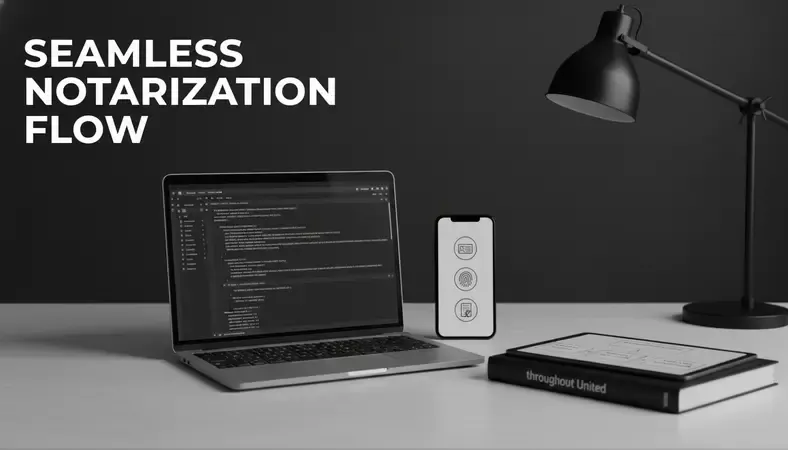
For remote online notaries, additional requirements apply. States that authorize RON require notaries to use approved audio-video technology, maintain a digital journal of sessions, and complete extra training on electronic notarization.
You can verify notary requirements for your specific state through the National Notary Association or your state's Secretary of State website.
How to Become a Notary of Republic
The process is straightforward in most states. Here's how it works from start to finish:
-
Check your state's requirements — Visit your Secretary of State's website. Requirements differ significantly between states like California (exam required) and Texas (no exam required).
-
Complete any required education — If your state mandates a notary training course, complete it before applying. Courses typically run two to six hours and are available online.
-
Submit your application — File your notary application with the appropriate state agency, usually the Secretary of State or county clerk's office. Pay the application fee.
-
Purchase a surety bond — If your state requires one, buy a bond from an insurance or bonding company before your commission is issued.
-
Take your oath of office — Some states require you to appear in person to be sworn in. Others allow this step online.
-
Get your notary supplies — Order your official notary seal (stamp or embosser) and a notary journal to log your sessions.
-
Register for RON (optional) — If you want to notarize documents remotely, register with a state-approved remote online notarization platform like BlueNotary and complete any additional RON-specific training.
Commission terms typically run four years, after which you renew through the same process. In our experience helping thousands of notaries get started, the education and oath steps are where most first-time applicants hit delays — planning ahead for those two requirements cuts your timeline in half.
Do You Need a Notary of Republic?
Most people don't need a notary for everyday documents. But certain transactions almost always require one.
You almost certainly need a notary for:
- Real estate deeds and mortgage documents
- Powers of attorney
- Wills and trusts (requirements vary by state)
- Affidavits and sworn statements
- Vehicle title transfers
- Adoption paperwork
- Business formation documents
You probably don't need a notary for:
- Standard employment contracts
- Personal letters
- Most everyday agreements between private parties
- Internal business memos
If you're unsure, check whether the document itself says "Notarization Required" or includes a notarial certificate block at the bottom. That block — with lines for the notary's signature, seal, and commission expiration date — is your clearest signal that a notary is required.
Key Insight: Skipping notarization when it's required doesn't just create a technical problem — it can void the document entirely. A deed without proper notarization may not be recordable, which means the property transfer doesn't legally happen.
For situations like document notarization after car accidents, having fast access to a notary can be the difference between a smooth claims process and weeks of delays.
How to Find a Notary of Republic Near You
Finding a notary — what people often search as "public notary close to me" or "notary in public" — is easier than it used to be.

In-person options:
- Banks and credit unions — Many offer free notary services to account holders.
- UPS Store and FedEx locations — Most locations have a notary on staff.
- Libraries — Public libraries in many cities offer free or low-cost notary services.
- Law offices — Attorneys often provide notarization for clients.
- AAA offices — Members can access notary services at AAA locations.
Online options:
Remote online notarization is now available in the majority of U.S. states. With a RON platform, you connect with a commissioned notary via video call, verify your identity digitally, and sign your document electronically — all in under 15 minutes.
BlueNotary is a state-approved remote online notarization platform. You upload your document, complete identity verification, and connect with a live notary on video. The notarized document is returned to you digitally, with a tamper-evident seal and a complete audit trail. We've processed over 100,000 remote notarizations, and the most common feedback we hear is relief — clients who spent days searching for a "notary of republic" near them complete the entire process in less time than it takes to drive across town.
States that have passed remote online notarization legislation now cover the majority of the U.S. population, making online notarization a practical option for most people.
Common Questions About Notary of Republic
Is "notary of republic" a real legal term?
No, "notary of republic" is not a recognized legal term in the United States. It's a common search variation of "notary public," which is the correct term. A notary public is a state-commissioned official authorized to witness signatures and perform other specific legal acts. If you've been searching for a "notary of republic," a notary public is exactly what you need.
How much does a notary public charge?
Most states cap notary fees by law. Fees typically range from $2 to $15 per signature or notarial act, depending on the state. California caps fees at $15 per signature. Texas allows up to $6 for the first signature and $1 for each additional. Remote online notarization fees are generally higher — often $25 to $50 per session — but include the convenience of completing the process from anywhere.
Can a notary public refuse to notarize a document?
Yes, a notary public can and should refuse in specific situations. A notary must decline if the signer cannot be positively identified, if the signer appears to be under duress or lacks capacity, if the document is incomplete or blank, or if the notary has a personal interest in the transaction. Refusing in these cases is not optional — it's a legal obligation.
How long does a notary commission last?
Most states issue notary commissions for four-year terms. A few states use different periods — Louisiana commissions last five years, while Maine uses a four-year term tied to the governor's term. After expiration, you must renew your commission through your state's application process. Your notary seal becomes invalid once your commission expires.
Does Pennsylvania allow online notarization?
Yes. Pennsylvania opened its doors to remote online notarization, joining the majority of states that now authorize RON. Pennsylvania notaries who want to perform remote notarizations must register with an approved RON platform and complete additional training. Documents notarized online in Pennsylvania carry the same legal weight as those notarized in person.
Final Thoughts
A notary public — the person behind every search for "notary of republic" — is one of the most accessible legal officials in the country. Whether you need an in-person witness or a fully remote session, the process is fast and straightforward. Notarize your documents online at BlueNotary — connect with a live, state-commissioned notary in minutes, no office visit required.
Written by the BlueNotary team — Remote Online Notary Services practitioners. Ready to get started? Visit BlueNotary to learn more.