






A notary stamp and a notary seal aren't the same thing, though many people use the terms interchangeably. The difference matters because some states require one over the other, and using the wrong tool could invalidate your notarization. If you're becoming a notary or need to understand what makes a document officially notarized, this guide breaks down exactly what each tool does and when to use which one.
What Is a Notary Stamp?
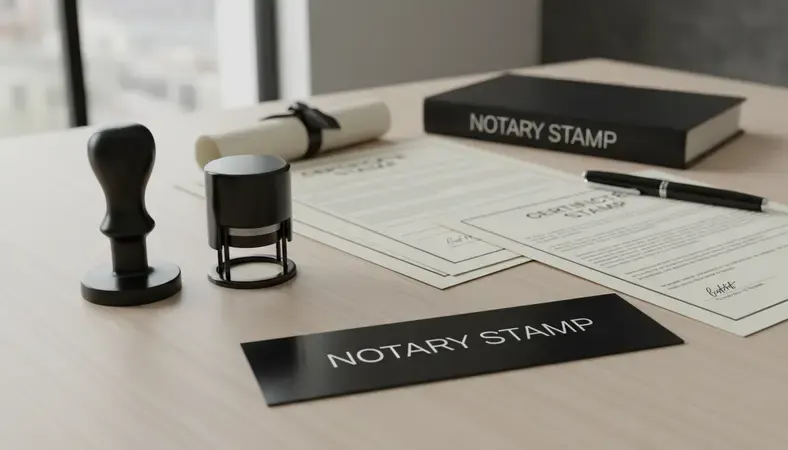
A notary stamp is a rubber stamp or self-inking device that prints the notary's official information in ink on a document. When you press it down, it leaves a clear, readable impression that includes the notary's name, commission number, state of commission, and commission expiration date.
Think of it like a high-quality office stamp, but with specific legal requirements. The stamp creates a flat, inked impression that's easy to read and photocopy. Most modern notary stamps are self-inking, meaning they automatically re-ink themselves after each use without needing a separate ink pad.
The information on a notary stamp typically includes:
- Notary's full name as it appears on their commission
- State of commission where they're authorized to notarize
- Commission number assigned by the state
- Commission expiration date showing when their authority ends
- "Notary Public" designation confirming their official status
What Is a Notary Seal?
A notary seal is an embossing device that creates a raised, three-dimensional impression on paper without using ink. When you squeeze the handles together, it presses the notary's information into the paper, creating a physical indentation you can feel with your fingers.
This embossed impression is much harder to forge or alter than an inked stamp. The raised lettering creates a permanent mark that shows through to the back of the paper, making it an excellent security feature for important documents.
Traditional notary seals look like large pliers with circular metal plates. When you align the document between the plates and squeeze, the seal creates a circular raised impression containing the same information as a stamp, but in embossed form instead of ink.
Notary Stamp vs Notary Seal: Key Differences
Comparison of Notary Tools
| Feature | Notary Stamp | Notary Seal |
|---|---|---|
| Impression Type | Flat ink impression | Raised embossed impression |
| Visibility | Easy to read, photocopies well | Harder to read, doesn't photocopy |
| Security | Standard security | Higher security, harder to forge |
| Speed | Quick single press | Requires positioning and squeezing |
| Cost | Lower cost ($15-40) | Higher cost ($40-80) |
| Portability | Compact and lightweight | Bulkier and heavier |
The choice between a stamp and seal often comes down to your state's requirements and your specific needs as a notary.
When Each Tool Works Best
Notary stamps work best when:
* Your state allows or requires ink impressions
* You need to notarize many documents quickly
* Documents will be photocopied or scanned frequently
* You're working in an office environment with good lighting
* Portability matters for mobile notary work
Notary seals work best when:
* Your state requires embossed impressions
* Document security is a top priority
* You're notarizing high-value legal documents
* The document won't need frequent photocopying
* You have adequate workspace for the larger tool

Types of Notary Stamps
Self-Inking Notary Stamps
Self-inking notary stamps are the most popular choice among modern notaries. They contain an internal ink pad that automatically re-inks the stamp after each use, eliminating the need for a separate ink pad.
These stamps offer several advantages:
- Consistent impressions without manually applying ink
- Clean operation with no messy ink pads to manage
- Thousands of impressions before needing replacement
- Professional appearance with crisp, clear text
- Customizable layouts to meet state requirements
The ink cartridge inside a self-inking stamp typically lasts for 5,000 to 10,000 impressions, depending on usage. When the ink runs low, you can replace just the cartridge rather than buying an entirely new stamp.
Pre-Inked Notary Stamps
Pre-inked stamps use a different technology where ink is embedded directly in the stamp material itself. These create extremely sharp, detailed impressions that work well for complex designs or small text.
Key features include:
- Superior image quality with fine detail reproduction
- Longer lasting than traditional rubber stamps
- No separate ink pad needed
- Consistent ink distribution across the entire impression
- Professional results that look crisp on any document
Pre-inked stamps cost more upfront but often provide better value over time due to their durability and print quality.
Traditional Rubber Stamps
Traditional rubber stamps require a separate ink pad and manual inking for each use. While less convenient than self-inking options, they remain popular in some situations.
Benefits include:
- Lower initial cost compared to self-inking alternatives
- Color flexibility by using different ink pads
- Replacement options for just the rubber die or ink pad
- Familiar operation for those comfortable with traditional stamps
- Durability when properly maintained
Notary Stamp Requirements by State
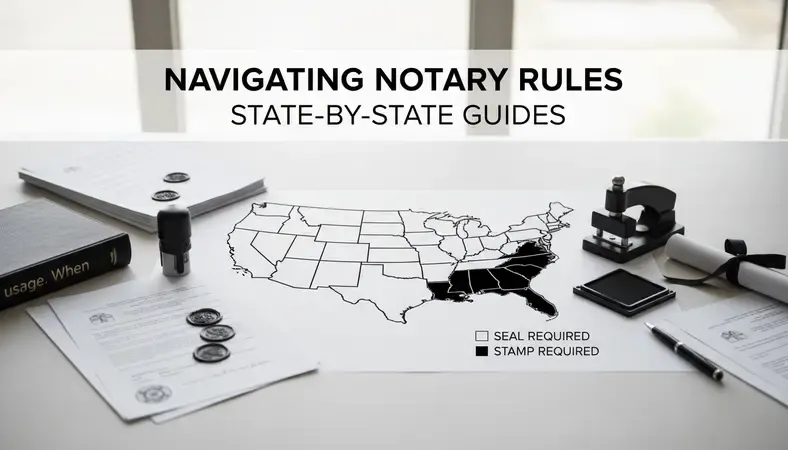
State requirements for notary stamps and seals vary significantly across the United States. Understanding your state's specific rules is crucial because using the wrong type of impression could invalidate your notarization.
States Requiring Ink Stamps
Most states now require or prefer ink stamps over embossed seals. These states typically specify that the notary's impression must be clear, legible, and photographically reproducible.
States in this category include California, Florida, Texas, New York, and many others. The trend toward ink stamps reflects the modern need for documents to be easily copied, scanned, and transmitted electronically.
States Requiring Embossed Seals
A smaller number of states still require traditional embossed seals for certain types of notarizations. These states value the security benefits of raised impressions that are difficult to forge or alter.
Some states allow either stamps or seals but may require seals for specific document types like real estate transactions or court filings.
States Allowing Both Options
Several states give notaries the flexibility to choose between stamps and seals, or even require both for different situations. In these states, notaries often carry both tools to handle any type of notarization request.
Important Note: State requirements change periodically, and some states have updated their rules in recent years. Always check with your state's notary commissioning authority for the most current requirements before purchasing notary tools.
How to Get a Notary Stamp
Getting a notary stamp involves several steps, starting with your official commission and ending with ordering the right stamp for your state's requirements.
Step-by-Step Process
Complete your notary commission: You must be officially commissioned as a notary public in your state before ordering any notary tools. This process includes training, testing, and background checks in most states.
Verify state requirements: Check your state's specific requirements for stamp design, size, and information that must be included. Some states provide exact specifications or approved vendors.
Choose a reputable vendor: Select a company that specializes in notary supplies and understands your state's requirements. Look for vendors that guarantee compliance with state regulations.
Provide commission information: You'll need to supply your exact name as it appears on your commission, your commission number, commission expiration date, and state of commission.
Select stamp type: Choose between self-inking, pre-inked, or traditional rubber stamps based on your needs and preferences.
Review the proof: Most vendors provide a digital proof of your stamp design before production. Carefully review all information for accuracy.
Wait for production: Custom notary stamps typically take 3-7 business days to produce and ship.
What Information Must Be Included
State laws specify exactly what information must appear on your notary stamp. While requirements vary, most states require:
- Your full legal name exactly as it appears on your commission
- "Notary Public" designation or similar official title
- State name where you're commissioned
- Commission expiration date in the required format
- Commission number if assigned by your state
Some states have additional requirements like county name, specific wording, or particular layouts. Never guess at these requirements—always verify with your state's notary authority.
Can You Use a Digital/Electronic Notary Stamp?
Digital notary stamps work differently from physical stamps but serve the same purpose in electronic notarization. These digital tools create secure, encrypted impressions on electronic documents during remote online notarization (RON) sessions.
How Digital Notary Stamps Work
When you perform a remote notarization through a platform like BlueNotary, the system applies your digital notary stamp automatically during the signing process. This digital stamp contains the same information as a physical stamp but uses encryption and digital certificates to ensure security.
The digital stamp includes:
- Your notary information in digital format
- Timestamp showing exactly when the notarization occurred
- Digital certificate linking the stamp to your verified identity
- Tamper-evident seal that shows if the document is altered after notarization
Legal Status of Digital Stamps
Digital notary stamps carry the same legal weight as physical stamps in states that authorize remote online notarization. The SECURE Notarization Act and similar state laws provide the legal framework for these digital tools.
Currently, over 40 states allow remote online notarization with digital stamps, and this number continues to grow as more states recognize the convenience and security benefits of electronic notarization.

Common Questions About Notary Stamps
Can I Use My Notary Stamp in Multiple States?
No, notary stamps are state-specific and can only be used in the state that issued your commission. If you move to a new state, you'll need to get commissioned in that state and order a new stamp with the correct state information.
Some notaries who live near state borders get commissioned in multiple states, but this requires separate applications, training, and stamps for each state.
How Long Does a Notary Stamp Last?
A quality notary stamp can last for many years with proper care. Self-inking stamps typically provide 5,000-10,000 impressions before needing ink replacement, while the stamp mechanism itself can last much longer.
However, you'll need a new stamp whenever your commission information changes, such as when you renew your commission and receive a new expiration date or commission number.
What Happens If My Notary Stamp Is Lost or Stolen?
If your notary stamp is lost or stolen, immediately report it to your state's notary commissioning authority. Many states require written notification within a specific timeframe, often 10-30 days.
You should also stop using the stamp immediately and order a replacement. Some states may require you to include a new commission number or other identifier on the replacement stamp to prevent misuse of the lost stamp.
Can I Make My Own Notary Stamp?
No, notary stamps must be ordered from authorized vendors who ensure compliance with state requirements. Making your own stamp could result in an invalid notarization and potential legal consequences.
Most states maintain lists of approved vendors or specify requirements that vendors must meet. Always use a reputable notary supply company that guarantees state compliance.
Do Notary Stamps Expire?
Notary stamps themselves don't expire, but the commission information on them does. When your notary commission expires and you renew, you'll typically need a new stamp with the updated expiration date.
Some states issue new commission numbers upon renewal, which would also require a new stamp. Check your state's renewal requirements to understand what changes might affect your stamp.
What Size Should My Notary Stamp Be?
Most states specify maximum dimensions for notary stamps, typically around 1 inch by 2.5 inches or similar rectangular dimensions. Some states allow circular stamps up to 2 inches in diameter.
The size requirements ensure the stamp fits appropriately on documents without obscuring important text while remaining large enough to include all required information clearly.
The Bottom Line
Choosing between a notary stamp and seal depends primarily on your state's requirements, but personal preferences and work style also matter. Most modern notaries prefer self-inking stamps for their convenience and clear impressions, while embossed seals remain necessary in certain states or for high-security documents.
Get your documents notarized remotely at BlueNotary — complete the entire process online in minutes with legally compliant digital stamps and seals. Ready to get started? Visit BlueNotary to learn more.