






To revoke a power of attorney, the principal signs a written revocation naming the original document and the agent, then gives written notice to the agent and every bank or office relying on it. Notarizing is common, and the revocation should be recorded if the original was. Only a competent principal can revoke.
This is general information, not legal advice. Rules vary by state, so confirm yours with an attorney, especially if the document covers real estate or a dispute is involved.
How do you revoke a power of attorney?
You revoke a power of attorney by signing a written revocation, delivering written notice to the agent and anyone who relied on the document, and recording the revocation where the original was recorded. Then, if you still need help managing your affairs, sign a new power of attorney naming a different agent.
1. Confirm that you are competent to revoke. A principal can revoke at any time while competent.
2. Sign a written revocation that identifies the original power of attorney and the agent.
3. Notarize the revocation. Rules vary, but a notarized revocation is common practice.
4. Deliver written notice to the agent, ideally by certified mail, and ask for all copies back.
5. Send written notice to every bank, broker, doctor, or title company that relied on the old document.
6. If the original was recorded, usually for real estate, record the revocation in the same office.
7. Sign a new power of attorney if you want someone else to act, and say that it replaces the old one.
The New York City Bar explains that a revocation should be in writing, identify the original power of attorney, and be given to the agent and to any bank, financial institution, or organization that may have relied on it. It adds that a power of attorney recorded for a real estate transaction may call for a recorded revocation so the public record matches (New York City Bar).
What should a power of attorney revocation form include?
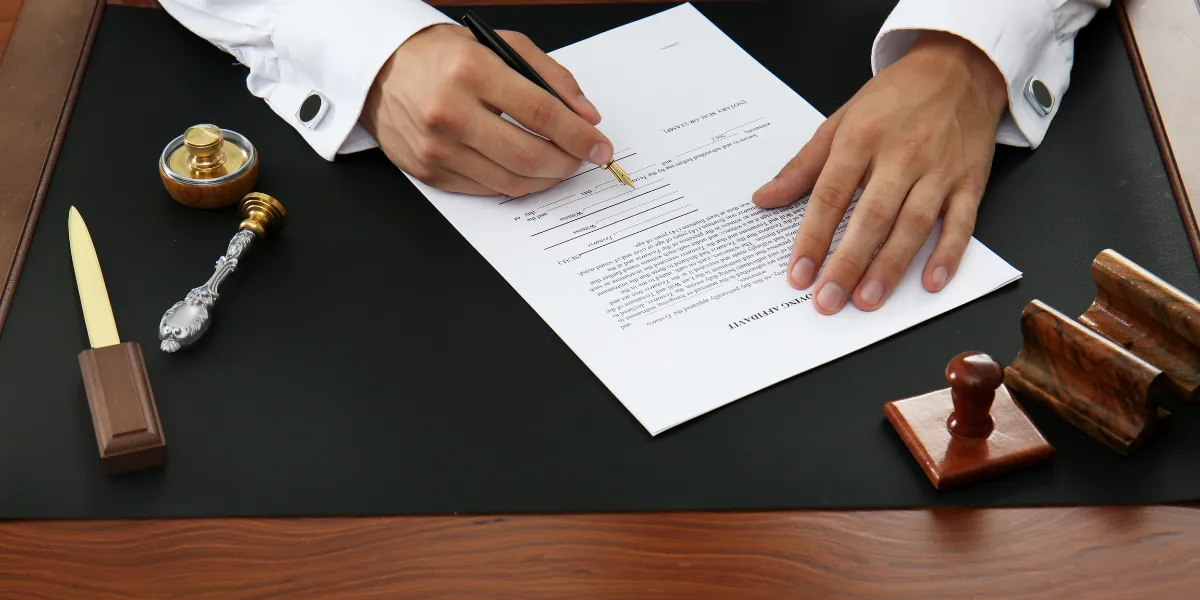
A power of attorney revocation form identifies the principal, the agent, and the original document by date, states plainly that the authority is revoked, and carries the principal’s signature and a notary certificate. Most states have no single mandatory form, so a clear written revocation that meets your state’s rules works.
| Part | What to include |
| Principal | Your full legal name and address |
| Agent | The agent’s name, and any successor or co-agents being revoked |
| Original document | The title, date signed, and any recording information of the power of attorney being revoked |
| Revocation statement | A clear sentence that you revoke the power of attorney and all authority of the agent, effective immediately |
| Instructions | A request that the agent stop acting and return all copies of the original |
| Signature and date | Your signature, signed only in front of a notary if you are notarizing |
| Notary certificate | An acknowledgment completed by the notary, with seal and commission details |
A legal forms provider describes a revocation that identifies the original power by grantor, attorney-in-fact, and date, and closes with a notary acknowledgment, which many banks and other third parties expect (ILRG form). The illustration below uses placeholders and is not legal advice.
| Revocation of power of attorney (illustration) |
| I, [full name], of [address], revoke the power of attorney I signed on [date] naming [agent name] as my agent. |
| I revoke all authority of [agent name] and any successor agent, effective immediately. I ask that [agent name] stop acting under the power of attorney and return all copies to me. |
| Signed: [signature]. Date: [date]. |
| [Notary acknowledgment, seal, and commission details] |
Does a revocation need to be notarized, and how do you deliver it?
Notarization is not required everywhere, but it is common practice and often expected by banks and recorders. It is generally needed if the revocation will be recorded. Delivery matters more: give written notice to the agent and to each institution, and keep proof. Certified mail with a return receipt is a standard way to prove delivery.
Florida’s statute says a principal may revoke by a later power of attorney or other writing signed by the principal, and the principal may give notice to an agent who accepted authority (Fla. Stat. § 709.2110). The same chapter says a notice, including a notice of revocation, is not effective until written notice is provided to the agent or third persons relying on the document (Chapter 709). North Carolina law firm guidance describes a signed, notarized revocation served on the agent and delivered to each institution (Pierce Law Group).
On BlueNotary, you can notarize a revocation online: upload the unsigned PDF, verify your identity, and sign in front of an online notary public. See its signer instructions, last updated July 14, 2026, and its identity guide. BlueNotary’s eSign is for documents that need only a signature, but a revocation you want banks and recorders to accept usually needs a notary.
Who can revoke a power of attorney, and can a family member revoke it?
Only the principal can revoke a power of attorney, and only while competent. A family member cannot revoke it for the principal. Family may ask a court to review the agent’s conduct if state law gives them standing, and a court can limit or end an agent’s authority. Powers of attorney also end on their own terms, such as the principal’s death.
The Uniform Power of Attorney Act lists the ways a power of attorney terminates in Section 110, including the principal’s death, the principal’s revocation, and a termination date or event in the document, and it lists who may petition a court to review an agent’s conduct in Section 116 (Uniform Power of Attorney Act). The Act also provides that a court must dismiss a petition on the principal’s motion unless it finds the principal lacks capacity to revoke.
Can a family member revoke a power of attorney? Not on their own. If the principal can no longer revoke, the usual routes are a court petition, or Adult Protective Services if abuse is suspected (ACL). A new power of attorney does not revoke an earlier one unless it says so. Colorado’s version requires a later document to expressly revoke the earlier one or state that all other powers of attorney are revoked (C.R.S. 15-14-710).
How do you revoke a durable, medical, or limited power of attorney?
A durable power of attorney is revoked the same way as any other: in writing, with notice. A medical power of attorney or health care directive follows separate state rules and can be easier to revoke. A limited power of attorney may end by its own terms once its purpose is done.
• Durable: the principal revokes it with a written revocation and notice, while competent. It continues through incapacity, so revoke before capacity is lost.
• Medical: rules differ. A Florida summary says a health care directive can be revoked by a competent principal in writing, by destroying it, or orally, with notice to the surrogate and providers (youth-voice.org summary of Fla. Stat. § 765.104). Check your state.
• Limited: if it covers one transaction or a set period, it may end by its terms. Revoke early in writing if you need to.
• Spouse as agent: filing for divorce, annulment, or legal separation ends a spouse-agent’s authority in many states, unless the document says otherwise (Alabama; Michigan).
When does a revocation take effect, and what if the agent keeps acting?
A revocation is effective when properly made, but the agent and third parties who act in good faith without knowing about it can still bind you. That is why notice matters. If the agent keeps acting, notify each institution again in writing, record the revocation, and talk to an attorney.
Florida’s statute says termination is not effective as to an agent who acts in good faith without knowledge of it (§ 709.2109(4)), and Michigan’s version has a similar rule covering other persons who act in good faith without actual knowledge (MCL 556.210). Until banks and others learn of the revocation, they may keep honoring the old document. A North Carolina firm advises serving the agent, notifying banks and brokerages, and recording the revocation and proof of service if the power of attorney was recorded (Pierce Law Group; LegalClarity).
If the agent has misused funds or refuses to stop, contact Adult Protective Services or law enforcement, and ask an attorney about a court order. You do not need proof to report suspected exploitation.
How much does it cost, and when is another option better?
On BlueNotary, one notarization with one stamp is $25, each additional stamp is $8, and each additional signer is $5, with a witness free if you bring one and $10 if BlueNotary provides one (checked October 2026). A revocation with one signer and one stamp is $25 (hypothetical total from the fee schedule).
An in-person notary may be better if a recorder or institution requires a paper original or you have no reliable video connection. An attorney is better when the principal’s capacity is in doubt, family members disagree, real estate is involved, or an agent is refusing to stop. A notary verifies identity and willingness and cannot give advice. If you are not the principal, see who can override a power of attorney, and for a new form see our power of attorney templates. See the pricing page and the remote online notarization page.
Ready to sign? Notarize Your Revocation Online with BlueNotary once your revocation is ready.
FAQs
1. Can I revoke a power of attorney without the agent’s permission?
Yes. The principal does not need the agent’s consent. Florida’s statute lets a principal revoke by a signed writing. What matters is that the agent and institutions get written notice.
2. Can I revoke a power of attorney verbally?
For a financial power of attorney, use a written revocation. Some health care directives can be revoked orally under certain state laws, so check your state.
3. What if the agent will not return the original document?
You can still revoke. Sign and notarize the revocation, serve it on the agent, and notify institutions in writing, as a North Carolina firm advises. Institutions can be told to stop honoring the old document.
4. Does a new power of attorney cancel the old one?
Only if the new one says so. Under the Uniform Act, a later power of attorney revokes an earlier one only if it expressly says it does or states that all other powers of attorney are revoked.
5. Should I record the revocation?
Yes, if the original power of attorney was recorded, usually for real estate. Record the revocation in the same office so the public record shows the agent’s authority ended.