




A bargain and sale deed is one of those real estate documents that sounds more complicated than it is. At its heart, it’s a legal tool for transferring property where the seller implies they own it but makes no promises about its past history.
Think of it like buying a used car 'as-is' from a private seller. The seller is giving you the keys and the title, confirming they own the car now, but they're not offering any warranty for mechanical issues that might have cropped up before they got it. This deed strikes a similar balance, offering a middle ground of protection for the buyer.
Decoding the Bargain and Sale Deed

When a property is transferred using a bargain and sale deed, the seller (the grantor) is really only making two quiet promises. First, they’re implying they actually hold the title to the property. Second, they're implying they have the legal right to sell it.
That's it. That's where their guarantees stop.
This type of deed offers zero protection to the buyer from any title defects or encumbrances—like old liens or unresolved easements—that previous owners might have left behind. The current seller isn’t on the hook for cleaning up someone else’s mess from years ago.
The Core Components
This legal instrument has roots stretching back to English common law, created as a straightforward way to convey property. In the U.S. today, a bargain and sale deed is most often used in specific situations where the seller implies they can transfer the property but won't offer explicit warranties about the title's history. It’s a stark contrast to a general warranty deed, making it a riskier but often necessary option for certain types of transfers.
For a bargain and sale deed to be legally sound, it has to include specific elements. A critical step is a formal acknowledgment before a notary, which validates the signatures and intent of the parties involved.
A bargain and sale deed assures the buyer that the seller currently holds the title, but it does not guarantee a clean title history. The risk of past claims, liens, or disputes falls squarely on the buyer.
Here’s a quick summary of what this deed involves.
Bargain and Sale Deed at a Glance
This table breaks down the core features, guarantees, and common uses of a bargain and sale deed for a handy reference.
| Feature | Description |
|---|---|
| Seller's Guarantee | Implies ownership and the right to sell the property. |
| Warranty Provided | None against past defects; only covers the seller’s time of ownership (if covenants are added). |
| Protection for Buyer | Limited. The buyer assumes the risk for any title issues from previous owners. |
| Common Uses | Foreclosure sales, estate transfers, tax sales, and transactions by trustees. |
Ultimately, this deed is a specialized tool for specific scenarios where full warranties are either impractical or impossible for the seller to provide.
Comparing Bargain and Sale Deeds to Other Deed Types
To really get a handle on what a bargain and sale deed is, you have to see where it lands on the spectrum of property deeds. They aren't all created equal. Some offer ironclad protection for the buyer, while others barely do more than transfer a potential interest in a property.
It helps to think about it like buying a used car. The type of "paperwork" you get tells you a lot about the promises the seller is making.
A General Warranty Deed is the gold standard, like buying a certified pre-owned car from a high-end dealership. You get a full, bumper-to-bumper warranty. The seller is guaranteeing the title is clean and promises to defend you against any claims—past, present, or future—no matter who might have caused the issue. This is the absolute best protection a buyer can get.
Next up is the Special Warranty Deed. This is more like buying a used car with a limited, dealership-specific warranty. The seller guarantees the title is clean, but only for the time they owned the property. They're basically saying, "I didn't mess anything up on my watch," but they make zero promises about what any previous owners might have done.
The Bargain and Sale Deed: The Middle Ground
The bargain and sale deed sits right in the middle of these, bridging the gap between deeds with solid promises and those with none at all. It implies two key things: the seller actually owns the property and has the right to sell it. That's it. There are no warranties against title defects.
This makes it the go-to choice for transactions where the seller has a limited or unknown history with the property, like in foreclosures, estate sales, or tax sales.
Think of it as buying a car "as-is" from a bank that repossessed it. The bank is implying it legally owns the car and can sell it, but it’s not going to guarantee the transmission won’t have a problem leftover from the last owner. The responsibility to get the car inspected—or in our case, to get a thorough title search—is entirely on you, the buyer.
The core difference really boils down to the promises being made. A warranty deed gives you explicit guarantees about the title's history. A bargain and sale deed simply implies the seller’s current ownership and shifts all the due diligence work onto the buyer's shoulders.
The Quitclaim Deed: The Minimalist Transfer
At the far end of the spectrum, offering the least protection, is the Quitclaim Deed. This is like someone just handing you a set of car keys and walking away. They aren't even promising they own the car. They are simply transferring whatever interest they might have in it, which could be anything from full ownership to absolutely nothing.
To really see how a bargain and sale deed measures up, it helps to compare it directly with other common deeds, like general warranty deeds and quitclaim deeds.
Let's break down how the four main deed types stack up side-by-side.
How Real Estate Deed Types Compare
This table is a great cheat sheet for understanding the crucial differences in protection and guarantees each deed provides to a buyer.
| Deed Type | Grantor's Guarantee | Protection for Buyer | Common Use Case |
|---|---|---|---|
| General Warranty | Full guarantee against all title defects, past and present. | Highest | Standard residential and commercial sales. |
| Special Warranty | Guarantees against defects only during the grantor's ownership. | Moderate | Commercial transactions, sales by developers. |
| Bargain and Sale | Implies ownership and right to sell, but offers no warranties. | Limited | Foreclosures, tax sales, estate transfers. |
| Quitclaim | None. Transfers only the grantor's current interest, if any. | Lowest | Family transfers, clearing title clouds. |
Ultimately, choosing the right deed comes down to the specifics of the deal and the level of risk the buyer and seller are comfortable with.
When Are Bargain and Sale Deeds Used?
You won't typically see a bargain and sale deed in a standard, everyday home sale between a buyer and a seller. Instead, this type of deed steps into the spotlight in very specific situations—usually when the seller either can't or won't offer a full warranty covering the property's entire history. Think of it as a specialized tool for less-than-traditional real estate transfers.
These deeds are the go-to choice when the seller hasn't actually lived in the property and, frankly, has no idea what its past holds. This is common for entities like banks, government agencies, or estate representatives who need to offload a property without taking on liability for problems they didn't cause.
Foreclosure and Tax Sales
Foreclosure sales are probably the most common place you'll find a bargain and sale deed. When a bank takes back a house after a mortgage default, its main goal is to sell it and recoup its losses. The bank has zero firsthand knowledge of any liens, disputes, or claims the previous owner might have racked up.
By using a bargain and sale deed, the bank is essentially saying, "Yes, we own this property now and have the right to sell it to you." But it stops short of guaranteeing anything about the title's history before they took over. The same logic holds true for government tax sales. When a county seizes a property for unpaid taxes and auctions it off, it can transfer ownership, but it can't vouch for the title's condition before the seizure.
This infographic shows exactly where a bargain and sale deed fits in the pecking order of buyer protection.
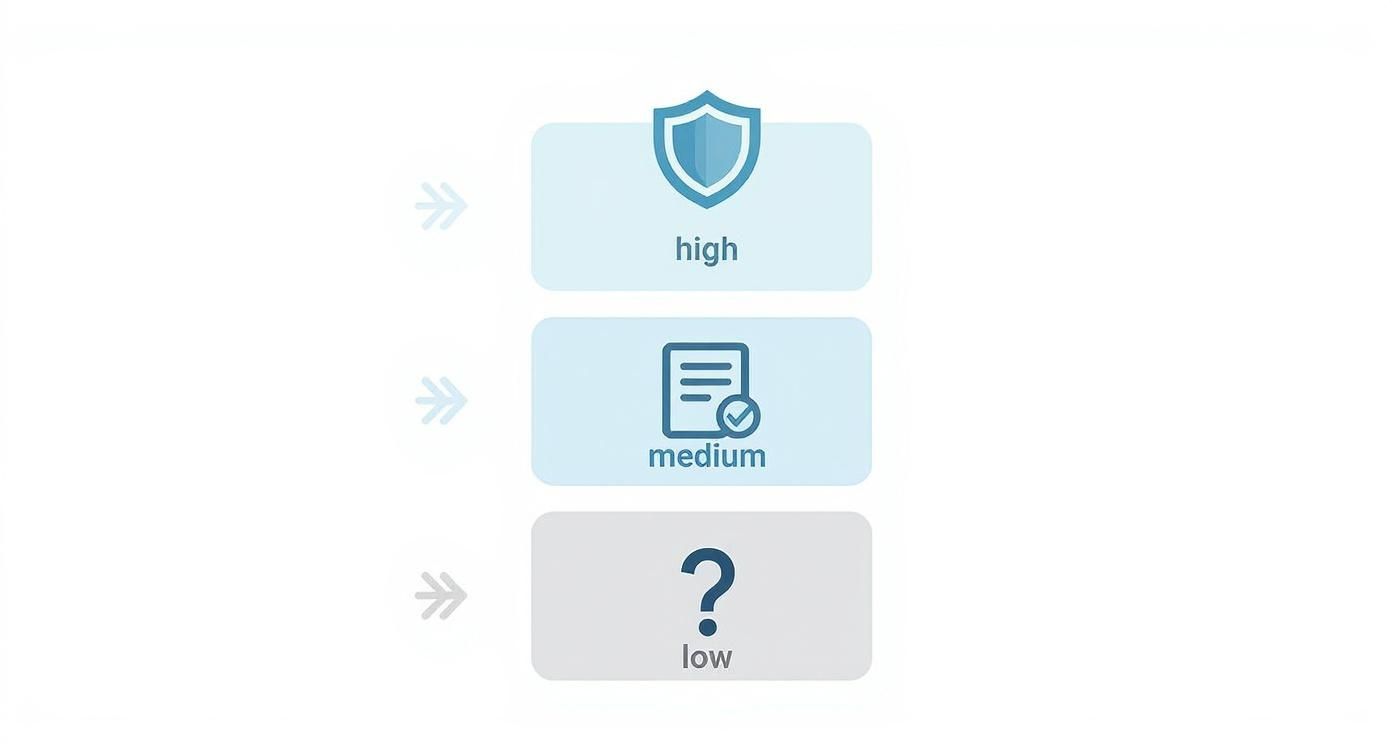
As you can see, it's a middle-of-the-road option. It offers more protection than a quitclaim deed but falls well short of the ironclad guarantee of a general warranty deed.
Estate and Trust Transfers
Estate and trust administration is another key area. Imagine an executor or trustee tasked with selling a home as part of settling an estate. They are acting as a fiduciary, and it's highly unlikely they ever lived in the property or have any personal insight into its title history.
Using a bargain and sale deed is the perfect solution. It allows the executor to legally transfer the property to a buyer or heir without making themselves personally liable for some unknown title defect from 30 years ago. It lets them do their job while protecting the estate from future lawsuits.
Key Takeaway: Bargain and sale deeds are fundamentally about risk management for the seller. They are used in transactions where the grantor can affirm their right to sell but cannot responsibly guarantee a flawless title history.
These deeds aren't just a niche product; they're a significant part of these transactions. Across major U.S. states, roughly 25-35% of all deeds issued in foreclosure sales are bargain and sale deeds. This number highlights just how essential they are when a seller can't guarantee a clean title. States like Washington and New York, for instance, consistently report that about a third of their foreclosure deeds are of this type. You can dig deeper into these state-specific uses in this DAL Law Firm overview.
Understanding the Risks for Buyers and Sellers
When a bargain and sale deed enters the picture, it completely changes the risk equation in a real estate deal. The burden of due diligence shifts squarely onto the buyer’s shoulders. For sellers, it's a clean break from the property's past, but for buyers, it can open the door to some serious legal and financial pain if they're not paying close attention.
The biggest risk for a buyer is simply the unknown. Because this type of deed offers zero guarantees against past title problems, you’re basically accepting the property—and its entire history, warts and all. This means a nasty surprise could be waiting for you long after the closing celebration is over.
Imagine this: months after you’ve moved in, you discover an old contractor’s lien that was never paid off. Or worse, a previously unknown heir pops up with a legitimate claim to an interest in your property. With a bargain and sale deed, the seller isn’t legally required to lift a finger to help. The mess, and the cost to clean it up, is all yours.
The Seller's Advantage: Limiting Liability
So why would anyone use this deed? For sellers—especially fiduciaries like estate executors, trustees, or institutions like banks in a foreclosure—the answer is simple: limited future liability. It allows them to transfer the property without making promises about a history they can't possibly know inside and out.
Think about it from an executor's perspective. They can confirm the estate legally holds the title and has the right to sell, but they have no firsthand knowledge of what the deceased owner did or didn't do. Did they have a boundary dispute? Did they take out a loan that was never recorded properly? A bargain and sale deed lets the executor fulfill their duty without exposing the estate, or themselves, to future lawsuits.
A bargain and sale deed effectively draws a line in the sand. The seller is responsible for nothing that happened before they took ownership, and the buyer assumes all risk for the property's entire title history.
This complete lack of warranties, or covenants, is what defines the risk. It’s a stark contrast to a general warranty deed, which is packed with covenants that protect the buyer from almost any conceivable title claim. The bargain and sale deed operates on a "buyer beware" principle, forcing you to verify everything yourself. Naturally, this higher risk for the buyer often gets baked into the property's final sale price, sometimes resulting in a better deal upfront.
But that potential discount comes with serious legal implications. Title companies are well aware of the elevated risk and may charge higher premiums or insist on special endorsements for properties transferred this way. It's a critical financial factor every buyer needs to account for. You can get more details on how these deeds play out with insurance and legal matters by exploring these insights from SmartAsset. All this makes a thorough title search and owner's title insurance not just good practice, but an absolute must.
How to Protect Yourself with Title Searches and Insurance

With all the risks attached to a bargain and sale deed, you're probably asking yourself, "Why would any buyer ever agree to one?" The answer is pretty straightforward: you aren't left high and dry. The seller might not be offering any warranties, but you can absolutely secure your own protection.
It all comes down to two critical tools of the trade: a comprehensive title search and a solid owner's title insurance policy.
Think of the title search as pulling a CarFax report on the property. A title company or real estate attorney digs deep into public records, searching for any red flags that could come back to haunt you. This isn't just a suggestion; it's your first and best line of defense against future title nightmares.
The Role of a Title Search
A professional title search is a deep dive into the property's entire recorded history. The mission is to find and clear up any "clouds" on the title before you ever get to the closing table.
So, what are they looking for? A whole host of potential problems:
- Outstanding Liens: This could be anything from an unpaid contractor's lien to a tax lien or even a judgment against a prior owner.
- Unresolved Easements: Hidden rights-of-way that might give someone else the legal right to use a portion of your land.
- Ownership Disputes: Surprise claims popping up from long-lost heirs or undisclosed co-owners.
- Recording Errors: Simple clerical mistakes in past deeds or public records that create a messy and ambiguous ownership history.
Finding these issues upfront empowers you. You can demand the seller fix them before you finalize the purchase, saving yourself from a world of financial pain and legal battles down the road.
With a bargain and sale deed, the burden of discovery falls squarely on the buyer’s shoulders. A professional title search isn't just a good idea—it's an absolute must to protect your investment.
Your Financial Safety Net: Owner's Title Insurance
Here's the thing: even the most meticulous title search isn't completely infallible. Some title defects are so well-hidden or unrecorded that they're practically impossible to find. That’s where owner's title insurance steps in to become your financial safety net.
This is a one-time premium you pay at closing, but its protection lasts as long as you own the property. It shields you from financial loss if a covered title issue—one that was missed during the search—surfaces after you've taken ownership.
If a valid claim ever arises, the insurance company steps up to defend your title in court and covers the costs, right up to your policy amount. It’s the ultimate backstop against the inherent risks of a bargain and sale deed.
Once your title is secured, the final documents need to be handled with the same level of care. Using a secure remote online notary platform can add a crucial layer of verification and convenience, making the closing process smoother and more secure.
After your title search is complete, finding a reputable insurance broker is a smart next step to ensure you have the right property coverage in place, protecting your asset from all angles.
Finalizing and Recording Your Bargain and Sale Deed
Okay, you’ve done your homework. The title search came back clean (or at least, you know what you’re dealing with), and you have title insurance lined up. Now it's time to make this thing official by executing and recording the bargain and sale deed.
This isn’t just paperwork. These last steps are what legally cement the property transfer and protect the buyer's new ownership rights from the rest of the world.
A valid deed isn't just a suggestion; it's a legal necessity. There are a few non-negotiable elements that absolutely have to be on the document to make it enforceable and prevent a world of headaches down the road.
Essential Deed Components
Before anyone signs anything, do a final check to make sure the deed has these key pieces of information nailed down:
- Grantor and Grantee: The full, correct legal names of the seller (the grantor) and the buyer (the grantee). No nicknames or typos.
- Legal Property Description: This is the big one. It's not just the street address. It’s the official, detailed description from the public record that spells out the property's exact boundaries.
- Consideration Clause: This is a formal statement of what the buyer gave for the property. Usually, it just states the purchase price.
- Words of Conveyance: Look for specific legal phrasing like "bargains, sells, and conveys." This is the language that actually does the work of transferring the property from one person to another.
Once you've confirmed all these details are correct, the grantor signs the deed. That signature is the legal act of passing their ownership interest to the grantee.
The final, crucial step is recording the deed. An unrecorded deed is like a secret agreement—it's valid between the parties but offers no protection against claims from others who are unaware of the sale.
The signed document then needs to be notarized. A notary public’s job is to verify the grantor’s identity and witness their signature, which is a critical step in preventing fraud. These days, you don't even have to meet in person. Platforms like BlueNotary use Remote Online Notarization (RON) to get this done securely from anywhere, which can seriously speed things up.
Finally, the notarized deed has to be filed with the county recorder's office where the property is located. This is called recording, and it’s what makes the transfer a matter of public record. It puts everyone on notice that the property has a new owner, protecting your rights against any future claims.
This whole sequence is typically managed during an eClosing, where all the documents are handled digitally. The property is usually held safely until every last 'i' is dotted and 't' is crossed. To get a better handle on this part of the process, you can learn more about what it means to be in escrow from our guide.
Got Questions? We've Got Answers
Even after you've got a handle on the basics of a bargain and sale deed, a few practical questions almost always pop up. Let's tackle some of the most common ones that buyers, sellers, and agents run into on the ground.
Are Bargain and Sale Deeds Used in Every State?
Nope. Their use is pretty specific to certain regions. You'll see them most often in states like Washington, Oregon, Colorado, and New York, especially for things like foreclosures or settling an estate.
In many other states, this exact deed type isn't even a thing. Instead, a special warranty deed usually fills that role, offering a similar level of limited protection. The bottom line? Always check with a local real estate attorney to know what's standard practice in your state. Property law is hyper-local.
Can I Get a Mortgage with This Type of Deed?
Absolutely. Lenders aren't too concerned with the type of deed you have; they're obsessed with the quality of the title.
Since a bargain and sale deed comes with zero promises from the seller, your lender will absolutely, positively require a lender's title insurance policy. This is non-negotiable for them. It’s their safety net, protecting their investment from any surprise claims or liens down the road. Your ability to get the loan will hinge on a clean title report and your financial standing, not the deed itself.
At the end of the day, a lender's main job is to protect their money. A bargain and sale deed makes title insurance a hard requirement for them, and honestly, it should be for you, too. It’s the only way both parties are covered if a title skeleton falls out of the closet.
What if I Find a Title Problem After Closing?
This is where the rubber meets the road. If a title issue surfaces after you've closed, your next move depends entirely on one thing: whether you bought an owner's title insurance policy.
If you have a policy, your first call should be to the title insurance company to file a claim. They'll jump in, investigate the issue, and—if the claim is valid—work to fix the defect or pay you for your financial loss, up to the policy limit.
If you skipped owner's title insurance? You're on your own. The full legal and financial burden of sorting out the title mess falls squarely on your shoulders.
For any deed, the final step—notarization—is what makes it official. BlueNotary provides a powerful Remote Online Notarization and eClosing platform that lets you finalize real estate documents securely in minutes, not days. See how you can get to the closing table faster and safer at https://bluenotary.us.