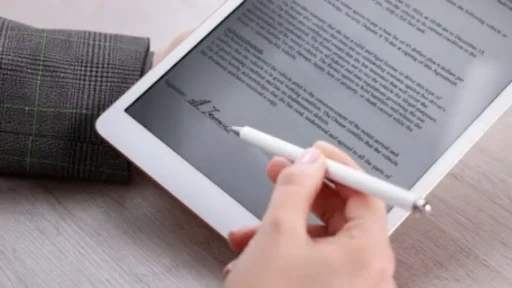






A notarized translation is a translated document accompanied by the translator’s signed statement of accuracy, where a notary public has verified the translator’s identity and witnessed or acknowledged that signature. The notary does not check whether the translation is correct. That is the key difference between a notarized translation and a certified one: certification is the translator vouching for the work, and notarization adds an official check of who signed that statement.
This guide explains certified, notarized and sworn translations, whether USCIS requires notarization, and how to get a translator’s statement notarized online.
What is a notarized translation?
A notarized translation has three parts: the original document, the translation, and a signed statement from the translator that the translation is complete and accurate. A notary verifies the translator’s identity and notarizes that signature. The notary’s role is about the signer, not the language or content.
State guidance is consistent on this point. The California Secretary of State’s Notary Public Handbook explains that a notary can notarize a signature on a document in a language the notary doesn’t know, because a notary’s function relates only to the signature and not the document’s content. The National Notary Association adds that no US state authorizes notaries to certify translations as an official act, although a notary may notarize the translator’s signature on the statement (NNA).
Because the notary never reviews the wording, a notarized translation is only as reliable as the translator who prepared it.
The American Translators Association (ATA) puts it plainly. It calls a request to have “the translation notarized” a misnomer, because a notary only acknowledges the identity of the person signing the certification statement (ATA).
Certified vs notarized vs sworn translation
A certified translation includes the translator’s signed statement of accuracy. A notarized translation is a certified translation whose statement has been notarized. A sworn translation is produced by a translator officially appointed by a government, a system used in many civil-law countries rather than the United States.
| Feature | Certified translation | Notarized translation | Sworn translation |
|---|---|---|---|
| Who signs | The translator | The translator, before a notary | A government-appointed sworn translator |
| What it confirms | The translator states the translation is complete and accurate | The same statement, plus a notary’s verification of the translator’s identity and signature | The translator’s official certification under that country’s law |
| Checks accuracy? | The translator vouches for it | The notary does not check accuracy | The sworn translator certifies accuracy under national rules |
| Where it’s common | USCIS and many US agencies | Some US agencies, courts and foreign authorities | Countries such as Spain |
| Typical use | Immigration filings, school admissions | Vehicle titles, some court filings, documents going abroad | Official documents for foreign governments |
In the United States, the ATA notes that anyone can certify a translation, and a translator does not need to hold a certification credential to provide a certified translation (ATA).
Sworn translation works differently. In Spain, for example, the Ministry of Foreign Affairs manages the process for obtaining the title of sworn translator, and sworn translators certify their work with their own signature and seal, giving it official character (Spain’s Ministry of Foreign Affairs). If a foreign authority asks for a sworn translation, a US notarized translation may not be a substitute, so ask that authority what it accepts.
Which one should you order?
Start with the recipient’s written instructions, then match the wording:
- “Certified translation” (for example, USCIS): order a certified translation with the translator’s signed statement.
- “Notarized translation” or “translator’s affidavit”: order a certified translation and have the translator sign the statement before a notary.
- “Sworn translation” from a foreign authority: ask whether it accepts a US notarized translation with an apostille, or whether it requires a translator appointed in that country.
When the instructions are unclear, ask the recipient before paying for extra steps.

Does USCIS require a notarized translation?
USCIS requires a certified translation, not a notarized one. Its regulation calls for a full English translation certified by the translator as complete and accurate, plus the translator’s statement of competence to translate. The rule doesn’t mention notarization, so a translator’s certification is normally enough.
The rule is in 8 CFR 103.2(b)(3): any document containing a foreign language submitted to USCIS must be accompanied by a full English translation that the translator has certified as complete and accurate, and by the translator’s certification that they are competent to translate from the foreign language into English.
USCIS repeats this in its filing guidance. The Form I-485 initial evidence checklist asks for a full English translation with a certification from the translator, and it says nothing about notarization. The US Department of State takes a similar approach for immigrant visa civil documents, asking for certified translations that include a signed translator statement on accuracy and competence (travel.state.gov).
Some applicants notarize anyway for peace of mind. That is optional for USCIS, and it doesn’t replace the certification itself. If you are gathering sponsorship paperwork, our guide to the Affidavit of Support (Form I-864) covers another common part of the immigration file.
When you might need a notarized translation
Notarization is usually required by the organization receiving the document, not by federal immigration rules. State motor vehicle offices, some courts and foreign authorities are the most common examples. Always check the recipient’s written instructions before you order a translation.
Verified examples include:
- Florida vehicle titles. Florida’s highway safety department requires foreign-language title and registration documents to come with an English translation signed by the translator before a notary public (FLHSMV Procedure TL-03).
- New York court papers. Under CPLR 2101(b), foreign-language papers must be accompanied by an English translation and an affidavit by the translator stating their qualifications and that the translation is accurate. An affidavit is a sworn statement, which typically requires a notary or other official.
- Documents going abroad with an apostille. The US Department of State advises getting a professional translation and having the translated copy notarized if the country where you will use it requires a translation (travel.state.gov).
- Texas authentication requests. The Texas Secretary of State says a notary must witness the translator sign the translation, and the original document must be submitted with the notarized translation (Texas SOS).
One rule surprises people: the translator and the notary must be different people. Florida’s Department of State states that the person translating the document cannot be the person who notarizes it (Florida DOS).
What a translator’s statement should include
A strong translator’s statement makes the translation easy to accept, whether or not it is notarized. The ATA recommends that a certification include the elements below (ATA).
Use this checklist when you review the statement:
- A statement of the translator’s qualifications
- A statement affirming that the translation is complete and accurate
- Identification of the translated document and the language pair
- The translator’s name, signature and date
- For USCIS, a statement that the translator is competent to translate from the foreign language into English
Avoid the gaps that can get a package sent back: a missing competence statement or an incomplete translation (USCIS asks for a full translation), a statement signed before the notary session, or a notarization performed by the translator. The ATA specifically advises translators not to sign the certification statement until they are in the presence of the notary.
For languages such as Spanish, our guide to getting documents notarized in Spanish covers related questions.
Two examples: when notarization matters and when it doesn’t
These hypothetical examples show how the recipient’s rules decide the answer.
Example 1 (hypothetical): a foreign birth certificate for a USCIS filing. Maria files an immigration petition that includes her birth certificate issued in Spanish. USCIS needs a full English translation with the translator’s certification of accuracy and competence under 8 CFR 103.2(b)(3). A notarized statement is acceptable but not required, so a properly worded certified translation is enough.
Example 2 (hypothetical): a US diploma for a university abroad. James needs his US diploma recognized in a country that requires documents translated into its language and apostilled. The State Department’s guidance is to have the translated copy notarized if the destination requires a translation. Here, the translator signs a statement before a notary, and the notary’s signature can then receive an apostille from the notary’s commissioning state.
The same document can need different treatment depending on where it’s going. That’s why the first step is always to read the recipient’s instructions.
How to get a translation notarized online
A translator can have the certification statement notarized by remote online notarization (RON), where a notary verifies identity and watches the signature by live video. This works well when the recipient accepts electronic notarization. If an apostille is needed, confirm the state’s policy on remotely notarized documents first.
- Confirm what the recipient wants. Ask whether it needs a certified or notarized translation, and whether it accepts electronic notarization.
- Finalize the translation and statement. Prepare the translation and an unsigned certificate or affidavit of accuracy as a PDF, with the original document attached if required.
- Book the online session. The translator, not the client, is the signer. The translator uploads the documents and verifies their identity.
- Sign on camera. The notary verifies the translator, confirms willingness to sign, and notarizes the signature on the statement.
- Deliver the file. Send the electronically notarized translation package to the recipient.
The notarization is priced separately from the translation. BlueNotary’s published fee schedule (checked September 2026) lists $25 for a notarization with one stamp and $8 for each additional stamp. Translation fees are set by the translator.
If the translation will need an apostille, check first. The Texas Secretary of State will apostille online notarizations when presented with the notary’s ledger and certificate, but Virginia currently cannot authenticate an electronic notarization (Virginia). For step-by-step detail on translating and notarizing, read can I translate a document and have it notarized. BlueNotary’s remote online notary page explains how sessions work.
Have a question about your translation or where it’s going? Email BlueNotary at [email protected] and the team will help.
Frequently asked questions
Can a notary translate my document?
A notary can’t certify a translation as a notarial act. The NNA notes that no US state authorizes this. A notary can only notarize the translator’s signature on a statement of accuracy.
Does the notary check that the translation is accurate?
No. The notary verifies the translator’s identity and signature. The translator is responsible for accuracy, which is why the statement of completeness and competence matters.
Is a certified translation the same as a certified copy?
No. A certified translation carries the translator’s statement of accuracy. A certified copy is a copy confirmed as a true reproduction of an original. See our guide to certified vs notarized documents for copies.
Does USCIS accept notarized translations?
Yes, as long as the translator’s certification of accuracy and competence is included. Notarization isn’t mentioned in the USCIS rule, so the certification is what USCIS reviews.
Can the translator be the same person as the notary?
Florida’s Department of State says the person translating a document cannot be the person who notarizes it. Treat the roles as separate everywhere, since notaries shouldn’t notarize their own signatures.
Do I need to attach the original document?
Often, yes. The Texas Secretary of State requires the original document to be submitted with the notarized translation for authentication, and many recipients expect both together.
Need a translator’s statement notarized? Start an online notarization with BlueNotary and have the translator sign in a live session with a commissioned notary.