



Getting a document notarized used to mean driving across town, waiting in line, and hoping the notary's schedule matched yours. Online notarization services completely change that experience. You can now get documents notarized from your computer or phone in minutes, not hours.
If you need important documents notarized quickly or can't make it to a physical location, this guide explains exactly how online notarization services work, what makes them legally valid, and when you should use them instead of traditional notarization.

What Is Online Notarization?
Online notarization services, also known as remote online notarization (RON), allow you to get documents notarized through a secure video call with a licensed notary public. Instead of meeting in person, you connect with a notary via computer or smartphone, verify your identity digitally, and sign documents electronically while the notary watches and applies their digital seal.
The Bottom Line: Online notarization services provide the same legal validity as traditional notarization but eliminate the need for physical meetings and paper documents.
The process combines video conferencing technology with identity verification systems and digital signatures to create a legally binding notarization that's often more secure than traditional paper-based methods. States that allow online notarization services have specific laws governing how the process works and what technology platforms can be used.
Currently, 45 U.S. states and the District of Columbia have passed laws allowing online notarization services, with the remaining states working on similar legislation. This widespread adoption means most Americans can now access these digital notary services for their important documents.
How Does Online Notarization Work?
The online notarization process follows a structured sequence that maintains the same legal requirements as in-person notarization while adding digital security layers.
The Complete Process
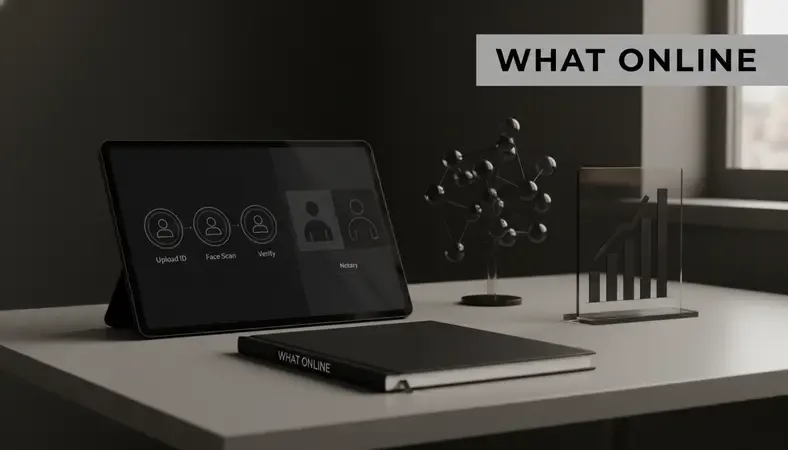
- Document Upload: You upload your document to the notary platform's secure system
- Identity Verification: The system verifies your identity through multiple methods
- Video Connection: You connect with a licensed notary via secure video call
- Document Review: The notary reviews the document and confirms your understanding
- Digital Signing: You sign the document electronically while the notary watches
- Digital Seal Application: The notary applies their official digital seal and signature
- Secure Storage: The completed document is stored securely and delivered to you
Identity Verification Methods
Online notarization services use several verification methods that often exceed traditional in-person checks:
- Credential Analysis: Advanced software examines your government-issued ID for security features
- Knowledge-Based Authentication (KBA): You answer questions based on your personal records that only you would know
- Biometric Verification: Facial recognition technology compares your live image to your ID photo
- Database Cross-Referencing: Your information is checked against multiple authoritative databases
Technology Requirements
To use online notarization services, you need:
- Stable Internet Connection: Essential for clear audio and video communication
- Webcam and Microphone: Built-in or external devices that work properly
- Valid Government ID: Driver's license, passport, or other official identification
- Compatible Device: Computer, tablet, or smartphone with updated browser or app
Is Online Notarization Legal and Secure?
Online notarization services are fully legal in states that have enacted Remote Online Notarization laws. These laws establish strict requirements for technology platforms, notary training, and security measures that often make digital notarization more secure than traditional methods.
Legal Framework
The Uniform Law Commission has developed model legislation that most states follow when creating their RON laws. This ensures consistency across state lines and helps with interstate document recognition.
Key legal protections include:
- Notary Licensing: Online notaries must hold valid licenses in their state
- Technology Standards: Platforms must meet specific security and recording requirements
- Audit Trails: Complete digital records of every notarization session
- Interstate Recognition: Documents notarized online in one state are generally accepted in others
Security Advantages
Online notarization services often provide stronger security than traditional notarization:
- Tamper-Proof Records: Digital documents with embedded certificates prevent alterations
- Complete Session Recording: Audio and video recordings of the entire process
- Multi-Factor Authentication: Multiple identity verification steps reduce fraud risk
- Encrypted Storage: Documents are protected with bank-level encryption
Key Insight: The digital audit trail created by online notarization services provides more comprehensive fraud protection than traditional paper-based methods.
Online Notarization vs Traditional Notarization
Understanding when to choose online notarization services versus traditional in-person notarization helps you make the right decision for your situation.
Comparison of Notarization Methods
| Aspect | Online Notarization | Traditional Notarization |
|---|---|---|
| Convenience | Available 24/7 from anywhere | Limited to notary's location and hours |
| Speed | Usually completed in 15-30 minutes | Can take hours with travel and waiting |
| Cost | Typically $25-$50 per document | Usually $5-$15 per document |
| Security | Multi-factor verification and recording | Visual ID check only |
| Document Storage | Secure digital copies provided | Physical documents only |
| Availability | 45+ states currently support | Available in all states |
When to Choose Online Notarization
Online notarization services work best for:
- Time-Sensitive Documents: When you need notarization quickly
- Remote Situations: When traveling or unable to meet in person
- Complex Scheduling: When coordinating multiple parties across different locations
- High-Value Documents: When enhanced security features provide peace of mind
- Digital Workflows: When you're already working with electronic documents
When Traditional Notarization Makes Sense
Traditional in-person notarization might be better for:
- Cost-Sensitive Situations: When minimizing fees is the top priority
- Local Requirements: When specific institutions require traditional notarization
- Technology Concerns: When you're uncomfortable with digital processes
- Complex Documents: When extensive document review and explanation are needed
What Documents Can Be Notarized Online?
Most documents that require notarization can be processed through online notarization services, but some restrictions apply depending on state laws and document types.
Commonly Accepted Documents
- Real Estate Documents: Deeds, mortgages, and property transfers
- Financial Papers: Loan documents, investment agreements, and banking forms
- Legal Documents: Powers of attorney, wills, and trust documents
- Business Contracts: Partnership agreements, vendor contracts, and employment documents
- Personal Affidavits: Sworn statements and declarations
- Healthcare Directives: Medical powers of attorney and advance directives
Documents with Restrictions
Some document types may have limitations:
- Wills and Trusts: Some states require in-person notarization for these documents
- Adoption Papers: Often require traditional notarization due to sensitivity
- Court Documents: May need specific court-approved notarization methods
- Immigration Forms: Federal requirements may mandate in-person verification
State-Specific Variations
Each state's RON laws determine which documents can be notarized online. Before proceeding, verify that your specific document type is approved for online notarization in the relevant state. Most platforms will inform you if your document cannot be processed digitally.
How Much Does Online Notarization Cost?
Online notarization services typically cost more per document than traditional notarization, but the convenience and time savings often justify the higher price.
Typical Pricing Structure
- Per Document Fee: Usually ranges from $25 to $50 per notarized document
- Platform Fees: Some services charge additional technology or processing fees
- Rush Services: Expedited notarization may cost $75 to $100 per document
- Bulk Discounts: Multiple documents in one session often receive reduced per-document rates
Cost Comparison Analysis
While online notarization services cost more upfront, consider the total cost including:
- Travel Time and Expenses: Gas, parking, and time off work
- Scheduling Flexibility: Avoiding multiple trips due to scheduling conflicts
- Document Security: Enhanced protection against fraud and loss
- Processing Speed: Faster completion for time-sensitive transactions
For many situations, the total cost of online notarization services becomes competitive with or less than traditional notarization when you factor in convenience and time savings.
How to Get a Document Notarized Online
Getting started with online notarization services is straightforward once you understand the process and have the necessary materials ready.
Step-by-Step Process
- Choose a Platform: Select a RON service provider licensed in your state
- Create an Account: Provide basic information and verify your email
- Upload Documents: Submit the documents that need notarization
- Schedule or Start Session: Book an appointment or connect immediately
- Complete Identity Verification: Follow the platform's verification process
- Join Video Call: Connect with your assigned notary public
- Review and Sign: Go through the document with the notary and sign electronically
- Receive Completed Documents: Download or receive your notarized documents
Preparation Checklist
Before starting your online notarization session:
- Valid ID Ready: Ensure your government-issued ID is current and clearly readable
- Stable Internet: Test your connection speed and stability
- Quiet Environment: Choose a location with minimal distractions
- Document Review: Read through your documents beforehand
- Questions Prepared: Have any questions ready for the notary
Platform Selection Criteria
When choosing an online notarization service, consider:
- State Licensing: Verify the service operates legally in your state
- Security Features: Look for encryption, audit trails, and compliance certifications
- Availability: Check hours of operation and appointment flexibility
- Pricing Transparency: Understand all fees before starting
- Customer Support: Ensure help is available if technical issues arise
Common Questions About Online Notarization Services
Are online notarized documents accepted everywhere?
Documents notarized through online notarization services are generally accepted across state lines due to interstate recognition laws. However, some institutions or specific use cases may have preferences for traditional notarization. When in doubt, check with the receiving party before proceeding with online notarization.
How long does the online notarization process take?
Most online notarization sessions take 15 to 30 minutes from start to finish. This includes identity verification, document review, and the actual notarization. Complex documents or first-time users might need additional time, but the process is typically much faster than scheduling and traveling to a traditional notary.
What happens if my internet connection fails during the session?
Reputable online notarization services have protocols for handling technical interruptions. Most platforms can reconnect you with the same notary to complete the process, and some maintain session data to avoid starting over completely. Always use a stable internet connection and have a backup option available.
Can I notarize documents for someone else online?
No, you cannot notarize documents on behalf of another person. Each individual must personally appear in the video call, verify their own identity, and sign their own documents. This requirement is the same for both online and traditional notarization methods.
How are online notarized documents stored and accessed?
Online notarization services typically provide secure digital storage of your completed documents. You'll usually receive immediate access to download copies, and most platforms maintain records for several years. The documents include digital certificates and audit trails that verify their authenticity.
What if I need to notarize documents in a state that doesn't allow RON?
If you're in a state that doesn't permit online notarization services, you'll need to use traditional in-person notarization. However, you can often work with a notary licensed in a RON-enabled state if the documents will be used across state lines, as long as the receiving jurisdiction accepts the notarization.
What This Means for You
Online notarization services offer a faster, more secure way to handle document notarization without the hassle of scheduling in-person appointments. For most document types, the enhanced security features and convenience outweigh the higher cost compared to traditional methods.
Get your documents notarized at BlueNotary — complete the entire process in minutes with bank-level security and full legal compliance. Ready to get started? Visit BlueNotary to learn more.