





Ever needed to get a document notarized but couldn't find the time to visit a notary office? Online notary California services completely transform this experience. An online notary California is a commissioned notary public who can legally notarize documents through secure video technology, allowing you to complete notarizations from anywhere in the state without leaving your home or office.
California's remote online notarization (RON) laws enable this digital process while maintaining the same legal validity as traditional in-person notarizations. Whether you're a law firm handling client documents, a real estate agent closing deals, or a title company processing property transfers, understanding how online notary California services work can streamline your operations and improve client satisfaction.
This guide explains everything you need to know about online notary California services, from the legal framework to practical implementation. You'll learn how the technology works, what documents can be notarized online, and how to choose the right platform for your needs.
What Is Online Notary California?
Online notary California refers to the state-authorized process where California-commissioned notaries perform notarizations through secure audio-video technology. This digital approach maintains all the legal requirements of traditional notarization while eliminating geographical constraints and scheduling limitations.
Legal Foundation in California
California's remote online notarization laws establish strict requirements that ensure the same level of security and authenticity as in-person notarizations. The state requires online notaries to use platforms that meet specific security standards, including identity verification, credential analysis, and tamper-evident technology.
Key Insight: California's RON laws don't replace traditional notarization—they expand options while maintaining the same legal standards and validity.
The legal framework requires that online notary California sessions include real-time audio-video communication, allowing the notary to interact directly with the signer. This ensures the notary can verify the signer's identity, confirm their willingness to sign, and witness the actual signing process.
Technology Requirements
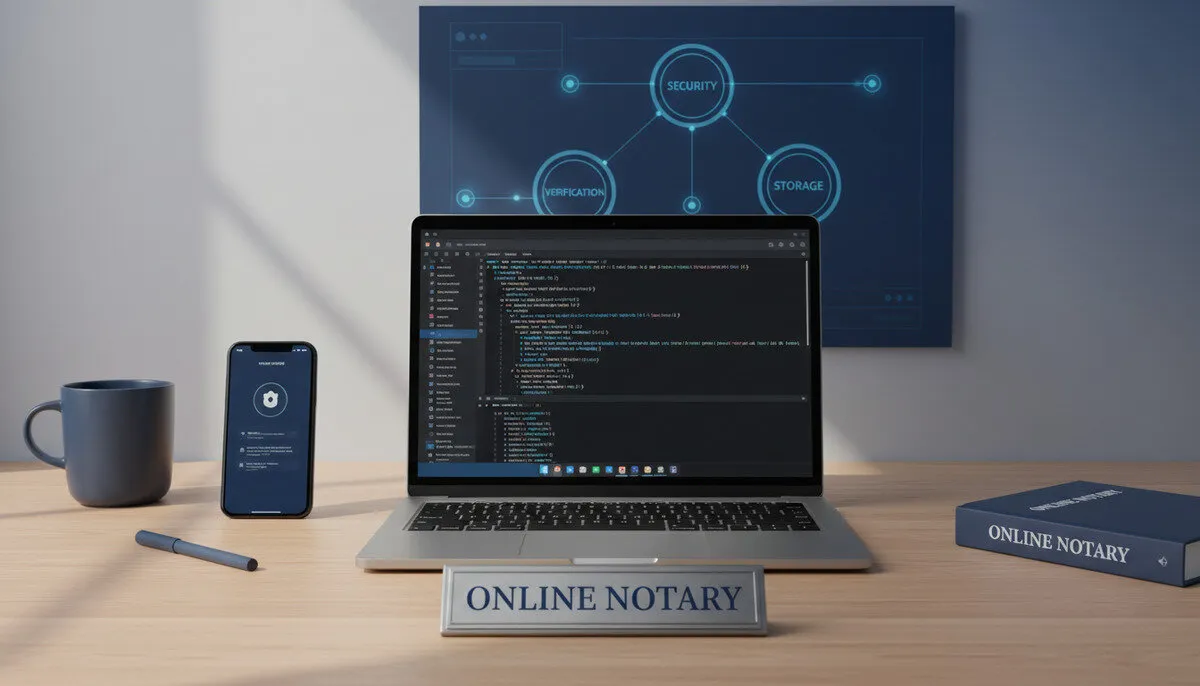
Online notary California platforms must incorporate several technological safeguards. These include public key infrastructure (PKI) for digital certificates, biometric verification systems, and secure document storage with audit trails. The technology creates a comprehensive record of the entire notarization session.
Comparison with Traditional Notarization
| Aspect | Traditional Notary | Online Notary California |
|---|---|---|
| Location | Physical meeting required | Remote from any location |
| Scheduling | Limited to notary availability | Extended hours, more flexibility |
| Document Storage | Physical records | Digital audit trail with recordings |
| Identity Verification | Visual ID check | Multi-factor authentication |
| Legal Validity | Recognized nationwide | Valid in California and reciprocal states |
The fundamental difference lies in convenience and accessibility while maintaining identical legal standards. Online notary California services use advanced technology to replicate and enhance the security measures of traditional notarization.
Who Can Use Online Notary California Services
California residents and businesses can utilize online notary California services for most document types that don't require specific physical presence. This includes contracts, affidavits, powers of attorney, real estate documents, and business agreements.
Out-of-state parties can also use online notary California services if they're dealing with California-related matters or if their state recognizes California's remote notarizations. However, specific requirements may vary based on the document type and intended use.
Pro Tip: Always verify that your specific document type and intended jurisdiction accept online notarizations before proceeding with the digital process.
How Online Notary California Works
The online notary California process follows a structured sequence that ensures security, legal compliance, and proper documentation. Understanding each step helps you prepare effectively and complete notarizations efficiently.
Step-by-Step Process Overview
Why It Matters: This multi-layered approach provides stronger identity verification than traditional notarization, which relies solely on visual ID inspection.
3. Live Video Session with the Notary
Once identity verification completes, you connect with a California-commissioned notary through secure video technology. The notary reviews your identity verification results, examines your documents, and confirms your understanding of what you're signing.
During this session, the notary asks required questions about your willingness to sign, your understanding of the document contents, and your identity. This interaction ensures compliance with California notary laws and creates a permanent audio-video record.
#### 4. Digital Signing and Notarization
After the notary confirms all requirements, you electronically sign the document using the platform's signing tools. The notary then applies their digital seal and signature, completing the notarization process.
The digital seal contains encrypted information that permanently links the notary's identity to the document, creating a tamper-evident record that's more secure than traditional paper seals.
Security and Audit Trail Creation
Throughout the entire process, the platform creates a comprehensive audit trail that includes:
- Complete session recording (audio and video)
- Timestamped activity logs
- Identity verification documentation
- Digital certificate information
- Document version control
Expert Tip: The digital audit trail provides superior evidence of the notarization process compared to traditional methods, which typically only create a basic journal entry.
This detailed record-keeping ensures legal compliance and provides comprehensive documentation for future reference or legal proceedings.

Platform Integration and Workflow
Modern online notary California platforms integrate with existing business systems, allowing seamless incorporation into established workflows. Law firms can connect these services to their case management systems, while real estate professionals can integrate with transaction management platforms.
The integration capabilities reduce manual data entry, minimize errors, and create efficient processes that save time for all parties involved.
Key Components of Online Notary California
Understanding the essential elements that make online notary California services function helps you evaluate platforms and ensure compliance with state requirements. Each component serves a specific purpose in maintaining security, legal validity, and user experience.
Digital Certificate Technology
The foundation of online notary California services rests on public key infrastructure (PKI) technology. Each notary receives a unique digital certificate that serves as their electronic equivalent of a traditional notary seal.
This certificate contains encrypted data that identifies the notary, their commission details, and expiration dates. When applied to a document, it creates a digital signature that's mathematically linked to both the notary and the specific document content.
- Encryption Standards: Platforms use industry-standard encryption (typically 256-bit SSL) to protect certificate data
- Tamper Detection: Any alteration to a digitally signed document invalidates the certificate, providing clear evidence of tampering
- Verification Systems: Recipients can verify certificate authenticity through automated checking systems
Identity Verification Components
Online notary California platforms employ sophisticated identity verification systems that exceed traditional notarization security measures.
Credential Analysis Technology
Advanced software examines government-issued IDs for security features, formatting consistency, and authenticity markers. This analysis includes:
- Security Feature Detection: Identification of holograms, watermarks, and other anti-counterfeiting elements
- Format Validation: Verification that ID formatting matches official standards for the issuing authority
- Data Extraction: Automated reading of ID information for comparison with user-provided data
Knowledge-Based Authentication (KBA)
KBA systems generate questions based on the signer's personal and financial history, drawing from multiple data sources to create verification questions that only the legitimate person should know.
Key Takeaway: KBA questions are dynamically generated and never repeated, making them extremely difficult for unauthorized individuals to answer correctly.
Audio-Video Communication Systems
Real-time communication technology enables the notary to interact with signers just as they would in person. These systems must meet specific technical requirements:
- High-Definition Video: Clear visual communication for identity verification and document review
- Secure Audio: Encrypted voice communication for questioning and confirmation
- Recording Capabilities: Complete session recording for audit trail purposes
- Multi-Device Compatibility: Support for computers, tablets, and smartphones
Document Management and Storage
Comprehensive document handling ensures security throughout the notarization process and creates permanent records for future reference.
Secure Storage Systems
Documents and session records require secure, long-term storage that meets legal requirements for record retention. This includes:
- Encrypted Storage: All documents and recordings stored with enterprise-grade encryption
- Access Controls: Strict limitations on who can access stored materials
- Backup Systems: Redundant storage to prevent data loss
- Retention Compliance: Automated retention management meeting California legal requirements
Comparison of Platform Components
| Component | Basic Platforms | Enterprise Platforms | BlueNotary Features |
|---|---|---|---|
| Identity Verification | Single-factor authentication | Multi-factor with KBA | Advanced biometric + KBA |
| Recording Quality | Standard definition | High definition | 4K video with enhanced audio |
| Storage Duration | 5 years | 10+ years | Permanent with easy retrieval |
| Integration Options | Limited APIs | Full API suite | Custom integrations available |
| Support Coverage | Business hours | Extended hours | 24/7 technical support |
The choice of platform components directly impacts user experience, security levels, and long-term compliance capabilities.
Compliance and Regulatory Components
Online notary California platforms must incorporate features that ensure ongoing compliance with state regulations and industry standards.
Audit Trail Management
Comprehensive logging systems track every action during the notarization process, creating detailed records that satisfy legal requirements and provide evidence for potential disputes.
Notary Commission Tracking
Platforms monitor notary commission status, expiration dates, and continuing education requirements to ensure all notarizations are performed by properly authorized individuals.
Pro Tip: Choose platforms that automatically verify notary credentials and prevent expired commissions from completing notarizations.
Benefits and Use Cases for Online Notary California
Online notary California services deliver significant advantages across various industries and use cases. Understanding these benefits helps organizations evaluate whether digital notarization aligns with their operational needs and client service goals.
Primary Benefits for Businesses
The shift to online notary California services creates measurable improvements in efficiency, cost management, and client satisfaction. These benefits compound over time, making digital notarization increasingly valuable for regular users.
Time and Cost Savings
Traditional notarization often requires scheduling appointments, travel time, and coordination between multiple parties. Online notary California eliminates these logistical challenges:
- Immediate Availability: Many platforms offer same-day or even immediate notarization services
- Reduced Travel Costs: No transportation expenses or lost productivity from office visits
- Faster Document Turnaround: Complete notarizations in minutes rather than days
- Lower Administrative Overhead: Reduced staff time spent coordinating appointments and managing paperwork
Why It Matters: Law firms report average time savings of 2-3 hours per notarization when switching to online services, translating to significant cost reductions for high-volume practices.
Enhanced Client Experience
Online notary California services improve client satisfaction through convenience and accessibility:
- Flexible Scheduling: Extended hours and weekend availability accommodate client schedules
- Remote Accessibility: Clients can complete notarizations from home, office, or any location
- Faster Service Delivery: Reduced waiting times and immediate document processing
- Better Documentation: Digital audit trails provide superior record-keeping
Industry-Specific Use Cases
Different industries leverage online notary California services to address specific challenges and improve their service delivery models.
Real Estate Applications
Real estate transactions involve numerous documents requiring notarization, making online services particularly valuable:
- Purchase Agreements: Buyers and sellers can execute contracts without coordinating in-person meetings
- Power of Attorney Documents: Out-of-state buyers can authorize local representation
- Refinancing Documents: Homeowners can complete refinancing without taking time off work
- Property Management Agreements: Landlords and tenants can execute leases remotely
Real estate agents report that online notary California services reduce transaction timelines by an average of 3-5 days, helping close deals faster and improve client satisfaction.
Legal Industry Benefits
Law firms utilize online notary California services to streamline client services and improve operational efficiency:
- Client Intake Documents: New clients can complete intake forms and retainer agreements remotely
- Estate Planning Documents: Wills, trusts, and powers of attorney can be executed without office visits
- Business Formation Papers: Entrepreneurs can complete incorporation documents from anywhere
- Litigation Support: Affidavits and sworn statements can be notarized quickly for court deadlines
Expert Tip: Law firms serving clients across multiple states benefit significantly from online notarization, as it eliminates geographical barriers to service delivery.
Title Company Operations
Title companies process high volumes of documents requiring notarization, making efficiency improvements particularly valuable:
- Closing Documents: Complete real estate closings without requiring all parties to meet physically
- Title Transfer Papers: Process ownership transfers more efficiently
- Lien Documentation: Execute lien releases and modifications quickly
- Insurance Documents: Process title insurance applications and claims faster
Accessibility and Inclusion Benefits
Online notary California services provide important accessibility advantages for individuals who face barriers to traditional notarization:
Mobility and Health Considerations
Individuals with mobility limitations, health concerns, or transportation challenges can access notarization services that might otherwise be difficult or impossible to obtain:
- Elderly Clients: Seniors can complete estate planning documents without leaving assisted living facilities
- Disabled Individuals: People with mobility impairments avoid transportation challenges
- Rural Residents: Individuals in remote areas gain access to notary services without long-distance travel
- Immunocompromised Individuals: People avoiding public exposure can complete necessary legal documents safely
Geographic and Scheduling Flexibility
Online notary California services remove traditional barriers related to location and timing:
- Business Travel: Professionals can complete urgent documents while traveling
- International Clients: California residents abroad can access state-authorized notary services
- After-Hours Needs: Emergency document processing outside traditional business hours
- Multi-Party Coordination: Simplified scheduling when multiple parties need to participate
Key Takeaway: The accessibility improvements from online notarization often provide the most significant value for clients who previously struggled to access traditional notary services.

Measurable Business Impact
Organizations implementing online notary California services typically observe quantifiable improvements in key performance metrics:
- Client Satisfaction Scores: Average increases of 15-25% in client satisfaction ratings
- Document Processing Speed: 60-80% reduction in average document completion times
- Operational Costs: 30-40% decrease in notarization-related administrative expenses
- Service Accessibility: 200-300% increase in after-hours and weekend service requests
These metrics demonstrate the tangible business value that online notary California services provide across different organizational contexts.
Common Misconceptions About Online Notary California
Despite the growing adoption of online notary California services, several misconceptions persist about their legality, security, and practical applications. Addressing these misunderstandings helps potential users make informed decisions based on accurate information.
Legal Validity Concerns
One of the most persistent misconceptions involves questions about the legal validity of online notarizations compared to traditional in-person services.
"Online Notarizations Aren't as Legally Valid"
This misconception stems from unfamiliarity with California's comprehensive legal framework governing remote online notarization. In reality, online notary California services operate under the same legal authority as traditional notarizations.
California's remote online notarization laws establish that properly executed online notarizations carry identical legal weight to in-person notarizations. Courts, government agencies, and financial institutions that accept traditional notarized documents must also accept properly executed online notarizations.
Key Insight: The legal framework for online notary California services actually provides stronger evidentiary support than traditional notarization through comprehensive audit trails and digital certificates.
Interstate Recognition Misunderstandings
Some people believe that online notarizations performed in California won't be accepted in other states. However, most states recognize notarizations performed under another state's authority, whether traditional or online.
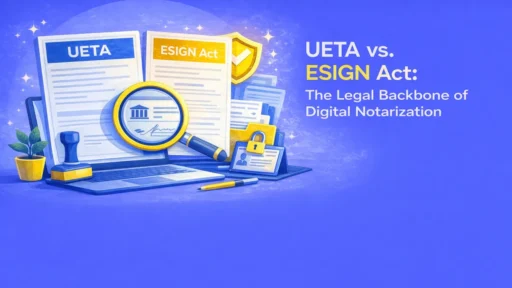
The Uniform Electronic Transactions Act (UETA) and Electronic Signatures in Global and National Commerce Act (ESIGN) provide federal support for electronic notarizations across state boundaries.
Security and Fraud Concerns
Another category of misconceptions focuses on security vulnerabilities and fraud risks associated with online notarization.
"Online Notarization Is Less Secure"
This misconception overlooks the sophisticated security measures built into online notary California platforms. In many ways, digital notarization provides superior security compared to traditional methods:
- Multi-Factor Identity Verification: Online platforms use credential analysis, knowledge-based authentication, and biometric verification
- Tamper-Evident Technology: Digital seals immediately reveal any document alterations
- Comprehensive Audit Trails: Complete session recordings provide detailed evidence of the notarization process
- Encrypted Storage: Documents and records receive enterprise-grade encryption protection
Traditional notarization relies primarily on visual ID inspection, which can be vulnerable to sophisticated fake identification documents.
Expert Tip: The multi-layered security approach used in online notary California services often detects fraudulent attempts that might succeed with traditional notarization methods.
Technology Complexity Assumptions
Many people assume that online notarization requires extensive technical knowledge or sophisticated equipment. Modern platforms are designed for ease of use:
- Simple Device Requirements: Most smartphones, tablets, or computers with cameras and microphones work perfectly
- User-Friendly Interfaces: Platforms guide users through each step with clear instructions
- Technical Support: Most services provide real-time assistance during sessions
- Backup Options: Alternative communication methods ensure sessions can continue despite minor technical issues
Document Type Limitations
Misconceptions about which documents can be notarized online create unnecessary barriers to adoption.
"Important Documents Can't Be Notarized Online"
While certain documents require specific handling (such as wills in some jurisdictions), most common business and personal documents work perfectly with online notary California services:
- Real Estate Contracts: Purchase agreements, refinancing documents, and property transfers
- Business Documents: Contracts, partnership agreements, and corporate resolutions
- Personal Legal Documents: Powers of attorney, affidavits, and personal contracts
- Financial Documents: Loan applications, account authorizations, and investment papers
The key factor isn't document importance but rather specific legal requirements that may mandate physical presence for certain document types.
Cost and Accessibility Myths
Several misconceptions exist about the cost and accessibility of online notary California services.
"Online Notarization Is More Expensive"
When considering total costs, online notary California services often provide better value:
| Cost Factor | Traditional Notary | Online Notary California |
|---|---|---|
| Service Fee | $10-15 per signature | $15-25 per document |
| Travel Costs | Gas, parking, time | None |
| Lost Productivity | 1-3 hours | 15-30 minutes |
| Total Cost | $50-100+ | $15-25 |
The apparent higher service fee for online notarization becomes cost-effective when factoring in time savings and eliminated travel expenses.
Pro Tip: For businesses processing multiple documents monthly, online notary California services typically reduce total notarization costs by 40-60% compared to traditional methods.
"Technology Barriers Make It Inaccessible"
Modern online notary California platforms are designed for users with varying technical comfort levels. Most sessions require no more technical skill than making a video call:
- Guided Setup Process: Step-by-step instructions help users prepare their devices
- Compatibility Testing: Platforms test device capabilities before sessions begin
- Live Technical Support: Real-time assistance available during sessions
- Mobile Optimization: Services work equally well on smartphones and computers
Understanding these misconceptions helps potential users evaluate online notary California services based on factual information rather than unfounded concerns. The technology has matured significantly, and regulatory frameworks provide strong legal foundations for digital notarization services.
Best Practices for Online Notary California
Implementing online notary California services effectively requires understanding best practices that ensure smooth operations, legal compliance, and optimal user experiences. These practices apply whether you're an individual using the service occasionally or an organization integrating it into regular workflows.
Preparation and Setup Guidelines
Proper preparation significantly impacts the success and efficiency of online notary California sessions. Taking time to prepare reduces technical issues and ensures compliance with legal requirements.
Document Preparation Standards
Before scheduling an online notarization session, ensure your documents meet technical and legal requirements:
- File Format Compatibility: Convert documents to PDF format for optimal compatibility across platforms
- Clear Signature Fields: Ensure signature areas are clearly marked and accessible for electronic signing
- Complete Information: Verify all required fields are filled out except for signatures and notarization sections
- Legible Text: Check that all text is clear and readable at standard zoom levels
Pro Tip: Many online notary California platforms offer document review services that identify potential issues before your scheduled session, saving time and preventing delays.
Technical Environment Setup
Creating an appropriate technical environment ensures smooth session execution:
- Stable Internet Connection: Test your connection speed and stability before the session
- Proper Lighting: Position yourself in well-lit area where your face is clearly visible
- Quiet Environment: Choose a location with minimal background noise and distractions
- Device Positioning: Set up your camera at eye level for natural interaction with the notary
Identity Document Requirements
Prepare acceptable identification documents that meet online notary California standards:
- Government-Issued Photo ID: Driver's license, passport, or state identification card
- Current and Valid: Ensure ID hasn't expired and information matches your current details
- High-Quality Images: If uploading ID photos, ensure images are clear and well-lit
- Backup Identification: Have a secondary form of ID available if needed
Organizational Implementation Strategies
Organizations adopting online notary California services benefit from structured implementation approaches that consider workflow integration, staff training, and client communication.
Workflow Integration Planning
Successful implementation requires thoughtful integration with existing business processes:
- Process Mapping: Document current notarization workflows and identify integration points
- Platform Selection: Choose services that integrate with existing software systems
- Staff Training: Provide comprehensive training on platform usage and best practices
- Client Communication: Develop clear communication strategies for introducing online options
Why It Matters: Organizations that plan integration carefully typically see 50-70% faster adoption rates and higher client satisfaction compared to ad-hoc implementations.
Quality Assurance Protocols
Establish quality assurance measures to ensure consistent service delivery:
- Session Monitoring: Regularly review session recordings for quality and compliance
- Client Feedback Collection: Implement systematic feedback collection to identify improvement opportunities
- Performance Metrics Tracking: Monitor completion rates, technical issues, and client satisfaction scores
- Continuous Improvement: Use data insights to refine processes and enhance service quality
Security and Compliance Best Practices
Maintaining security and compliance requires ongoing attention to platform capabilities, data handling, and regulatory requirements.
Data Protection Measures
Implement comprehensive data protection strategies that go beyond platform security features:
- Access Control: Limit platform access to authorized personnel only
- Regular Security Reviews: Conduct periodic assessments of security measures and protocols
- Incident Response Planning: Develop clear procedures for addressing security incidents
- Compliance Documentation: Maintain records demonstrating adherence to security requirements
Record Management Standards
Establish systematic approaches to managing digital notarization records:
- Retention Policies: Develop clear policies for how long records are maintained
- Access Procedures: Create standardized procedures for accessing historical records
- Backup Strategies: Implement redundant storage systems to prevent data loss
- Disposal Protocols: Establish secure methods for disposing of records when retention periods expire
Client Service Excellence
Delivering exceptional client experiences requires attention to communication, support, and service delivery standards.
Communication Strategies
Effective communication helps clients understand and successfully use online notary California services:
- Clear Instructions: Provide step-by-step guidance for session preparation and participation
- Expectation Setting: Explain the process, timing, and technical requirements upfront
- Support Availability: Offer multiple channels for technical assistance and questions
- Follow-Up Procedures: Implement systematic follow-up to ensure client satisfaction
Expert Tip: Organizations that provide pre-session orientation calls or tutorials see 80% fewer technical issues during actual notarization sessions.
Accessibility Considerations
Ensure online notary California services remain accessible to clients with varying needs and capabilities:
- Multiple Device Support: Test service compatibility across different devices and operating systems
- Technical Assistance: Provide real-time technical support during sessions
- Alternative Options: Maintain traditional notarization options for clients who prefer them
- Accommodation Procedures: Develop procedures for clients with special accessibility needs
Performance Monitoring and Optimization
Continuous improvement requires systematic monitoring of key performance indicators and regular optimization of processes and procedures.
Key Metrics to Track
Monitor specific metrics that indicate service quality and efficiency:
- Session Completion Rates: Percentage of sessions completed successfully without technical issues
- Client Satisfaction Scores: Regular surveys measuring client experience and satisfaction
- Average Session Duration: Time from session start to completion
- Technical Issue Frequency: Number and types of technical problems encountered
Optimization Strategies
Use performance data to identify and implement improvements:
- Process Refinement: Streamline procedures based on common issues or delays
- Technology Upgrades: Invest in better equipment or platform features as needed
- Training Enhancement: Update staff training based on observed challenges
- Platform Evaluation: Regularly assess whether current platforms meet evolving needs
These best practices help ensure that online notary California services deliver maximum value while maintaining security, compliance, and client satisfaction standards.
Common Questions About Online Notary California
Understanding frequently asked questions about online notary California services helps clarify important details about legality, process requirements, and practical implementation considerations.
Is online notarization legally valid in California?
Yes, online notarization is fully legal and valid in California under the state's remote online notarization (RON) laws. California established comprehensive regulations that authorize commissioned notaries to perform notarizations through secure audio-video technology while maintaining the same legal standards as traditional in-person notarizations.
The California Secretary of State oversees the regulatory framework, ensuring that online notary California services meet strict security and authentication requirements. Documents notarized online in California carry the same legal weight as those notarized in person and are recognized by courts, government agencies, and financial institutions.
California's RON laws require specific technological safeguards, including identity verification, credential analysis, and tamper-evident digital seals. These requirements often provide stronger security than traditional notarization methods, making online notarizations legally robust and difficult to challenge.
Key Takeaway: California's online notarization laws create a legal framework that's often more secure and well-documented than traditional notarization processes.
What documents can be notarized online in California?
Most common business and personal documents can be notarized online in California, including contracts, affidavits, powers of attorney, real estate documents, business agreements, and financial papers. The key factor isn't the document type but rather whether specific legal requirements mandate physical presence.
Documents that typically work well with online notary California services include:
- Real Estate Contracts: Purchase agreements, refinancing documents, and property transfers
- Business Documents: Partnership agreements, corporate resolutions, and commercial contracts
- Personal Legal Papers: Powers of attorney, personal affidavits, and authorization forms
- Financial Documents: Loan applications, investment authorizations, and banking forms
However, certain documents may have specific requirements that preclude online notarization. These might include some wills (depending on circumstances), certain court documents, and papers with specific statutory requirements for physical presence. Always verify with the receiving party or legal counsel whether online notarization is acceptable for your specific document and intended use.
How much does online notary California service cost?
Online notary California services typically charge between $15-25 per document, which may initially seem higher than traditional notary fees of $10-15 per signature. However, the total cost comparison strongly favors online services when you factor in time savings and eliminated expenses.
Traditional notarization often involves hidden costs including travel time, gas, parking, and lost productivity. A typical in-person notarization might require 1-3 hours of total time when including travel and waiting, while online notarization usually completes in 15-30 minutes.
For businesses processing multiple documents monthly, online notary California services typically reduce total notarization costs by 40-60% compared to traditional methods. The convenience and time savings often justify the service fee, especially for time-sensitive documents or when coordinating multiple parties.
Many platforms offer volume discounts for regular users, and some provide subscription models that further reduce per-document costs for high-volume users.
What technology do I need for online notarization?
Online notary California services work with standard consumer technology that most people already own. You need a device with a camera and microphone (smartphone, tablet, or computer), a stable internet connection, and a web browser or mobile app.
Specific requirements typically include:
- Device: Any smartphone, tablet, or computer with camera and microphone
- Internet: Broadband connection with upload speeds of at least 1 Mbps
- Browser: Current version of Chrome, Firefox, Safari, or Edge
- Environment: Well-lit, quiet space where you can interact clearly with the notary
Most platforms test your device compatibility before sessions begin and provide technical support if issues arise. The technology requirements are similar to making a video call, so if you can use Zoom or FaceTime, you can likely use online notary California services without difficulty.
No special software downloads or technical expertise are required. Platforms are designed for ease of use and provide step-by-step guidance throughout the process.
How long does an online notarization session take?
A typical online notary California session takes 15-30 minutes from start to finish, though this can vary based on document complexity and the number of signatures required. Simple documents like single-page affidavits might complete in 10-15 minutes, while complex real estate packages could take 30-45 minutes.
The session timeline typically breaks down as follows:
- Identity Verification: 5-10 minutes for credential analysis and authentication
- Document Review: 5-10 minutes for the notary to review documents and requirements
- Signing Process: 5-15 minutes depending on the number of signatures and document complexity
- Final Processing: 2-5 minutes for digital seal application and completion
Preparation significantly impacts session duration. Having documents ready, identification available, and technical setup complete beforehand ensures sessions proceed smoothly and efficiently.
Many platforms offer same-day scheduling, and some provide immediate availability during business hours. Emergency or after-hours services may be available for time-sensitive documents, though these might involve additional fees.
Can out-of-state residents use California online notary services?
The ability for out-of-state residents to use online notary California services depends on several factors, including the document's intended use, the recipient's requirements, and interstate recognition laws.
Generally, out-of-state residents can use California online notary services if:
- The document relates to California matters (such as California real estate transactions)
- The receiving party accepts California notarizations
- Their state recognizes remote online notarizations performed in other states
However, some states have specific requirements about where notarizations must be performed, and certain documents might need notarization in the state where they'll be used or filed.
Expert Tip: Before using online notary California services as an out-of-state resident, verify with the document's recipient that they accept California remote notarizations for your specific use case.
The Uniform Electronic Transactions Act (UETA) and federal ESIGN Act generally support interstate recognition of electronic notarizations, but specific state laws and institutional policies can vary.
Conclusion
Online notary California services represent a significant advancement in document authentication, offering the same legal validity as traditional notarization while providing superior convenience, security, and accessibility. The technology eliminates geographical barriers, reduces costs, and creates comprehensive audit trails that often exceed traditional notarization standards.
Ready to experience the benefits of online notarization for your business? Get started with BlueNotary and discover how digital notarization can enhance your client service and operational efficiency.