





A contract only does its job if it holds up the one time someone tries to break it. Most disputes don’t come from bad faith, they come from a sentence that could mean two different things, or a term nobody thought to write down. These tips will help you close those gaps before they become a problem.
Start With the Six Elements, Not the Template
Before you touch a template, make sure the underlying agreement actually qualifies as a contract. Courts look for six things: offer, acceptance, consideration (something of value changing hands on both sides), capacity (both parties are legally able to agree), a lawful purpose, and mutual intent to be bound. Skip consideration, and even a signed document may not hold up a one-sided promise where only one party gains anything is rarely enforceable.
Once you’ve confirmed those elements are in place, the drafting itself is really about precision.
Write Obligations Like You’re Writing Instructions, Not a Summary
The single most common drafting mistake is vagueness dressed up as language. “Party A will provide marketing services” tells a judge nothing. “Party A will deliver two 1,000-word blog posts per week, submitted by 5 PM Eastern each Friday, for six months starting [date]” is an actual contract term it’s measurable, and there’s no room to argue about whether it was met.
Apply the same standard to every obligation: who does what, by when, in what format, to what standard. If you can’t picture exactly how a court would check whether the term was satisfied, rewrite it.
Build in the Clauses That Handle the Bad Scenarios
You don’t need every clause in every contract a simple freelance agreement doesn’t need the same protections as a software licensing deal. But these are the ones worth checking against your specific risk:
- Confidentiality/NDA protects information shared during the relationship (pricing, client lists, trade secrets)
- Termination defines the notice period and valid grounds for ending the agreement
- Dispute resolution requires mediation or arbitration before either side can go to court, which is usually faster and cheaper than litigation
- Force majeure covers breach caused by events outside anyone’s control
- Indemnification spells out who covers losses caused by the other party’s errors
- Limitation of liability caps financial exposure instead of leaving it open-ended
- Governing law settles which state’s law applies when parties are in different states, so a court isn’t deciding that for you later
Define Your Terms Courts Will Hold Vague Language Against the Drafter
If your contract uses any specialized or technical language, define it the first time it appears. Under the contra proferentem principle, ambiguous wording is generally interpreted against whichever party wrote the contract. That’s a strong incentive to make sure nothing in your draft can be read two ways.
Match the Contract to Its Legal Requirements
Some agreements are only binding if they’re in writing. Under the Statute of Frauds and the Uniform Commercial Code, this generally includes real estate sales, leases longer than a year, goods contracts over $500, and agreements that can’t be completed within a year. Everything else can technically be verbal but a written contract is still the smarter move, since it removes the “he said, she said” problem entirely.
Digital signatures carry the same legal weight as wet-ink ones in the U.S., under the ESIGN Act and the Uniform Electronic Transactions Act (UETA), which nearly every state has adopted. If your workflow needs an e-signature step, our electronic signature legal requirements guide breaks down what makes those signatures enforceable.

When Notarization Actually Adds Value
Most contracts don’t legally require a notary. What makes them enforceable is the six elements above, not a stamp. But notarization does something those elements can’t: it puts an independent, commissioned third party on record verifying who signed and that they did so willingly.
Certain documents skip past “optional” real estate deeds, powers of attorney, affidavits, and some promissory notes generally require notarization to be valid, and requirements vary by state and document type. For everything else, notarizing is worth considering any time the stakes are high enough that you’d want a harder-to-dispute record: significant vendor agreements, partnership contracts, or settlement terms. If you’re weighing whether a specific document needs it, our power of attorney guide and notary public services overview cover the state-by-state basics.
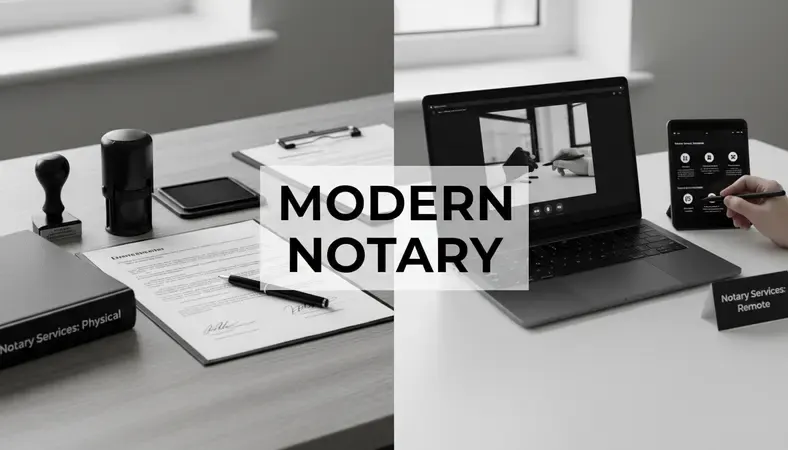
Remote online notarization (RON) is now legal in the majority of U.S. states, which means two parties in different cities can sign and notarize the same contract over a live video call instead of coordinating an in-person appointment. You can see how the process works on our online notarization services page.
Five Mistakes That Show Up in Almost Every Bad Contract
- Vague obligations see above; this is the biggest one by far.
- Missing consideration of a promise with nothing offered in return is unlikely to be enforced.
- No dispute resolution clause without one, any disagreement defaults straight to litigation.
- Undefined key terms anything specialized needs a definition on first use.
- No signature date an undated contract creates ambiguity about when obligations and deadlines actually start.
Don’t Stop at “Signed” Finish the Job
A signed contract isn’t a finished one. Once both parties sign, make sure each person gets a dated copy stored somewhere it won’t disappear. If the agreement requires or would benefit from notarization, handle that at the point of signing rather than as an afterthought a notarized signature is presumptively authentic in court, which shifts the burden of proof onto anyone who later challenges it.
If you’re starting from a blank page rather than a fully custom draft, BlueNotary’s form and contract templates include ready-to-edit versions for common agreements from a consulting agreement to a freelance contract to a standard NDA.
Frequently Asked Questions