






A notary public provides crucial document authentication services that protect against fraud and ensure legal compliance. Whether you need to notarize a power of attorney, real estate documents, or business contracts, understanding what notary services offer and where to find reliable resources can save you time and ensure your documents are properly executed.
This resource guide covers everything from understanding what a notary public does to finding the right notarization services for your specific needs. You'll discover government resources, professional associations, mobile notary services, and modern remote online notarization options that make document authentication more convenient than ever.

What Is a Notary Public?
A notary public is a state-appointed official who serves as an impartial witness to document signings and identity verification. Think of them as a neutral third party whose job is to prevent fraud by confirming that the person signing a document is who they claim to be and that they're signing voluntarily.
The notary public doesn't provide legal advice or determine whether your document is legally sound. Instead, they focus on three key responsibilities: verifying the signer's identity through government-issued ID, ensuring the signer understands what they're signing, and confirming the signature happens voluntarily without coercion.
Key Insight: A notarized document isn't special paper from a government office—it's any regular document that has a notarial certificate added by a notary public to prove the signature's authenticity.
Government Resources for Notary Services
National Notary Association (NNA)
The NNA serves as the leading resource for notary education and standards across the United States. They provide comprehensive training materials, state-specific guides, and continuing education for both notaries and the public.
Best for: Understanding notary laws in your state and finding certified notaries
Key features: State law summaries, notary locator tool, educational webinars
Access: Free basic resources with premium training options
State Secretary of State Offices
Each state's Secretary of State office oversees notary public appointments and maintains official records. These offices provide the most authoritative information about notary requirements, fees, and legal standards in your jurisdiction.
Best for: Official state requirements and notary verification
Key features: Notary commissioning information, fee schedules, complaint procedures
Access: Free through individual state websites
U.S. Department of State Authentication Services
For documents used internationally, the State Department provides authentication and apostille services that make U.S. notarized documents legally recognized abroad.
Best for: International document authentication
Key features: Apostille services, embassy legalization, processing status tracking
Access: Fee-based services with online applications
Professional Notary Service Providers
Traditional Notary Services
Bank notary services
Most major banks offer free notary services to account holders. Bank notaries typically handle routine documents like loan papers, account changes, and basic legal forms.
- Wells Fargo, Bank of America, Chase: Free for customers
- Availability: Business hours only
- Best for: Simple documents and banking-related paperwork
UPS Store Locations
Many UPS Store franchises employ notaries who can handle document authentication alongside shipping and printing services.
- Cost: Typically ranges from contact for pricing per signature
- Availability: Extended hours including some weekends
- Best for: Urgent notarizations with flexible scheduling
Mobile Notary Services
Mobile notaries travel to your location, making them ideal for situations where you can't easily visit a traditional notary office.
National mobile notary networks
Services like NotaryGo and 123notary.com connect you with local mobile notaries who can meet you anywhere—your home, office, or even a coffee shop.
Best for: Elderly clients, busy professionals, complex document signings
Typical cost: Contact for personalized quotes based on location and timing
Scheduling: Often available evenings and weekends

Comparison of Notary Service Types
| Service Type | Availability | Cost | Best For | Typical Wait Time |
|---|---|---|---|---|
| Bank Notary | Business hours | Free for customers | Simple banking documents | Same day |
| Mobile Notary | Flexible scheduling | Contact for quote | Home/office visits | 24-48 hours |
| UPS/Retail | Extended hours | Per signature fee | Urgent needs | Walk-in available |
| Remote Online | 24/7 in most states | Competitive rates | Digital documents | 15 minutes |
Remote Online Notarization Resources
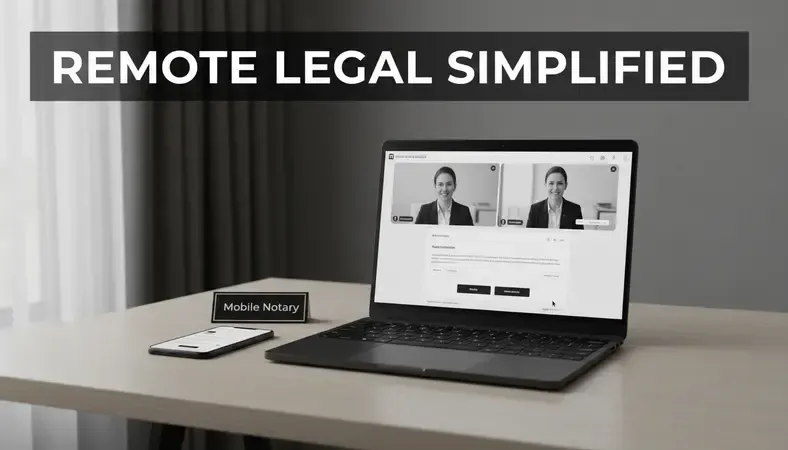
Remote online notarization (RON) represents the newest evolution in notary services, allowing you to get documents notarized through secure video calls from anywhere with an internet connection.
Understanding RON Technology
Remote online notarization uses advanced identity verification technology including knowledge-based authentication, credential analysis, and biometric verification. The process creates a complete digital record of the notarization session, often providing stronger fraud protection than traditional in-person methods.
Technology Requirements:
* Stable internet connection for uninterrupted video calls
* Computer or mobile device with camera and microphone
* Government-issued photo ID for identity verification
* Email access to receive completed documents
Leading RON Platforms
NotaryCam
One of the first RON platforms, NotaryCam focuses on real estate transactions and offers 24/7 availability with licensed notaries.
Best for: Real estate closings and mortgage documents
Key features: Recorded sessions, document storage, integration with title companies
Notarize
A consumer-focused platform that handles a wide variety of document types with an emphasis on user experience and quick turnaround times.
Best for: General document notarization and business contracts
Key features: 15-minute average wait times, mobile app, document templates
When Do You Need a Notary Public?
Understanding when notarization is required versus when it's simply beneficial can help you plan ahead and avoid delays in important transactions.
Legally Required Notarization
Certain documents must be notarized to be legally valid:
- Real estate deeds and mortgages in most states
- Powers of attorney for financial and healthcare decisions
- Wills and estate planning documents (requirements vary by state)
- Adoption papers and custody agreements
- Business formation documents like articles of incorporation
Recommended Notarization
While not legally required, notarization adds credibility and fraud protection to:
- Contracts and agreements between parties
- Affidavits and sworn statements
- Permission letters for travel with minors
- Employment verification documents
- Insurance claims and medical forms
Pro Tip: When in doubt, getting a document notarized provides an extra layer of legal protection that's usually worth the small cost and time investment.
How Much Does a Notary Public Cost?
Notary fees vary significantly by state, service type, and complexity of the documents involved.
State-Regulated Fee Structures
Most states set maximum fees that notaries can charge:
- Basic acknowledgment: Contact for current rates per signature
- Jurat (sworn statement): Similar pricing to acknowledgments
- Copy certification: Often lower fees for certified copies
- Travel fees: Additional charges for mobile services
Premium Service Pricing
Specialized notary services typically cost more:
- Mobile notary visits: Contact for personalized quotes including travel
- After-hours service: Premium rates for evenings and weekends
- Remote online notarization: Competitive with traditional services
- Complex document packages: May involve multiple signature fees
Educational Resources and Training
Notary Public Training Materials
National notary association education
Comprehensive courses covering notary law, proper procedures, and common mistakes to avoid.
- State-specific training: Tailored to your jurisdiction's requirements
- Continuing education: Updates on law changes and best practices
- Error and omissions insurance: Protection for practicing notaries
State-Required Training Programs
Many states mandate specific training before commissioning new notaries.
- Online courses: Convenient self-paced learning
- In-person workshops: Hands-on practice with experienced instructors
- Exam preparation: Study guides for state certification tests
Legal Reference Materials
Understanding the legal framework helps both notaries and consumers make informed decisions about document authentication.
Uniform law commission resources
The Revised Uniform Law on Notarial Acts provides model legislation that many states have adopted, creating more consistency across jurisdictions.
American bar association guidelines
Professional standards and ethics guidance for notaries working with legal documents.
Common Questions About Notary Public Services
Can a notary public refuse to notarize my document?
Yes, notaries must refuse service in several situations. If they can't verify your identity through acceptable ID, if you appear to be signing under duress, or if you don't understand the document's contents, a responsible notary will decline the notarization. They also can't notarize documents where they have a financial interest or family relationship with the signer.
What's the difference between an acknowledgment and a jurat?
An acknowledgment confirms that you signed a document voluntarily and that the signature is authentic. A jurat requires you to swear or affirm that the document's contents are true, and you must sign in the notary's presence. The type of notarization needed is usually specified on the document itself.
Are remote online notarizations legally valid everywhere?
Remote online notarizations are legally recognized in over 40 states, but acceptance varies by jurisdiction and document type. Some states that allow RON may still require traditional notarization for certain documents like wills or real estate deeds. Always check your state's specific requirements and the requirements of any organization that will receive the document.
How long are notarized documents valid?
Notarized documents don't have expiration dates—the notarization itself remains valid indefinitely. However, the underlying document may have time limits imposed by law or the receiving organization. For example, some powers of attorney include specific termination dates, and financial institutions may require recently dated account-related documents.
What happens if I find an error after notarization?
If there's an error in the notarial certificate, you'll typically need to have the document re-notarized with a corrected certificate. Minor clerical errors might be correctable through an acknowledgment of correction, but substantive changes to the document content require complete re-execution and re-notarization.
Can I notarize documents in languages other than English?
Notaries can notarize documents in foreign languages, but they must be able to communicate directly with the signer in a common language to verify understanding and willingness to sign. The notarial certificate itself is typically completed in English, even if the underlying document is in another language.
Conclusion
Finding the right notary public resources depends on your specific needs, timeline, and location. Traditional bank and retail notaries work well for routine documents, while mobile notaries offer convenience for complex signings or mobility-limited clients.
Get your documents notarized at BlueNotary — complete secure remote online notarization in minutes with licensed notaries available 24/7. Ready to get started? Visit BlueNotary to learn more.