






A notary of republic is one of those terms that sounds more complicated than it actually is. Most people only think about notarization when they're staring at a document that says "must be notarized" — and suddenly they need to figure out what that means and where to go.
This article explains exactly what a notary of republic is, what they can and can't do, and how to find one when you need one.
What Is a Notary of Republic?
A notary of republic — more commonly written as "notary public" — is a state-commissioned official authorized to witness signatures, verify identities, and certify documents. They act as an impartial third party whose job is to deter fraud.

Think of a notary of republic as a human fraud-prevention system. When you sign a document in front of one, you're creating a verified, official record that you are who you say you are, and that you signed willingly.
The term "notary of republic" is simply an older or informal variation of "notary public." Both terms refer to the same role. You'll see "notary notary public" and "notary in public" used interchangeably across government websites and legal documents — they all mean the same thing.
Key Insight: A notary of republic doesn't validate the content of a document. They verify the identity of the signer and confirm the signature is genuine. Those are two very different things.
Each U.S. state commissions its own notaries of republic. Requirements, powers, and fees vary by state, but the core function is consistent nationwide.
Notary of Republic vs. Other Notary Types
Not all notaries are the same. Here's how a standard notary of republic compares to other types you might encounter.
Comparing Notary Types
| Type | Who Commissions Them | Primary Function | Where They Work |
|---|---|---|---|
| Notary of Republic (Notary Public) | State government | Witness signatures, verify identity | In-person or online |
| Remote Online Notary (RON) | State government | Same as above, via video call | Fully online |
| Notary Signing Agent | State + private certification | Loan document signings | At borrower's location |
| Civil Law Notary | State (Louisiana only) | Drafts and authenticates legal documents | Law office |
The most common type most people will ever deal with is the standard notary of republic. Remote Online Notaries (RONs) do the same job — they're just authorized to do it over a secure video call instead of in person. Platforms like BlueNotary connect you with commissioned RON notaries who hold the same legal standing as any in-person notary of republic.
What Can a Notary of Republic Do?
A notary of republic can perform several official acts, though the exact list depends on the state.
- Acknowledgments: The signer appears before the notary and confirms they signed the document voluntarily. Common for deeds, mortgages, and powers of attorney.
- Jurats: The signer swears or affirms that the contents of a document are true. Common for affidavits.
- Copy certifications: The notary certifies that a copy of a document is a true reproduction of the original.
- Oath administration: The notary administers a formal oath or affirmation.
- Signature witnessing: The notary watches the signing happen in real time.
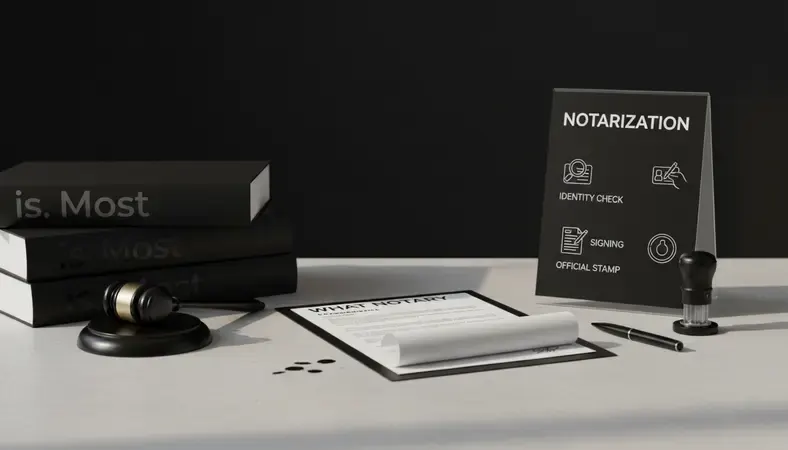
What a notary of republic cannot do is equally important. They cannot give legal advice, tell you whether a document is legally valid, or draft legal documents for you (except in Louisiana). If you need legal guidance on what a document means, that's a job for an attorney.
Notary of Republic Requirements and Qualifications
Requirements to become a notary of republic vary by state, but most share a common baseline.
Typical State Requirements
| Requirement | Details |
|---|---|
| Age | Must be 18 or older |
| Residency | Must be a resident or work in the commissioning state |
| Criminal record | No felony convictions (varies by state) |
| Application | Submit a state application with a fee |
| Bond | Most states require a surety bond |
| Training/exam | Required in some states (California, New York, others) |
| Commission term | Typically 4 years, then renewal required |
Some states require notaries to complete an approved education course before receiving a commission. Others simply require a clean background check and a completed application. The notary public commissioning process is managed at the state level through the Secretary of State's office in most states.
How to Become a Notary of Republic
The path to becoming a notary of republic is more straightforward than most people expect. Here's the general process.
- Check your state's requirements: Visit your state's Secretary of State website. Requirements differ significantly — some states require a training course, others don't.
- Complete any required education: If your state mandates a notary course or exam, complete it before applying.
- Submit your application: Fill out the state application and pay the filing fee. Fees typically range from modest to moderate depending on the state.
- Purchase a surety bond: Most states require a bond to protect the public from notarial errors. Bond requirements vary by state.
- Receive your commission: Once approved, you'll receive your official commission certificate.
- Purchase your notary supplies: You'll need a notary seal or stamp and a journal to record your notarial acts.
- File your oath and bond: Some states require you to file these with a county clerk before you can begin working.
If you want to become a Remote Online Notary, there are additional steps — including completing an approved RON training course and using a state-approved online notarization platform.
Do You Need a Notary of Republic?
Most everyday documents don't require notarization. But certain transactions almost always do.
You likely need a notary of republic for:
- Real estate transactions (deeds, mortgages, refinancing)
- Powers of attorney
- Wills and trusts (requirements vary by state)
- Affidavits and sworn statements
- Vehicle title transfers
- Loan document signings
- Adoption paperwork
- Business formation documents
You probably don't need one for:
- Standard contracts between private parties
- Most employment agreements
- Everyday correspondence
If you're dealing with a document that involves real property, significant financial transactions, or legal authority over another person's affairs, assume notarization is required and verify with the institution requesting the document.
Document notarization after car accidents is one area where people are often caught off guard — insurance claims, medical affidavits, and settlement agreements can all require notarized signatures at short notice.

How to Find a Notary of Republic
Finding a public notary close to me used to mean calling banks, shipping stores, or law offices. You have more options now.
- Your bank or credit union: Many offer free notary services to account holders.
- UPS Store or FedEx Office: Most locations have a commissioned notary on staff.
- Public libraries: Some offer free or low-cost notarization services.
- AAA offices: Members can often access notary services at local branches.
- Online notarization platforms: Remote Online Notaries are available 24/7 through platforms like BlueNotary — no travel required, no scheduling delays.
The online option has become the default for many people. According to the National Notary Association, more than 40 states have now enacted Remote Online Notarization laws, making it a legally valid option for most documents across the country.
Common Questions About Notary of Republic
Is a notary of republic the same as a notary public?
Yes. "Notary of republic" and "notary public" refer to the same official role. The variation in terminology is mostly regional or informal — both describe a state-commissioned individual authorized to perform notarial acts.
How much does a notary of republic charge?
Most states set maximum fees a notary of republic can charge per notarial act. Fees are generally modest. Banks and credit unions often notarize documents for free for their customers. Online notarization platforms charge a flat fee per session, which often covers multiple signatures in one sitting.
Can a notary of republic refuse to notarize a document?
Yes. A notary of republic can and should refuse if they have reason to believe the signer is being coerced, doesn't understand what they're signing, cannot be properly identified, or if the document appears fraudulent. Notaries have a duty to refuse improper notarizations.
Does a notarized document expire?
The notarization itself doesn't expire, but the document it's attached to might. A power of attorney or deed can become invalid for reasons unrelated to the notarization. Always check whether the institution or jurisdiction accepting the document has its own time requirements.
Can I get a document notarized online?
Yes, in most states. Remote Online Notarization (RON) allows a notary of republic to perform notarial acts via a secure video call. The notary verifies your identity digitally and applies a tamper-evident electronic seal. The resulting document carries the same legal weight as an in-person notarization in states that have enacted RON laws.
Wrapping Up
A notary of republic is your identity witness — a state-commissioned official who confirms you are who you say you are when signing important documents. Connect with a commissioned notary at BlueNotary and get your documents notarized via secure video call in minutes — no office visit, no scheduling hassle, legally valid in most states. Ready to get started? Visit BlueNotary to learn more.