





Getting documents notarized used to mean one thing: finding a notary public, scheduling an appointment, and meeting in person to watch you sign papers. That traditional approach worked for decades, but it often came with scheduling headaches, travel time, and geographical limitations. Remote online notarization services have completely changed this landscape, offering a digital alternative that's legally valid in most states.
The choice between remote and traditional notarization isn't just about convenience—it's about understanding which method best serves your specific needs, timeline, and circumstances. Remote notarization uses secure video technology to connect you with a commissioned notary from anywhere, while traditional notarization maintains the familiar in-person process that's been the legal standard for generations.
Whether you're a law firm managing client documents, a real estate agent coordinating closings, or a title company processing transactions, understanding these two approaches will help you make informed decisions about notarization methods that impact your business efficiency and client satisfaction.
Understanding Your Notarization Options
The notarization landscape now offers two distinct paths: traditional in-person notarization and remote online notarization (RON). Each method serves the same fundamental purpose—providing legal verification that a document was signed by the intended person—but they accomplish this goal through very different processes.

Traditional notarization requires physical presence, where you meet face-to-face with a notary public who verifies your identity using your government-issued ID, watches you sign the document, and applies their official seal and signature to complete the notarization. This method has been the legal standard for centuries and remains the most widely accepted approach across all jurisdictions.
Remote online notarization leverages secure video technology to conduct the same verification process digitally. You connect with a commissioned notary through a secure platform, undergo identity verification using multiple authentication methods, sign documents electronically, and receive a digitally sealed notarized document. The entire process happens through your computer or mobile device.
Why It Matters: The method you choose affects not just convenience, but also legal acceptance, processing time, and cost considerations that can impact your business operations significantly.
Geographic and Legal Considerations
The biggest difference between these approaches lies in their geographic flexibility and legal acceptance. Traditional notarization works everywhere—every state, every county, and internationally where U.S. notarized documents are accepted. The notary's physical seal and signature provide universal recognition that courts and institutions worldwide understand and accept.
Remote online notarization, while growing rapidly, operates under state-specific laws. Currently, over 40 states have enacted RON legislation, but the specific requirements, technology standards, and acceptance policies vary significantly. Some states allow RON for any document type, while others restrict it to specific categories like real estate transactions or financial documents.
Technology Requirements and Accessibility
Traditional notarization requires no technology beyond basic transportation to reach the notary's location. You need only your identification and the documents requiring notarization. This simplicity makes it accessible to anyone, regardless of their technological comfort level or available equipment.
Remote notarization demands reliable internet connectivity, a device with camera and microphone capabilities, and basic digital literacy. The platforms typically require specific browser versions, updated software, and stable bandwidth to maintain the secure video connection throughout the session.
Comparing Notarization Methods
When evaluating these two approaches, several key factors determine which method best suits your specific situation. Understanding these differences helps you make informed decisions that align with your priorities, constraints, and requirements.
Quick Comparison Overview
| Factor | Traditional Notarization | Remote Online Notarization |
|---|---|---|
| Location Flexibility | Must travel to notary location | Complete from anywhere with internet |
| Time Investment | Travel time + appointment duration | Session time only (typically 15-30 minutes) |
| Legal Acceptance | Universal acceptance | State-specific, growing acceptance |
| Technology Requirements | None | Internet, camera, microphone, compatible device |
| Cost Range | $5-$25 per signature | $15-$50 per session |
| Document Types | All document types accepted | Varies by state and platform |
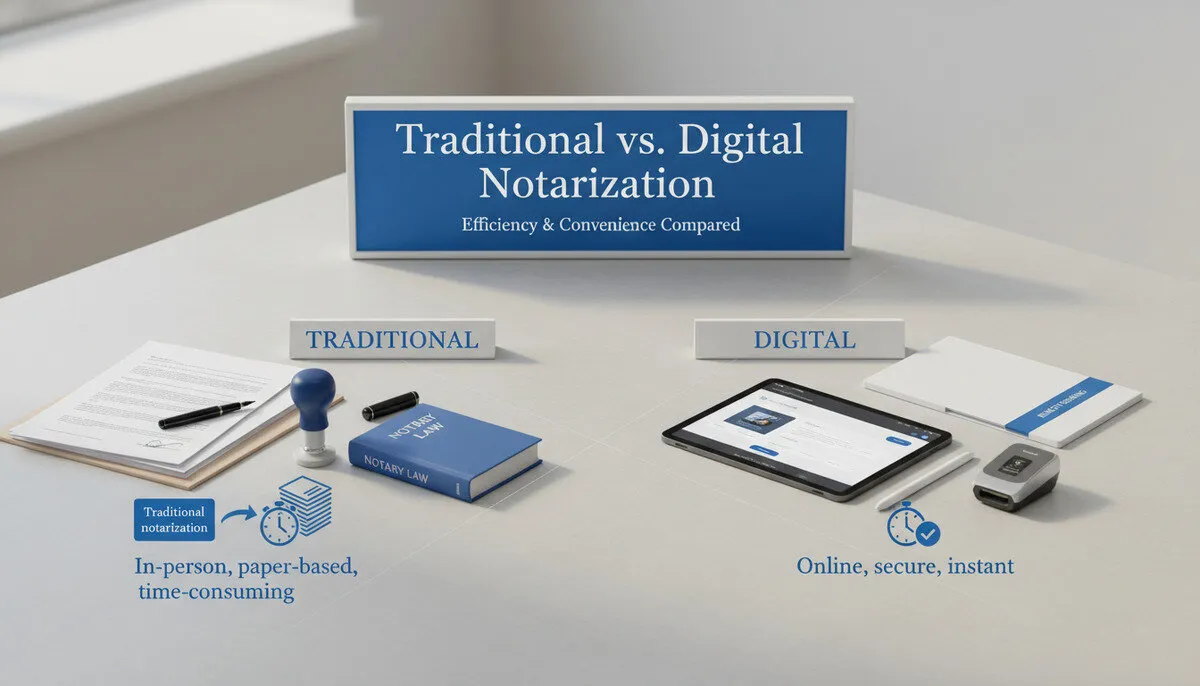
This comparison reveals that each method excels in different scenarios. Traditional notarization wins on universal acceptance and simplicity, while remote notarization offers superior convenience and time efficiency.
When to Choose Traditional Notarization
Traditional notarization remains the preferred choice for several specific situations. If you're dealing with documents that will be used internationally, traditional notarization provides the broadest acceptance. Many foreign governments and international organizations specifically require physical notarization with original seals and signatures.
Complex legal documents, particularly those involving significant financial transactions or estate planning, often benefit from the traditional approach. The in-person interaction allows for detailed discussion of the document's contents, and some attorneys prefer the additional security that comes with physical presence verification.
Expert Tip: For documents requiring additional services like medallion signatures, apostilles, or complex witness requirements, traditional notarization often provides a more straightforward path to completion.
When to Choose Remote Online Notarization
Remote notarization excels when time sensitivity, geographic constraints, or convenience factors take priority. If you're managing multiple signers across different locations, remote notarization can coordinate complex signing sessions without requiring everyone to travel to a central location.
Business operations that require frequent notarizations—such as law firms processing client intake forms, real estate agencies handling purchase agreements, or title companies managing closings—often find remote notarization significantly improves workflow efficiency and client satisfaction.
Deep Dive: Traditional Notarization Process
Traditional notarization follows a time-tested process that's remained largely unchanged for decades. Understanding this process helps you prepare effectively and set appropriate expectations for timing and requirements.
The traditional notarization process begins with document preparation and notary selection. You'll need to identify a commissioned notary public in your area, which might be at a bank, shipping store, law office, or independent notary service. Many notaries operate by appointment only, while others offer walk-in services during specific hours.
Identity Verification and Document Review
When you arrive for your appointment, the notary begins with identity verification using your government-issued photo identification. They examine your ID for security features, verify that the photo matches your appearance, and confirm that the document hasn't expired. This step typically takes 2-3 minutes but forms the foundation of the entire notarization process.
Next comes document review, where the notary examines the papers requiring notarization. They check for completeness, ensure all signature lines are present, and verify that the document type is eligible for notarization. The notary may ask questions about the document's purpose to ensure you understand what you're signing.
Key Takeaway: Traditional notaries cannot provide legal advice about document contents, but they can refuse to notarize if they suspect fraud, coercion, or if the signer appears to lack understanding of the document's significance.
The Signing and Sealing Process
The actual signing occurs under the notary's direct observation. You'll sign each designated signature line while the notary watches, ensuring that you're the person who appeared, provided identification, and acknowledged the document. This witnessed signing is the core legal function that gives notarized documents their enhanced credibility.
Following your signature, the notary completes the notarial certificate—the official section that transforms a regular document into a notarized one. They fill in details including the date, location, type of notarization performed, and their commission information. Finally, they apply their official seal and signature, creating the completed notarized document.
Time and Cost Considerations
Traditional notarization typically requires 15-45 minutes of total time, including travel to the notary's location. The actual notarization process usually takes 5-10 minutes, but scheduling constraints and travel time can extend the overall time investment significantly.
Costs for traditional notarization are generally regulated by state law, with fees typically ranging from $5-$15 per signature. However, mobile notary services that travel to your location often charge additional fees of $50-$150 for the convenience of coming to you.
Deep Dive: Remote Online Notarization Process
Remote online notarization represents a fundamental shift in how notarization services are delivered, leveraging technology to maintain legal standards while dramatically improving accessibility and convenience.
The remote notarization process begins with platform selection and account setup. You'll choose from various RON providers, each offering different features, pricing, and state coverage. Popular platforms include DocuSign Notary, NotaryCam, and Notarize, though the specific options available depend on your state's approved provider list.
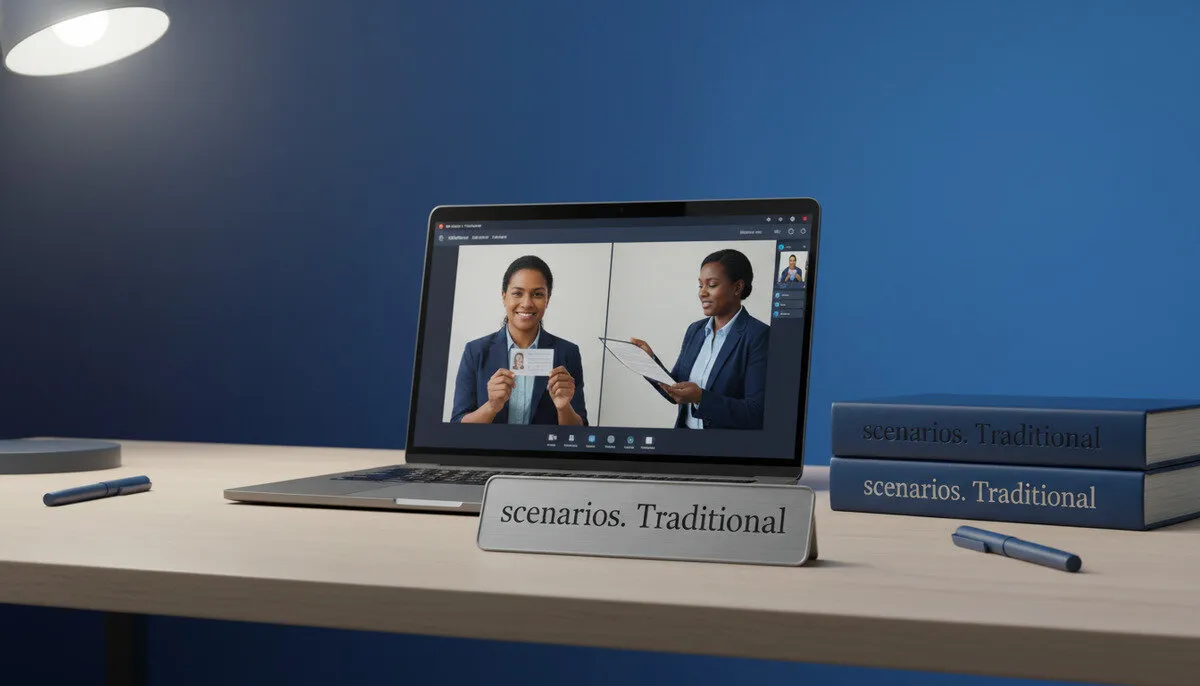
Multi-Factor Identity Verification
Remote notarization employs sophisticated identity verification that often exceeds traditional methods in security and thoroughness. The process typically includes three distinct verification layers: credential analysis, knowledge-based authentication, and biometric verification.
Credential analysis involves uploading photos of your government-issued ID, which specialized software examines for security features, authenticity markers, and potential tampering. This automated review can detect sophisticated forgeries that might pass casual visual inspection.
Knowledge-based authentication (KBA) presents you with multiple-choice questions derived from public records and credit history. These questions cover information that would be difficult for an imposter to know, such as previous addresses, loan amounts, or family member details. You typically need to answer 4-5 questions correctly within a time limit.
The Digital Signing Session
Once identity verification is complete, you enter the live video session with a commissioned notary. This real-time interaction maintains the personal connection that's central to traditional notarization while leveraging technology for enhanced convenience.
During the session, the notary guides you through document review, explains any unclear sections, and ensures you understand what you're signing. The electronic signing process uses legally compliant digital signature technology that creates tamper-evident documents with audit trails showing exactly when and how each signature was applied.
Pro Tip: Most remote notarization sessions include screen recording and detailed audit logs that provide more comprehensive documentation than traditional notarization, which can be valuable for legal proceedings or compliance requirements.
Digital Sealing and Document Delivery
After you complete all signatures, the notary applies their digital seal using Public Key Infrastructure (PKI) technology. This digital seal is cryptographically secure and provides stronger fraud protection than traditional physical seals, which can be counterfeited or altered.
The completed notarized documents are immediately available for download, and most platforms also provide secure cloud storage for future access. You receive both the notarized document and a detailed audit trail showing every step of the notarization process, creating comprehensive documentation that exceeds what traditional notarization typically provides.
Key Components of Each Method
Understanding the essential elements that make each notarization method legally valid helps you appreciate their strengths and limitations. Both approaches must satisfy the same fundamental legal requirements, but they accomplish these goals through different mechanisms.
Traditional Notarization Components
Traditional notarization relies on five core components that have remained consistent for centuries. The physical presence requirement ensures that the notary can directly observe the signer and verify their identity through face-to-face interaction. This personal observation forms the foundation of the notary's ability to testify about the signing if legal questions arise later.
The government-issued identification serves as the primary identity verification tool, with notaries trained to recognize authentic documents and detect common forgeries. Physical examination of ID cards allows notaries to feel security features, examine printing quality, and compare photos directly with the person appearing before them.
- Notarial Certificate: The official section added to documents that includes the notary's attestation, commission details, and jurisdiction information
- Physical Seal: An embossed or inked impression that provides visual evidence of notarization and includes the notary's name, commission number, and expiration date
- Notary Journal: A detailed record of each notarization that includes signer information, document details, and verification methods used
- Witness Observation: Direct visual confirmation of the signing process, ensuring the person who provided ID is the same person who signed the document
Remote Notarization Components
Remote online notarization incorporates advanced technological components designed to replicate and enhance the security of traditional methods. The secure video platform provides real-time audio-visual communication that allows the notary to observe the signer's behavior, verify their identity, and ensure they're signing voluntarily.
Multi-factor authentication replaces simple ID checking with layered verification that includes document analysis, knowledge-based questions, and biometric comparison. This comprehensive approach often provides stronger identity verification than traditional methods, particularly for detecting sophisticated identity theft.
- Digital Certificate: Cryptographic credentials that uniquely identify the notary and cannot be replicated or transferred to unauthorized users
- Audit Trail: Comprehensive electronic record of every action during the notarization session, including timestamps, IP addresses, and verification results
- Tamper-Evident Technology: Digital sealing methods that make any document alterations immediately detectable through cryptographic verification
- Session Recording: Video and audio capture of the entire notarization process, providing permanent documentation of the signer's acknowledgment and consent
Why It Matters: The technological components of remote notarization often provide stronger fraud protection and more detailed documentation than traditional methods, but they require compatible technology and reliable internet connectivity to function properly.
Benefits and Use Cases for Each Method
Both notarization methods offer distinct advantages that make them ideal for different situations and user needs. Understanding these benefits helps you select the approach that best aligns with your priorities and constraints.
Traditional Notarization Benefits
Traditional notarization excels in situations requiring universal acceptance and maximum legal certainty. International document use represents one of the strongest cases for traditional notarization, as many foreign governments and international organizations specifically require physical notarization with original seals and signatures.
The simplicity of traditional notarization eliminates technology barriers that might prevent some individuals from completing their notarization needs. Elderly clients, those with limited technology access, or people in areas with poor internet connectivity can reliably access traditional notarization services.
- Universal Legal Recognition: Accepted in all 50 states and internationally without question or additional verification requirements
- No Technology Dependencies: Works regardless of internet availability, device compatibility, or technical skill level
- Established Legal Precedent: Centuries of legal precedent support the validity and enforceability of traditionally notarized documents
- Personal Interaction: Face-to-face communication allows for clarification of questions and ensures signer understanding
- Additional Services: Many traditional notaries offer related services like document copying, faxing, or apostille assistance
Remote Notarization Benefits
Remote online notarization transforms the notarization experience by eliminating geographic and scheduling constraints. Business professionals managing multiple transactions across different time zones can coordinate complex signing sessions without requiring travel or extensive scheduling coordination.
The efficiency gains from remote notarization compound significantly for organizations that process high volumes of notarized documents. Law firms, real estate agencies, and financial services companies often find that remote notarization reduces processing time by 70-80% compared to traditional methods.
- Geographic Flexibility: Complete notarizations from anywhere with internet access, eliminating travel time and expanding notary availability
- Time Efficiency: Sessions typically complete in 15-30 minutes total, compared to 1-2 hours for traditional notarization including travel
- Enhanced Security: Multi-factor authentication and digital audit trails often provide stronger fraud protection than traditional methods
- 24/7 Availability: Many platforms offer evening and weekend hours that exceed traditional notary availability
- Document Management: Immediate digital delivery and secure cloud storage eliminate the risk of losing physical documents
Industry-Specific Applications
Different industries find particular value in each notarization method based on their specific operational requirements and client needs. Law firms often use remote notarization for routine client intake forms and standard agreements while maintaining traditional notarization for complex estate planning documents and international transactions.
Real estate professionals increasingly rely on remote notarization for purchase agreements and disclosure forms, particularly when coordinating transactions involving out-of-state buyers or sellers. However, final closing documents may still require traditional notarization depending on local recording office requirements and lender preferences.
Expert Tip: Many successful organizations adopt a hybrid approach, using remote notarization for routine documents and high-volume transactions while reserving traditional notarization for complex legal documents, international use, or situations where maximum legal certainty is required.
Common Misconceptions About Both Methods
Several persistent misconceptions about notarization methods can lead to poor decision-making and missed opportunities. Understanding these misconceptions helps you make more informed choices based on accurate information rather than outdated assumptions.
Traditional Notarization Myths
One of the most common misconceptions is that traditional notarization provides stronger legal protection simply because it's been used longer. While traditional notarization has extensive legal precedent, the security of the process depends more on the notary's diligence and the document's handling than on the method itself. Physical documents can be altered, seals can be counterfeited, and notary journals can be lost or damaged.
Another persistent myth suggests that traditional notarization is always less expensive than remote alternatives. While the base notarization fee might be lower, the total cost including travel time, parking, and potential lost productivity often exceeds remote notarization costs, particularly for business professionals whose time has significant value.
- Myth: Traditional notarization works faster for urgent documents
- Reality: Traditional notarization requires scheduling appointments and travel time, often taking several hours to complete what remote notarization accomplishes in minutes
- Myth: Physical seals cannot be forged
- Reality: Traditional notary seals can be counterfeited, and physical documents can be altered after notarization without detection
- Myth: All notaries provide the same quality of service
- Reality: Notary training, experience, and attention to detail vary significantly, affecting the quality and legal strength of the notarization
Remote Notarization Myths
Perhaps the biggest misconception about remote online notarization is that it's less secure than traditional methods. In reality, the multi-factor authentication, biometric verification, and digital audit trails used in remote notarization often provide stronger fraud protection than traditional identity verification methods.
Another common myth suggests that remote notarization isn't legally valid or won't be accepted by courts and institutions. While state laws vary, remote notarization is specifically authorized by statute in most states and has been successfully used in legal proceedings, real estate transactions, and financial services for several years.
- Myth: Remote notarization is too complicated for non-technical users
- Reality: Most platforms are designed for ease of use and provide step-by-step guidance that makes the process accessible to users with basic computer skills
- Myth: Internet connection problems make remote notarization unreliable
- Reality: Modern platforms include connection monitoring and backup systems that ensure session continuity and provide alternative completion methods if technical issues arise
- Myth: Remote notarization costs significantly more than traditional methods
- Reality: When factoring in travel time, scheduling constraints, and productivity costs, remote notarization often provides better overall value for business users
Key Takeaway: Both notarization methods have evolved significantly in recent years, with improved security measures, better training requirements, and enhanced legal protections that make outdated assumptions about their relative strengths and weaknesses increasingly inaccurate.
Making the Right Choice: Decision Framework
Selecting between traditional and remote notarization requires evaluating multiple factors that affect both immediate convenience and long-term legal effectiveness. This decision framework helps you systematically consider the most important variables for your specific situation.
Legal and Compliance Requirements
Start by determining the legal requirements for your specific document and intended use. If the document will be used internationally, filed with foreign governments, or submitted to institutions that specifically require traditional notarization, your choice is predetermined. Contact the receiving organization to confirm their acceptance policies for remote notarization if you're uncertain.
State law variations also affect your options significantly. While most states now authorize remote online notarization, the specific requirements, approved platforms, and document types eligible for RON vary considerably. Verify that your state permits remote notarization for your document type and that you're using an approved platform.
Time and Geographic Constraints
Evaluate your timeline and location constraints realistically. If you need notarization within hours and don't have local notary access, remote notarization may be your only viable option. Conversely, if you have flexible timing and easy access to traditional notary services, the method choice becomes more about preference and cost considerations.
Consider the locations of all parties involved in your transaction. If multiple signers are scattered across different geographic areas, remote notarization can coordinate the process much more efficiently than trying to arrange traditional notarization for everyone.
Technology Comfort and Infrastructure
Assess your technology capabilities honestly. Remote notarization requires reliable internet, compatible devices, and basic digital literacy. If you're uncomfortable with video calls, have unreliable internet, or lack the necessary equipment, traditional notarization eliminates these potential complications.
Pro Tip: Most remote notarization platforms offer practice sessions or technical support to help you prepare for your actual notarization session, reducing the risk of technical difficulties during the official process.
Cost-Benefit Analysis
Calculate the total cost of each option, including direct fees, travel time, and opportunity costs. Traditional notarization might have lower base fees, but remote notarization often provides better total value when you factor in time savings and increased convenience.
For business users, consider the productivity impact of each method. The time saved through remote notarization often justifies higher fees, particularly when managing multiple transactions or serving clients who value convenience and speed.
Risk Tolerance and Security Preferences
Evaluate your comfort level with different security approaches. Traditional notarization offers familiar, time-tested verification methods, while remote notarization provides technologically advanced security features that may actually offer stronger fraud protection.
Consider the sensitivity and value of your documents. High-stakes legal documents, significant financial transactions, or documents with complex requirements might benefit from the personal interaction and established legal precedent of traditional notarization.
Common Questions About Notarization Methods
How do I know if my state allows remote online notarization?
Most states now permit remote online notarization, but the specific laws and requirements vary significantly. You can check your state's current RON status by consulting your Secretary of State's website or contacting the state agency that regulates notaries public. The National Notary Association also maintains updated information about RON laws across all states.
Keep in mind that even if your state allows remote notarization, the receiving organization or institution may have their own policies about accepting RON documents. Banks, courts, and government agencies sometimes have specific requirements that override general state authorization.
Can remote notarization be used for all document types?
The answer depends on both state law and the specific document type. Most states that authorize remote online notarization allow it for common documents like contracts, affidavits, powers of attorney, and real estate documents. However, some states restrict RON for certain sensitive document types like wills, trusts, or adoption papers.
Additionally, some documents may require specific notarization procedures that are easier to accomplish through traditional methods. Documents requiring multiple witnesses, complex acknowledgment language, or special notarial acts may be better suited for in-person notarization where the notary can provide more detailed guidance.
Is remote notarization more expensive than traditional notarization?
The direct fees for remote notarization are typically higher than traditional notarization, often ranging from $15-$50 per session compared to $5-$15 per signature for traditional methods. However, the total cost calculation should include travel time, scheduling constraints, and opportunity costs.
For business professionals, the time savings from remote notarization often justify the higher fees. When you factor in travel time, parking costs, and the value of your time, remote notarization frequently provides better overall value, particularly for routine documents or time-sensitive transactions.
How secure is remote online notarization compared to traditional methods?
Remote online notarization often provides stronger security than traditional methods through multiple verification layers, biometric authentication, and comprehensive audit trails. The digital sealing process uses cryptographic technology that makes document tampering immediately detectable, while traditional physical seals can be counterfeited or altered.
However, remote notarization does introduce technology-related risks like potential hacking, system failures, or identity theft through compromised devices. The overall security depends largely on the platform's security measures and your own digital hygiene practices.
What happens if there are technical problems during a remote notarization session?
Reputable remote notarization platforms include technical support and backup procedures to handle common connection issues. Most platforms monitor connection quality throughout sessions and can pause or restart the process if problems occur. Many also provide alternative completion methods, such as switching to phone verification or rescheduling with priority booking.
If technical problems prevent completion of the notarization, you typically won't be charged for the incomplete session, and the platform will help reschedule or provide alternative solutions. Some platforms also offer hybrid options where you can complete the identity verification remotely and finish the signing process through traditional methods if necessary.
Will remote notarization be accepted by banks, courts, and government agencies?
Acceptance varies by institution and jurisdiction, but remote notarization is gaining widespread recognition as states continue to enact supporting legislation. Most major banks now accept remotely notarized documents for routine transactions, and federal agencies increasingly recognize RON documents for appropriate purposes.
However, some institutions maintain policies requiring traditional notarization, particularly for high-value transactions or sensitive legal proceedings. When in doubt, contact the receiving organization directly to confirm their acceptance policies before choosing your notarization method.
Conclusion
The choice between remote and traditional notarization ultimately depends on your specific circumstances, requirements, and priorities. Traditional notarization offers universal acceptance, established legal precedent, and simplicity that makes it ideal for international documents, complex legal matters, and users who prefer face-to-face interaction. Remote online notarization provides superior convenience, time efficiency, and often stronger security features that benefit busy professionals and routine document processing.
Rather than viewing these as competing options, consider them complementary tools in your document management strategy. Many successful organizations use remote notarization for routine documents and time-sensitive transactions while maintaining traditional notarization for complex legal documents and situations requiring maximum legal certainty. Ready to experience the convenience of remote notarization? Get started with BlueNotary and discover how digital notarization can streamline your document processes.