






Ever wondered what makes a title notary different from your regular notary public? When you’re buying a car, house, or dealing with property transfers, you’ll likely encounter a title notary. They’re specialized professionals who handle the notarization of documents specifically related to vehicle titles, property deeds, and ownership transfers.
A title notary isn’t just any notary—they’re experts in the specific requirements and legal nuances of title-related documents. While a regular notary can handle general documents like contracts or affidavits, title notaries focus on the complex world of ownership transfers. They understand the state-specific requirements for vehicle titles, real estate deeds, and the critical importance of getting these documents right the first time.
Why It Matters: Title documents represent legal ownership of valuable assets. One mistake in notarization can delay a sale, create legal complications, or even invalidate a transfer. Title notaries specialize in preventing these costly errors.
This comprehensive guide will walk you through everything you need to know about title notaries. You’ll learn what they do, how they differ from regular notaries, when you need their services, and how modern technology is transforming the title notarization process. Whether you’re a real estate agent, work at a title company, or simply need to understand the process for your own transactions, this guide has you covered.
What Is a Title Notary?
A title notary is a commissioned notary public who specializes in notarizing documents related to ownership transfers, particularly vehicle titles and real estate deeds. Unlike general notaries who handle a wide variety of documents, title notaries focus specifically on the legal requirements and procedures for transferring ownership of valuable assets.
The Legal Foundation of Title Notarization
Title notarization serves as a critical legal safeguard in ownership transfers. When you buy or sell a vehicle, the title must be properly notarized to legally transfer ownership from one party to another. This process creates an official record that the seller willingly transferred ownership and that both parties were properly identified and verified.
The notarization process for titles involves several key elements that regular document notarization might not require. Title notaries must verify the identity of all parties, ensure the title is legitimate and unaltered, confirm that all required fields are completed accurately, and apply their official seal in the designated area.
Key Insight: Title notarization isn’t just about witnessing signatures—it’s about creating an unbreakable legal chain of ownership that protects both buyers and sellers from fraud and disputes.
Types of Documents Title Notaries Handle
Title notaries work with various ownership-related documents beyond just vehicle titles. Vehicle titles represent the most common type, covering cars, trucks, motorcycles, boats, and recreational vehicles. Each state has specific requirements for how these titles must be completed and notarized.
Real estate deeds constitute another major category of title notary work. Property transfers, warranty deeds, quitclaim deeds, and mortgage documents all require precise notarization to be legally valid. The stakes are particularly high with real estate transactions, where errors can involve hundreds of thousands of dollars.
Specialized Knowledge Requirements
What sets title notaries apart is their deep understanding of state-specific requirements. Vehicle title requirements vary significantly between states—some require notarization of both buyer and seller signatures, while others only require the seller’s signature to be notarized. Some states have moved away from requiring notarization altogether, while others have strict requirements about when and how the notarization must occur.
Title notaries also understand the common pitfalls that can invalidate a title transfer. They know to check for liens that haven’t been properly released, ensure odometer disclosures are accurate and complete, verify that all co-owners have signed when required, and confirm that the title hasn’t been altered or tampered with.
The Business Context
Identity Verification Process
Title notarization requires strict identity verification for all parties involved in the transaction. The notary must verify each person’s identity using acceptable forms of identification, typically a current driver’s license, state-issued ID card, or passport.
For title transfers, this verification process is particularly important because it creates a legal record of who transferred ownership. The notary will compare the names on the identification documents to the names on the title, ensure all parties are present and willing to sign, verify that signers understand what they’re signing, and confirm that no one is being coerced or pressured.
The Notarization Ceremony
The actual notarization follows specific legal protocols. All parties must be present simultaneously (unless state law allows otherwise), and each person must sign the title in the notary’s presence. The notary cannot notarize signatures that were signed beforehand.
During this ceremony, the notary will administer an oath or affirmation, asking each signer to swear or affirm that the information in the document is true and that they are signing willingly. This oath creates additional legal accountability for the accuracy of the information provided.

Documentation and Record Keeping
After witnessing the signatures, the title notary completes their portion of the document. This includes adding the notarial certificate, which contains specific language required by state law, applying their official seal or stamp, signing their name as the notary, and recording the date and location of the notarization.
The notary must also maintain detailed records of the transaction in their notary journal. This journal entry typically includes the date and time of notarization, the type of document notarized, the method of identification used for each signer, and any fees charged for the service.
State-Specific Variations
Different states have varying requirements for title notarization. Some states require both buyer and seller signatures to be notarized, while others only require the seller’s signature. Certain states have specific timing requirements—the notarization must occur within a certain number of days of the sale.
Understanding these variations is where specialized title notaries provide significant value. They stay current with changing state requirements and ensure compliance with local laws. This expertise is particularly valuable for transactions involving parties from different states, where conflicting requirements might create confusion.
Key Components of Title Notary Services
Title notary services encompass several distinct components, each designed to ensure legal compliance and protect all parties involved in ownership transfers. Understanding these components helps clients know what to expect and ensures nothing important gets overlooked.
Document Authentication and Verification
The foundation of title notary services lies in thorough document authentication. This process goes beyond simply witnessing signatures—it involves comprehensive verification that the title document is legitimate, unaltered, and legally valid.
Title notaries examine security features embedded in title documents, such as special paper, watermarks, or security inks that help prevent counterfeiting. They also verify that the document format matches current state requirements, as title formats change periodically and outdated forms may not be accepted.
Expert Tip: Bring your title to the notary in a protective sleeve or folder. Title documents are printed on special security paper that can be damaged easily, and any significant damage might require obtaining a duplicate title before proceeding.
Lien Release Coordination
One of the most complex aspects of title notarization involves handling existing liens. When a vehicle or property has an outstanding loan, the lender holds a lien against the title. Before ownership can be transferred, these liens must be properly released.
Title notaries often coordinate with lenders to ensure lien releases are processed correctly. This might involve verifying that loan payoffs are accurate, ensuring lien release documents are properly executed, coordinating timing so releases are available when needed, and confirming that all lienholders have been satisfied.
Multi-Party Transaction Management
Many title transfers involve multiple parties—buyers, sellers, co-owners, and sometimes lienholders. Managing these complex transactions requires careful coordination and attention to detail.
The notary must ensure that all required parties are present and properly identified, verify that each person has the legal authority to sign, coordinate scheduling when multiple busy parties need to meet simultaneously, and manage the signing sequence to ensure all documents are executed in the proper order.
Compliance Documentation
Title notaries must maintain detailed records that demonstrate compliance with state and federal regulations. This documentation serves multiple purposes: it protects the notary from liability, provides evidence of proper procedures if questions arise later, and helps ensure that the transaction meets all legal requirements.
The compliance documentation typically includes copies of identification documents used for verification, detailed journal entries describing the transaction, certificates of notarization with proper wording and formatting, and any additional state-required documentation.
Error Prevention and Quality Control
Professional title notaries implement systematic quality control measures to prevent errors that could invalidate a transaction. These measures include double-checking all information before notarization begins, using standardized checklists to ensure nothing is missed, verifying that all signatures match the names on identification documents, and confirming that dates and other details are accurate and consistent.
Comparison of Title Notary Service Types
| Service Type | Best For | Key Features | Typical Timeline |
|---|---|---|---|
| In-Office Services | Standard transactions | Lower cost, established location | Same day |
| Mobile Title Notary | Convenience, multiple parties | Travel to your location, flexible scheduling | 1-2 days |
| Remote Online Notarization | Distance transactions | Video conferencing, digital documents | Same day (where legal) |
Each service type offers distinct advantages depending on your specific situation and needs.
Benefits and Use Cases for Title Notary Services
Title notary services provide significant benefits across various scenarios, from simple vehicle sales to complex real estate transactions. Understanding these benefits helps you recognize when specialized title notary services add value beyond what a general notary might provide.
Enhanced Transaction Security
The primary benefit of using a title notary lies in the enhanced security they provide for high-value transactions. Title notaries understand the specific fraud risks associated with ownership transfers and implement additional verification measures to prevent fraudulent transactions.
These security measures include verifying that the person selling the property or vehicle is the legitimate owner, checking for signs of title washing or other fraudulent alterations, ensuring that all liens are properly disclosed and handled, and maintaining detailed records that create an audit trail for the transaction.
Why It Matters: Vehicle title fraud costs Americans millions of dollars annually. A specialized title notary’s expertise in recognizing and preventing fraud can save you from becoming a victim of these sophisticated schemes.
Real Estate Transaction Support
In real estate transactions, title notaries provide critical support that goes beyond basic notarization. They understand the complex interplay between different documents in a real estate closing and ensure that all elements work together properly.
Real estate title notaries coordinate with title companies, lenders, and real estate agents to ensure smooth closings. They verify that deed transfers are executed properly, confirm that mortgage documents are notarized according to lender requirements, ensure that power of attorney documents are valid and properly executed, and handle the notarization of closing disclosure documents and other required paperwork.
Vehicle Dealership Operations
Car dealerships rely heavily on title notaries to process the high volume of vehicle sales they handle daily. Dealership title notaries streamline the sales process by being available on-site when customers complete purchases, understanding manufacturer-specific title requirements, coordinating with lenders for financed vehicles, and ensuring that trade-in titles are properly transferred.
For dealerships, having access to experienced title notaries can mean the difference between smooth sales processes and costly delays that frustrate customers and tie up inventory.
Estate Planning and Probate Support
Title notaries play an important role in estate planning and probate proceedings, where property and vehicle ownership must be transferred to heirs or beneficiaries. These transactions often involve additional complexity because they require court documents, death certificates, and other specialized paperwork.
Estate-related title transfers might involve transferring vehicle titles from deceased owners to heirs, executing deed transfers for inherited property, notarizing documents required for probate court proceedings, and handling situations where multiple heirs are involved in the transfer.
Interstate Transaction Facilitation
When buyers and sellers are located in different states, title notarization can become complicated due to varying state requirements. Specialized title notaries understand these interstate complexities and can help ensure that documents meet the requirements of both states involved.
This expertise is particularly valuable for military families who frequently move between states, online vehicle sales where buyer and seller may be far apart, real estate investors who purchase property in multiple states, and business transactions involving assets in different jurisdictions.
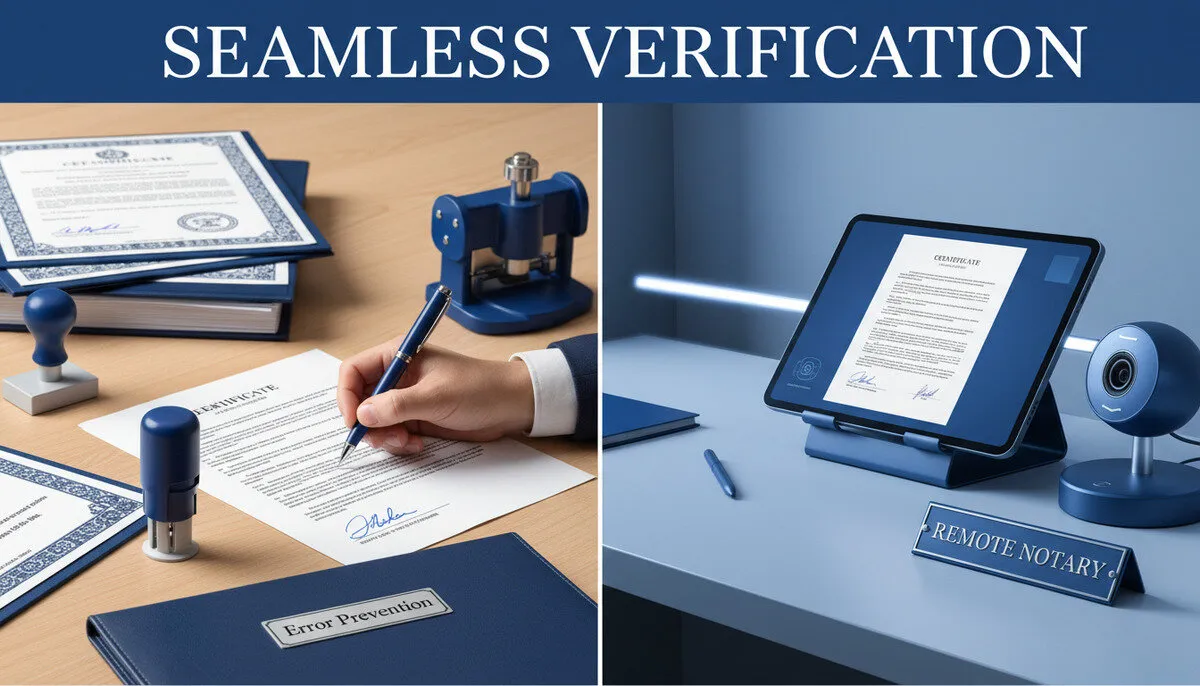
Cost Savings Through Error Prevention
While specialized title notary services might cost slightly more than general notarization, they often provide significant cost savings by preventing expensive errors. The cost of correcting a title error—obtaining duplicate titles, re-executing documents, or resolving legal disputes—far exceeds the cost of proper notarization from the start.
Professional title notaries help avoid common costly mistakes such as incomplete lien releases that prevent registration, incorrect notarization that invalidates the transfer, missing signatures from co-owners, and improper handling of out-of-state requirements.
Common Misconceptions About Title Notaries
Several widespread misconceptions about title notaries can lead to confusion, delays, and even legal problems. Understanding these misconceptions helps ensure you approach title notarization with accurate expectations and proper preparation.
Misconception: Any Notary Can Handle Title Documents
One of the most common misconceptions is that any commissioned notary public can effectively handle title notarization. While technically true from a legal standpoint, the reality is much more nuanced.
General notaries may lack the specialized knowledge required for title documents. They might not understand state-specific requirements for vehicle titles, may be unfamiliar with lien release procedures, could miss critical errors that invalidate the transfer, and might not recognize signs of fraudulent documents.
Key Takeaway: While any notary can legally notarize a title, using a specialized title notary significantly reduces the risk of errors and ensures compliance with complex state requirements.
Misconception: Title Notarization Is Always Required
Another common misconception is that all title transfers require notarization. The reality varies significantly by state and transaction type. Some states have eliminated notarization requirements for vehicle titles, while others maintain strict requirements.
Understanding when notarization is required helps avoid unnecessary delays and expenses. For example, some states only require notarization for certain types of vehicles or transaction values, while others have different requirements for in-state versus out-of-state transfers.
Misconception: Remote Online Notarization Works for All Titles
With the growth of remote online notarization (RON), many people assume they can handle all title notarizations remotely. However, many states specifically exclude title documents from remote notarization, requiring in-person notarization for vehicle titles and real estate deeds.
The restrictions on remote title notarization exist because of the high value and fraud risk associated with these documents. States want to maintain the additional security that comes with in-person verification and document handling.
Misconception: Title Notarization Guarantees Ownership Transfer
Some people believe that having a title notarized automatically completes the ownership transfer. In reality, notarization is just one step in a multi-step process that typically includes submitting the notarized title to the appropriate state agency, paying required fees and taxes, obtaining new registration documents, and updating insurance information.
The notarization validates the signatures and creates legal accountability, but the actual ownership transfer doesn’t occur until the state processes the paperwork and issues new documentation.
Misconception: All States Have Identical Requirements
A particularly problematic misconception is that title notarization requirements are standardized across states. In reality, requirements vary dramatically between jurisdictions.
Some states require both buyer and seller signatures to be notarized, while others only require the seller’s signature. Certain states have specific timing requirements for when notarization must occur, and others have different requirements for different types of vehicles or transaction values.
Misconception: Title Notaries Can Provide Legal Advice
Many clients mistakenly believe that title notaries can provide legal advice about their transactions. While title notaries have specialized knowledge about notarization requirements, they cannot provide legal advice about the transaction itself.
Title notaries can explain notarization procedures and requirements, but they cannot advise whether a transaction is legally sound, interpret contract terms or legal documents, provide guidance on tax implications, or recommend specific courses of action for complex situations.
Expert Tip: If you have legal questions about your title transfer, consult with an attorney who specializes in real estate or vehicle law. Title notaries focus on the notarization process, not legal advice.
Best Practices for Working with Title Notaries
Successfully working with title notaries requires preparation, understanding of the process, and clear communication. Following established best practices ensures smooth transactions and helps avoid common pitfalls that can delay or complicate title transfers.
Preparation Before Your Appointment
Proper preparation is crucial for efficient title notarization. Start by gathering all required documents well in advance of your appointment. This includes the original title document, valid government-issued identification for all parties, lien release documents if applicable, and any power of attorney documents if someone is signing on behalf of another party.
Review the title document carefully before your appointment to identify any potential issues. Check that all information is accurate and legible, verify that there are no obvious alterations or damage, confirm that all current owners are available to sign, and identify any liens that need to be addressed.
Pro Tip: Take photos of your title document before your appointment. This provides a backup record and can help if the original is damaged during the process.
Scheduling and Coordination
When multiple parties are involved in a title transfer, careful scheduling becomes critical. Coordinate with all parties to find a mutually convenient time, confirm that everyone understands what documents they need to bring, verify that all parties will be available for the entire appointment, and build in extra time for unexpected complications.
For complex transactions involving multiple documents or parties, consider scheduling a preliminary consultation with the notary to review requirements and identify potential issues before the actual signing appointment.
During the Notarization Process
Active participation during the notarization process helps ensure everything goes smoothly. Listen carefully to the notary’s instructions and ask questions if anything is unclear. Provide complete and accurate information when requested, and be prepared to show identification and answer questions about the transaction.
Don’t rush through the process—take time to review documents before signing and make sure you understand what you’re signing. If you notice any errors or have concerns, address them immediately before the notarization is completed.
Post-Notarization Steps
Your responsibilities don’t end when the notarization is complete. Protect the notarized documents carefully, as they represent legal proof of the transaction. Submit required documents to appropriate state agencies promptly, as many states have time limits for processing title transfers.
Keep copies of all notarized documents for your records, and follow up to ensure that the title transfer is processed correctly by the relevant state agency. If you encounter any problems during the processing, contact the notary who handled your transaction for guidance.
Choosing the Right Title Notary
Selecting an appropriate title notary can significantly impact your transaction experience. Look for notaries with specific experience in title work, particularly if your transaction involves unusual circumstances or out-of-state requirements.
Consider factors such as availability and scheduling flexibility, location and convenience, experience with your type of transaction, and understanding of relevant state requirements. Don’t hesitate to ask about their experience and qualifications before scheduling your appointment.
Communication and Documentation
Maintain clear communication throughout the process. Provide accurate contact information and respond promptly to requests for information or clarification. Keep detailed records of all communications and transactions, including dates, times, and the content of important conversations.
If problems arise during or after the notarization, document them carefully and communicate with the notary promptly to seek resolution.

Frequently Asked Questions About Title Notaries
Understanding the most common questions about title notaries helps clarify the process and sets appropriate expectations for anyone involved in title transfers.
Do I Need a Title Notary for Every Vehicle Sale?
The need for title notarization depends entirely on your state’s requirements and the specific circumstances of your transaction. Many states require notarization for all vehicle title transfers, while others have eliminated this requirement or only require it for certain types of vehicles or transaction values.
To determine if you need title notarization, check with your state’s Department of Motor Vehicles or equivalent agency. They can provide current requirements for your specific situation. Keep in mind that requirements can change, so always verify current rules rather than relying on past experience or assumptions.
Some states also have different requirements for different types of transactions. For example, transfers between family members might have different requirements than sales to unrelated parties, and commercial vehicle transfers might have different rules than personal vehicle transfers.
Can I Use Remote Online Notarization for Title Documents?
Remote online notarization (RON) availability for title documents varies significantly by state. While RON has become widely available for many types of documents, many states specifically exclude title documents from remote notarization due to the high value and fraud risk associated with ownership transfers.
States that do allow remote title notarization often have additional requirements or restrictions. These might include specific technology requirements, additional identity verification steps, or limitations on which types of title documents can be notarized remotely.
Before assuming you can use remote notarization for your title transfer, check with both your state’s notary regulating authority and the agency that processes title transfers. Requirements can be complex and may differ between vehicle titles and real estate deeds.
What Happens If There’s an Error in My Notarized Title?
Errors in notarized titles can create significant complications, but they’re not necessarily impossible to fix. The resolution process depends on the type and severity of the error, as well as your state’s specific procedures for handling title corrections.
Minor errors, such as incorrect dates or small spelling mistakes, might be correctable through an affidavit process or by obtaining a corrected title from the issuing agency. More serious errors, such as incorrect vehicle identification numbers or missing signatures, typically require more complex correction procedures.
In some cases, you might need to obtain a duplicate title and start the notarization process over. This can be time-consuming and expensive, which is why working with an experienced title notary who can prevent errors is so valuable.
How Much Does Title Notary Service Cost?
Title notary fees vary based on several factors, including your location, the complexity of the transaction, and whether you use mobile or in-office services. Basic in-office title notarization typically costs between $5 and $25 per signature, depending on state regulations and local market conditions.
Mobile title notary services generally cost more due to travel time and convenience factors. These services might charge $50 to $150 or more, depending on distance traveled and the complexity of the transaction.
Remote online notarization, where available for title documents, typically falls somewhere between in-office and mobile pricing. Additional fees might apply for complex transactions involving multiple documents or parties.
Can Someone Else Sign My Title for Me?
In most cases, you must personally sign your title in the presence of the notary. However, there are limited exceptions where someone else might be able to sign on your behalf using a properly executed power of attorney document.
Power of attorney arrangements for title transfers must meet specific legal requirements and are subject to state-specific restrictions. The power of attorney document itself typically must be notarized and may need to include specific language authorizing the agent to transfer vehicle or property ownership.
Some states don’t allow power of attorney for certain types of title transfers, while others have specific requirements about when and how these arrangements can be used. If you need someone else to handle your title transfer, consult with an attorney to ensure proper documentation.
What Should I Do If My Title Notary Made a Mistake?
If you discover that your title notary made an error, contact them immediately to discuss the situation. Professional notaries carry errors and omissions insurance and have procedures for addressing mistakes when they occur.
Document the error carefully, including photographs of the problematic notarization and copies of any relevant documents. Gather information about how the error affects your transaction and what steps are needed to correct it.
In many cases, the notary can help coordinate the correction process, which might involve re-executing documents, obtaining corrected titles, or working with state agencies to resolve the issue. If the notary is unresponsive or unwilling to help address their error, you may need to file a complaint with your state’s notary regulating authority.
What This Means for You
Getting title notarization right makes all the difference between smooth ownership transfers and costly legal complications. Whether you’re buying your first car or handling complex real estate transactions, understanding the specialized role of title notaries helps ensure your valuable assets are protected throughout the transfer process. Get started with BlueNotary to experience how modern remote online notarization can streamline your title transactions while maintaining the highest standards of security and legal compliance.