



A notary in Florida can help you authenticate documents through two main pathways: traditional in-person notarization or modern remote online notarization (RON). Both methods are legally valid, but they serve different needs. If you need a document notarized quickly from home, remote notarization works in minutes. If you prefer face-to-face interaction or have complex documents, in-person notarization might be better.
IMAGE: hero | Florida [notary public working with documents in modern office setting]
This guide compares both options so you can choose the right approach for your situation.
What Is a Notary in Florida?
A notary public in Florida is a state-commissioned official who verifies the identity of people signing important documents. Think of them as an official witness whose job is to prevent fraud by confirming that the person signing is who they claim to be.
Florida notaries can authenticate signatures on documents like real estate deeds, power of attorney forms, affidavits, and contracts. The notary checks your ID, watches you sign, and applies their official seal to create a legally binding record.
Key Insight: A Florida notary doesn't verify the content of your document—only that you are who you say you are when signing it.
The state of Florida requires notaries to complete training, pass an exam, and maintain a surety bond. This ensures they understand proper procedures and can be held accountable for their work.
Types of Notary Services Available in Florida
Florida offers several notarization methods to meet different needs and situations.
Traditional In-Person Notarization
The classic approach involves meeting a notary public face-to-face at their office, a bank, shipping store, or mobile notary visiting your location. You present your ID, sign the document while they watch, and they apply their physical seal.
Remote Online Notarization (RON)
Florida legalized remote online notarization in 2019, allowing you to complete the entire process through a secure video call. You connect with a commissioned Florida notary through an approved platform, verify your identity digitally, and sign documents electronically.
Mobile Notary Services
Mobile notaries travel to your location—home, office, hospital, or anywhere convenient. They bring their seal and can notarize documents on the spot. This combines the personal touch of in-person service with the convenience of not traveling.
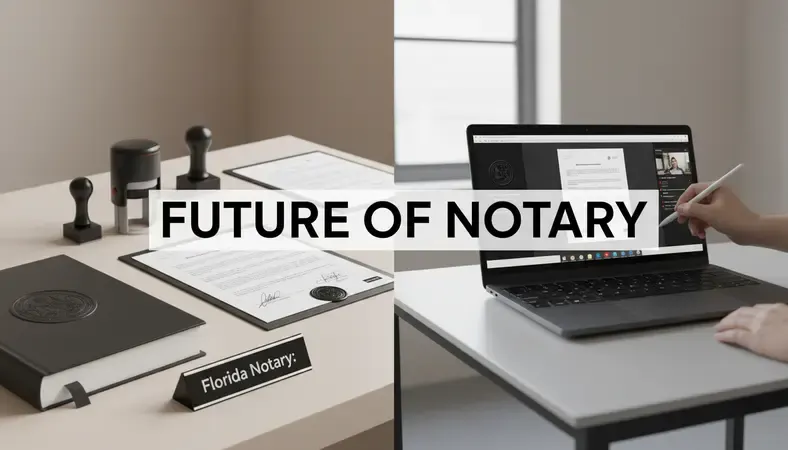
Comparing In-Person vs Remote Notarization in Florida
Quick Comparison Overview
| Factor | In-Person Notary | Remote Online Notary |
|---|---|---|
| Speed | 30-60 minutes including travel | 5-15 minutes total |
| Availability | Business hours only | 24/7 on most platforms |
| Location | Must travel to notary or pay for mobile | Anywhere with internet |
| ID Verification | Physical ID inspection | Digital ID verification + knowledge questions |
| Document Types | All notarizable documents | Most documents (some restrictions apply) |
| Technology Required | None | Computer/phone with camera and internet |
When to Choose In-Person Notarization
Best for: Complex real estate transactions, elderly signers uncomfortable with technology, documents requiring multiple signatures, or situations where you prefer face-to-face interaction.
In-person notarization works well when you have time to plan ahead and want the reassurance of meeting your notary directly. Many people feel more comfortable with traditional methods for high-stakes documents like wills or property deeds.
Real estate professionals often prefer in-person notarization for closing documents because it allows for immediate questions and clarifications. The notary can explain any concerns on the spot.
When to Choose Remote Online Notarization
Best for: Busy professionals, time-sensitive documents, signers with mobility issues, or anyone wanting convenience without compromising security.
Remote notarization shines when speed and convenience matter most. A business owner can get a contract notarized between meetings without leaving their office. Someone with mobility challenges can handle legal documents from home.
The technology behind RON actually provides stronger security than traditional methods. Digital certificates, audit trails, and recorded sessions create a permanent record that's harder to forge than a physical seal.
How to Become a Notary in Florida
Becoming a notary public in Florida involves a straightforward process that takes about 4-6 weeks to complete.
Step-by-Step Process
Meet Basic Requirements: You must be 18 or older, a legal Florida resident, and able to read and write English. A high school diploma or equivalent is required.
Complete Training: Take a 3-hour education course from an approved provider. This covers Florida notary laws, proper procedures, and common mistakes to avoid.
Pass the Exam: Schedule and pass the state exam with a score of 80% or higher. The test covers laws, procedures, and practical scenarios.
Submit Application: File your application with the Florida Department of State along with the required fee and background check authorization.
Purchase Bond and Supplies: Obtain a $7,500 surety bond and purchase your official seal and record book.
Take Oath of Office: Complete the oath before a current notary or other authorized official to activate your commission.
The entire process costs approximately $100-150 including fees, bond, and supplies. Your commission lasts four years before renewal.
Florida Notary Requirements and Qualifications
Florida maintains specific standards for notary public appointments to ensure competency and trustworthiness.
Mandatory Qualifications
- Age and Residency: Must be 18+ and a legal resident of Florida
- Education: High school diploma or equivalent required
- Language Skills: Ability to read and write English fluently
- Training: Complete 3-hour approved education course
- Examination: Pass state exam with 80% or higher score
- Background Check: Submit to criminal history review
- Bond: Maintain $7,500 surety bond throughout commission
Disqualifying Factors
Florida will deny notary applications for certain criminal convictions, particularly those involving fraud, dishonesty, or moral turpitude. Recent felony convictions typically result in automatic disqualification.
Mental incompetence or inability to perform notarial duties also disqualifies applicants. The state reviews each application individually to determine fitness for the role.
Continuing Education
While Florida doesn't require continuing education for renewals, many notaries take refresher courses to stay current with law changes and best practices. This is especially important for notaries handling complex documents or working in specialized fields.
What Documents Can a Notary Notarize in Florida?
Florida notaries can authenticate a wide range of documents, but certain restrictions apply depending on the notarization method.
Documents Suitable for Both Methods
- Real Estate Documents: Deeds, mortgages, property transfers
- Legal Documents: Affidavits, power of attorney forms, contracts
- Financial Documents: Loan agreements, banking forms
- Personal Documents: Wills, healthcare directives, name changes
- Business Documents: Corporate resolutions, partnership agreements
Remote Notarization Restrictions
Some documents cannot be notarized remotely under Florida law:
- Wills and Codicils: Must be notarized in person with witnesses
- Certain Real Estate Documents: Some counties require in-person notarization for specific property transactions
- Court Documents: Many court filings require traditional notarization
- Immigration Forms: Federal requirements often mandate in-person verification
Important Note: Always verify document requirements before choosing your notarization method. Some institutions may not accept remotely notarized documents even when legally valid.
How Much Does Notary Service Cost in Florida?
Florida sets maximum fees that notaries can charge, though many charge less than the legal limit.
Standard Notary Fees
| Service Type | Maximum Fee | Typical Fee Range |
|---|---|---|
| In-Person Notarization | $10 per signature | $5-10 per signature |
| Remote Online Notarization | $25 per notarization | $15-25 per session |
| Mobile Notary | $10 + travel fee | $25-75 total including travel |
| After Hours/Weekend | Standard fee + premium | $50-100+ per session |
Additional Costs to Consider
Mobile notaries typically charge travel fees of $15-50 depending on distance and time of day. Some charge per mile, while others have flat rates for specific service areas.
Remote notarization platforms may charge platform fees separate from the notary's fee. These typically range from $5-15 per session and cover the technology infrastructure.
Banks and credit unions often provide free notarization for account holders, but this is limited to business hours and may require appointments.
Remote Online Notarization (RON) in Florida
Florida's RON system represents a significant advancement in notarial services, offering security and convenience that traditional methods can't match.
How RON Works in Florida
The process begins when you upload your document to an approved RON platform. You then schedule a video session with a Florida-commissioned notary who specializes in remote services.
During the session, you'll verify your identity through multiple methods:
- Document Verification: Take photos of your government-issued ID
- Knowledge-Based Authentication: Answer questions based on your personal history
- Biometric Verification: Facial recognition compares your live image to your ID photo
Once identity verification is complete, you'll review the document with the notary and sign it electronically. The notary applies their digital seal and certificate, creating a tamper-evident record.
Security Features
RON sessions include multiple security layers that exceed traditional notarization:
- Recorded Sessions: Complete video recordings stored securely for years
- Digital Certificates: Cryptographic seals that detect any document changes
- Audit Trails: Detailed logs of every action during the session
- Identity Verification: Multi-factor authentication stronger than physical ID checks
Technology Requirements
To use RON services, you need:
- Device: Computer, tablet, or smartphone with camera and microphone
- Internet: Stable broadband connection for clear video quality
- Browser: Updated web browser or platform-specific app
- ID: Valid government-issued photo identification
Most RON platforms work on any modern device without special software installation.
Common Questions About Florida Notary Services
Is remote notarization legally valid in Florida?
Yes, absolutely. Florida legalized remote online notarization in 2019, making it equivalent to traditional notarization for most documents. RON documents carry the same legal weight and are accepted by courts, government agencies, and most private institutions.
However, some specific documents like wills still require in-person notarization with witnesses. Always verify requirements for your specific document type.
Can I use a Florida notary if I live in another state?
For traditional notarization, you must be physically present in Florida with the notary. For remote notarization, you can be anywhere as long as you're using a Florida-commissioned notary and the document will be used in Florida or a state that accepts Florida RON.
Many states have reciprocity agreements recognizing each other's remote notarizations, but it's wise to confirm acceptance before proceeding.
How quickly can I get a document notarized?
Remote notarization typically takes 5-15 minutes once you connect with a notary. Many platforms offer same-day service, and some provide 24/7 availability for urgent needs.
Traditional notarization depends on the notary's schedule and your ability to travel to them. Mobile notaries usually require 2-24 hours notice but can often accommodate same-day requests for additional fees.
What happens if I make a mistake during signing?
With traditional notarization, you'll need to start over with a new document or make corrections before the notary applies their seal. The notary cannot notarize a document with errors or incomplete information.
During remote notarization, you can often make corrections electronically before finalizing the document. The notary will guide you through any necessary changes during your video session.
Do banks accept remotely notarized documents?
Most major banks and financial institutions accept remotely notarized documents for standard transactions. However, some may have internal policies requiring traditional notarization for specific high-value transactions.
Contact your bank beforehand to confirm their acceptance policy, especially for mortgage documents or large financial agreements.
Can I notarize documents for family members?
Florida law prohibits notaries from notarizing documents for spouses, children, parents, or other close relatives. This applies to both traditional and remote notarization to prevent conflicts of interest.
You also cannot notarize documents where you have a financial interest in the transaction or stand to benefit from the document's execution.
The Bottom Line
Florida offers both traditional and remote notarization options, each with distinct advantages. Remote online notarization provides unmatched convenience and stronger security features, while in-person notarization offers personal interaction and broader document acceptance. Choose based on your specific needs, timeline, and comfort level with technology.
Get your documents notarized at BlueNotary — fast, secure remote notarization available 24/7 with Florida-commissioned notaries. Ready to get started? Visit BlueNotary to learn more.