






Florida has more than 800,000 commissioned notaries public — one of the largest notary populations of any state in the country. If you’ve ever needed a document notarized and weren’t sure where to start, you’re not alone.
This guide covers everything you need to know about notary public Florida rules: what a notary actually does, what Florida law requires, how to become one, and where to find one fast — including online.
What Is a Notary Public?
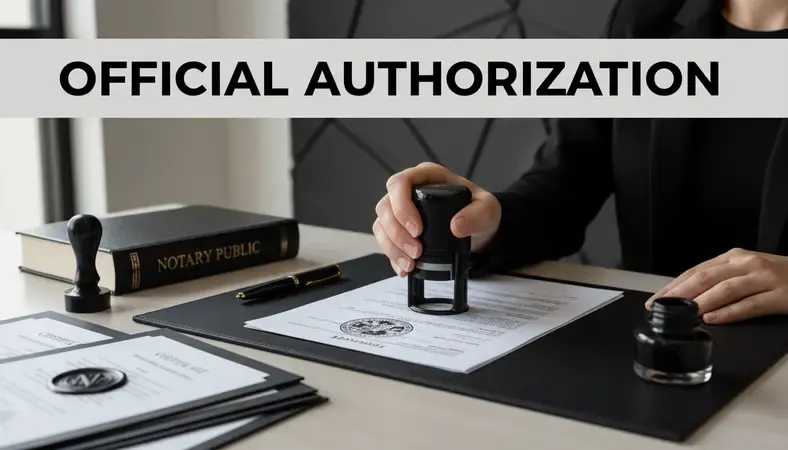
A notary public is a state-commissioned official authorized to witness signatures, verify identities, and authenticate documents. They act as an impartial third party — someone with no personal stake in the transaction — who confirms that the person signing a document is who they say they are and is signing voluntarily.
In Florida, a notary public is appointed by the Governor and commissioned through the Department of State. The commission lasts four years and must be renewed to remain active.
Notaries don’t give legal advice. They don’t verify the accuracy of what’s inside a document. Their job is specifically to authenticate the act of signing — not the content of what’s being signed.
What Documents Require a Notary?
The list of documents that commonly require a notary public Florida stamp is broad:
- Real estate documents — deeds, mortgages, and closing paperwork
- Powers of attorney — legal documents authorizing someone to act on your behalf
- Wills and trusts — estate planning documents
- Affidavits — sworn written statements
- Vehicle title transfers — required by the Florida DMV
- Loan documents — especially for refinancing or home equity agreements
- Adoption paperwork — court-required documentation
- Business contracts — particularly for high-value or legally sensitive agreements
If a document requires notarization, it will typically say so explicitly — look for a signature block labeled “Notary Public” or “Acknowledgment.”
Notary Public Requirements in Florida
To become a notary public in Florida, you must meet a specific set of eligibility criteria set by the state. These aren’t suggestions — they’re legal requirements.
Eligibility Requirements
- Be at least 18 years old
- Be a legal resident of Florida (or a non-resident who is a regular place of employment or practice in Florida)
- Not have been convicted of a felony (unless civil rights have been restored)
- Be able to read, write, and understand English
- Not have had a notary commission revoked in the previous five years
Florida does not require a notary to be a U.S. citizen, but you must be a legal resident of the state.
Notary License Florida: What You’ll Need
Getting a notary license Florida requires completing an approved education course before submitting your application. Florida is one of the few states that mandates this training for all first-time applicants.
The education requirement is a three-hour course covering Florida notary laws, duties, and ethical responsibilities. Several providers offer this online, and completion typically takes a few hours.
How to Become a Notary Public in Florida
The process to get your notary public license Florida is straightforward. Here’s exactly how it works:
- Complete the required education course: Take a Florida-approved three-hour notary education course. This is mandatory for first-time applicants. Renewal applicants are exempt.
- Obtain a surety bond: Florida requires a $7,500 surety bond for all notaries. The bond protects the public if a notary makes an error or acts improperly. Bond providers are widely available and typically offered through the same companies that process your application.
- Submit your application: Apply through the Florida Department of State. Many applicants use a bonding agency or notary association to handle the paperwork, which streamlines the process considerably.
- Take the oath of office: After approval, you’ll receive your commission certificate. You must take an oath of office before you begin performing notarizations.
- Purchase your notary supplies: Florida notaries are required to use an official notary seal (stamp) and maintain a notary journal. The seal must include your name, commission number, and commission expiration date.
- Register your signature: Some counties require notaries to register their official signature with the county clerk. Check your local requirements.
The entire process typically takes two to four weeks from application to commission. Your commission is valid for four years.
Notary Public License Florida: Renewal
Renewal follows a similar process. You don’t need to retake the education course, but you do need to obtain a new surety bond and submit a renewal application before your current commission expires.

Notary Public Duties and Responsibilities
A notary public Florida commission comes with specific legal duties. Performing these incorrectly — or performing acts outside your authority — can result in commission revocation, fines, or civil liability.
Core Notarial Acts in Florida
Florida law authorizes notaries to perform these acts:
- Acknowledgments — Confirming that a signer personally appeared and acknowledged their signature
- Oaths and affirmations — Administering sworn statements for affidavits and depositions
- Attested photocopies — Certifying that a copy is a true copy of an original document
- Verifications — Confirming the truthfulness of a written statement under oath
What Florida Notaries Cannot Do
- Notarize a document where they have a direct financial or personal interest
- Notarize their own signature
- Certify copies of vital records (birth certificates, death certificates, marriage licenses) — these require certified copies from the issuing agency
- Perform a notarization if they cannot communicate directly with the signer
The Notary Journal
Florida notaries are strongly encouraged — though not legally required in all cases — to maintain a journal of all notarial acts. For online notarizations, a journal is required by law. Recording each transaction protects you if a notarization is later questioned.
Florida Notary Public Laws and Regulations
Florida’s notary laws are found primarily in Chapter 117 of the Florida Statutes. This is the governing law for all notary public Florida activity, and it was significantly updated when Florida authorized remote online notarization in 2019.
Remote Online Notarization in Florida
Florida was among the early states to authorize remote online notarization (RON). Under Florida law, a notary public Florida can notarize documents for signers who are physically located anywhere in the world — as long as the notary is physically present in Florida during the session.
RON sessions require:
- Real-time audio-video communication
- Identity verification through knowledge-based authentication (KBA) and credential analysis
- An electronic journal entry for every session
- Tamper-evident technology applied to the final document
The result is a legally valid notarized document that carries the same legal weight as an in-person notarization. Florida courts and recording offices accept RON documents.
Florida Notary Public Laws: Key Restrictions
Florida law prohibits notaries from:
- Advertising notary services in a language other than English without including a disclaimer that they are not attorneys
- Using the title “notario” or “notario público” — these terms imply attorney status in many Spanish-speaking countries and are explicitly banned in Florida
- Charging more than the state-set maximum fee per notarial act
Key Insight: Florida’s ban on the term “notario público” protects Spanish-speaking residents from being misled into thinking a notary has the same legal authority as an attorney. If you see this term used in advertising, it’s a red flag.
How Much Do Notary Services Cost in Florida?
Florida sets a maximum fee that notaries public can charge per notarial act. The current maximum is $10 per notarial act for in-person services.
For remote online notarization, Florida allows notaries to charge up to $25 per online notarial act. This higher fee reflects the technology and additional verification requirements involved.
Typical Cost Breakdown
Florida Notary Fee Comparison
| Service Type | Maximum Fee Per Act | Notes |
|---|---|---|
| In-person notarization | $10 | Set by Florida statute |
| Remote online notarization | $25 | Includes technology platform costs |
| Mobile notary travel fee | Negotiated | Not regulated; varies by provider |
| Loan signing agent | Negotiated | Package pricing is common |
Many banks, credit unions, and UPS Store locations offer free or low-cost notary services to customers. Libraries in Florida also often provide free notarizations for basic documents.
Mobile notaries — who travel to your location — charge a travel fee on top of the per-act fee. This is unregulated in Florida, so prices vary significantly.

Where to Find a Notary Public in Florida
Finding a notary public Florida residents can use is easier than most people expect. You have several options depending on how quickly you need the service and whether you can appear in person.
In-Person Options
- Banks and credit unions — Most major banks (Chase, Bank of America, Wells Fargo) offer free notary services to account holders. Call ahead to confirm availability.
- UPS Store locations — The UPS Store provides walk-in notary services at most Florida locations. Fees are typically at or below the state maximum.
- Public libraries — Many Florida county library systems offer free notarizations for residents. Hours vary.
- Courthouses — Clerk of court offices often have notaries available during business hours.
- Shipping stores and office supply retailers — FedEx Office and Staples locations frequently offer notary services.
- Real estate and title companies — If your document is related to a property transaction, the title company handling the closing typically has notaries on staff.
Online: Find a Florida Notary Without Leaving Home
Florida’s RON law means you can find a Florida notary and complete your notarization entirely online — no travel, no scheduling around office hours, no waiting rooms.
Platforms like BlueNotary connect you with a commissioned Florida notary public through a secure video session. You verify your identity online, sign your document electronically, and receive a completed, legally valid notarized document — often within minutes.
This is particularly useful for:
- Documents needed urgently outside business hours
- Signers who are traveling or living outside Florida temporarily
- Anyone with mobility limitations or transportation challenges
- Business documents requiring notarization across multiple parties in different locations
For those dealing with complex situations — like Document Notarization After Car Accidents — having immediate online access to a notary public Florida can make a meaningful difference when time is critical.
The Florida Notary Association
The Florida Notary Association maintains a directory of commissioned notaries and provides resources for both notaries and the public. This is a useful starting point if you need to verify a notary’s commission status or find a specialist for a specific document type.
You can also verify any notary’s commission status directly through the Florida Department of State’s online database — a smart step before handing over sensitive documents.
Common Questions About Notary Public Florida
Can a Florida notary notarize a document for someone in another state?
Yes. A notary public Florida can notarize documents for signers located in other states — and even other countries — through remote online notarization. The notary must be physically located in Florida during the session. The document is then legally valid in Florida and typically recognized in other states under full faith and credit principles.
What’s the difference between a notary and a notario público?
These terms are not interchangeable. A notary public in the U.S. is a witness to signatures — they don’t provide legal advice or draft legal documents. A notario público in Latin American countries is typically a licensed attorney with significant legal authority. Florida law explicitly prohibits Florida notaries from using the term “notario” because it creates a misleading impression of legal authority.
Do I need a notary for a will in Florida?
A standard will in Florida requires two witnesses but does not require notarization to be valid. However, a self-proving will — which makes probate significantly easier — does require notarization. If you want your will to be self-proving, a notary public Florida signature is necessary.
How long is a Florida notary commission valid?
A Florida notary commission is valid for four years from the date of issuance. After that, you must renew your commission, obtain a new surety bond, and reapply through the Department of State. There’s no limit on how many times you can renew.
Can a Florida notary refuse to notarize a document?
Yes. A Florida notary has the right — and in some cases the legal obligation — to refuse a notarization. Valid reasons include: the signer cannot be positively identified, the signer appears to be under duress or lacks capacity, the document is incomplete, or the notary has a personal interest in the transaction. Refusing to notarize is not the same as making a legal judgment about the document’s content.
Is a remote online notarization legally valid in Florida?
Yes. Florida authorized RON in 2019 under Chapter 117 of the Florida Statutes. Documents notarized online by a commissioned Florida notary public carry the same legal weight as in-person notarizations and are accepted by Florida courts, recording offices, and most financial institutions. The Florida Department of State maintains updated guidance on RON requirements.
Conclusion
Notary public Florida services are more accessible than ever — whether you need a quick stamp at your local bank or a fully remote online notarization from anywhere in the world. Florida’s laws are clear, the fees are regulated, and the RON framework makes same-day notarization genuinely practical.
Notarize your Florida documents online through BlueNotary — connect with a commissioned notary via secure video, sign electronically, and receive your completed document in minutes, no office visit required. Ready to get started? Visit BlueNotary to learn more.