





Most people don't think about notary services until they're staring at a document that needs one — a real estate deed, a power of attorney, a loan package. Then the scramble begins: where do you find a notary, what does it cost, and can you do it without driving somewhere?
This guide cuts through the confusion. You'll find clear answers on what a notary service actually does, when you need one, how much it costs, and the best resources for getting documents notarized — including online.
What Is a Notary Service?
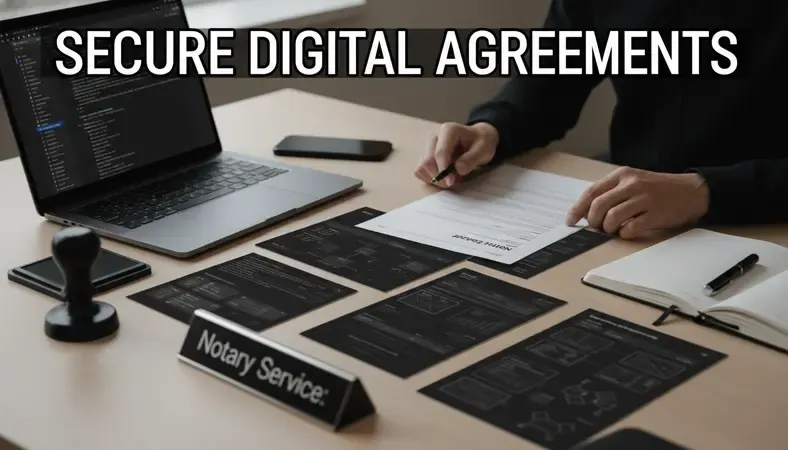
A notary service is the official process of having a licensed notary public witness the signing of important documents and verify the identities of everyone involved.
A notary public is a state-commissioned official authorized to perform specific legal acts. They don't give legal advice. They don't draft documents. Their job is to confirm that the person signing is who they say they are, that they're signing willingly, and that they understand what they're signing.
The result is a notarized document — one that carries a notarial certificate, the notary's signature, and an official seal. That seal tells courts, banks, and government agencies that the signing was properly witnessed and verified.
What Does a Notary Public Do?
A notary public performs several distinct acts depending on the document:
- Acknowledgments: The signer confirms their identity and acknowledges they signed the document voluntarily. Common for deeds, mortgages, and powers of attorney.
- Jurats: The signer swears or affirms that the contents of a document are true. Used for affidavits and sworn statements.
- Copy certifications: The notary certifies that a copy of an original document is accurate. Used for diplomas, passports, and other records.
- Oaths and affirmations: The notary administers a verbal oath, often for witnesses or public officials.
Each of these serves a different legal purpose. When you request a notary service, knowing which type you need helps things move faster.
When Do You Need a Notary?
Not every document needs notarization, but many important ones do. Here are the most common situations:
- Real estate transactions (deeds, mortgages, refinancing)
- Powers of attorney and healthcare directives
- Wills and trust documents
- Loan agreements and financial documents
- Affidavits and sworn statements
- Vehicle title transfers
- Business contracts and partnership agreements
- Immigration documents
If a document says "notarization required" or includes a notarial certificate block at the bottom, you need a notary service. When in doubt, the institution requesting the document — a bank, court, or government agency — can confirm whether notarization is necessary.
Types of Notary Services
Standard In-Person Notary
The traditional notary service requires you to appear physically before a commissioned notary. You bring your ID and the unsigned document. The notary watches you sign, verifies your identity, and applies their seal.
Remote Online Notary (RON)
An online notary service — also called remote online notarization — lets you complete the entire process over a secure video call. You connect with a commissioned notary through a platform, verify your identity digitally, and sign documents electronically. The notary applies a digital seal. The completed document is legally equivalent to one notarized in person.
As of 2024, over 40 U.S. states have enacted laws authorizing remote online notarization. Adoption has grown sharply since 2020.
Mobile Notary
A mobile notary travels to your location — your home, office, hospital, or other site. You pay a travel fee on top of the standard notary fee. Useful when you can't travel or need notarization in an unusual setting.
Loan Signing Agent
A specialized notary who handles mortgage and real estate closings. They're trained to walk borrowers through loan packages, collect signatures on the correct pages, and return documents to the lender or title company.
Medallion Signature Guarantee
A medallion notary is different from a standard notary. A medallion signature guarantee is a special certification used specifically for transferring securities — stocks, bonds, and brokerage accounts. Banks and credit unions with STAMP or MEDALLION program membership provide this service. A regular notary cannot provide a medallion guarantee, and a medallion guarantee cannot substitute for standard notarization.
Comparing Notary Service Types
| Type | Where It Happens | Best For | Typical Wait Time |
|---|---|---|---|
| In-Person Notary | Notary's office or bank | Standard documents, walk-ins | Same day |
| Remote Online (RON) | Video call, any location | Convenience, multi-state signers | Minutes to hours |
| Mobile Notary | Your location | Homebound signers, hospitals | Scheduled appointment |
| Loan Signing Agent | Closing location | Real estate, mortgage packages | Scheduled closing |
| Medallion Guarantee | Bank or credit union | Securities transfers only | Varies by institution |
The right notary service depends on your document type, your location, and how quickly you need it done.
Remote Online Notary vs. In-Person Notary
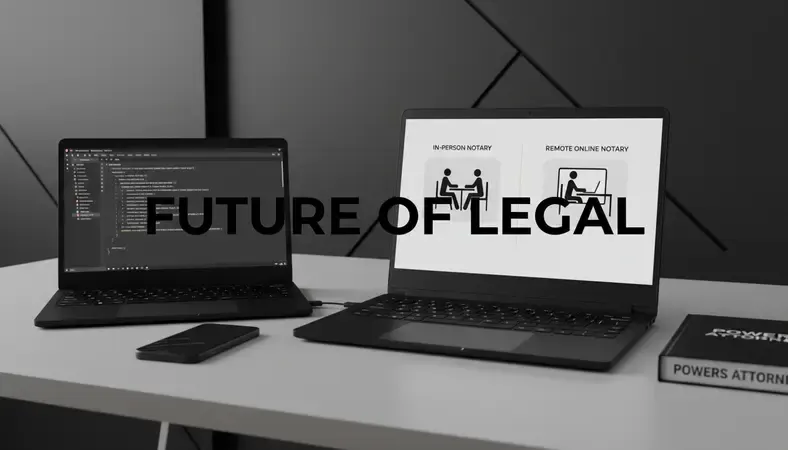
The core question most people face: do you go in person or use an online notary service?
In-person notarization is the traditional route. You find a notary, schedule a time, bring your ID and document, and sign in front of them. It works everywhere and is accepted by all institutions. The downside is the logistics — finding availability, traveling, and coordinating schedules.
Remote online notarization removes those friction points. You connect via video, verify your identity through knowledge-based authentication (questions drawn from your personal records) and ID scanning, then sign electronically. The notary's digital seal is applied automatically. The whole session typically takes 15–20 minutes.
Key Insight: Remote online notarization produces a legally valid, court-admissible document in every state that has enacted RON legislation — and most states now have. Check your state's requirements before using an online notary service for real estate or court filings.
The main limitation of RON is acceptance. Most institutions accept it, but some — particularly certain courts and foreign-facing documents — may still require wet ink signatures. Always confirm with the receiving party first.
How Much Does Notary Service Cost?
Notary fees vary by state and service type. Most states cap the per-signature fee a notary can charge.
- Standard in-person notarization: Typically a few dollars per signature, with state-mandated maximums. Many banks offer free notary service to account holders.
- UPS notary service cost: UPS Store locations offer notary services at select stores. Fees vary by location but are generally in the range of standard state-allowed fees. Call ahead to confirm availability — not every UPS Store location has a notary on staff.
- Bank of America notary: Bank of America provides free notary service to customers at most branch locations during business hours. Non-customers may be turned away or charged a fee.
- Mobile notary: Charges a travel fee on top of the per-signature fee. Total cost depends on distance and document volume.
- Remote online notary: Platforms charge a per-session or per-document fee. Prices are set by the platform, not the state.
The cheapest option for most people is a bank notary service if you have an account. The most convenient option for complex or time-sensitive documents is an online notary service.

How to Find a Notary Service Near You
Several reliable resources help you locate a notary service quickly:
- Your bank or credit union: Call ahead and ask if they have a notary on staff. Most major banks — including Bank of America, Chase, and Wells Fargo — offer this service to customers.
- UPS Store locations: Many UPS Store locations provide notary services. Use the store locator at ups.com and call to confirm notary availability before visiting.
- The National Notary Association (NNA): The NNA maintains a directory of commissioned notaries at nationalnotary.org. You can search by location and specialty.
- Your state's notary database: Many states maintain a public registry of commissioned notaries through the Secretary of State's office. Search "[your state] notary public search" to find it.
- Remote online notary platforms: If you need a notary service now and can't travel, platforms like BlueNotary connect you with a commissioned notary over video in minutes. No scheduling, no driving.
For document notarization after car accidents or other urgent legal situations, having access to an on-demand online notary service can make a real difference when time is short.
Common Questions About Notary Services
Can any notary notarize any document?
Most commissioned notaries can handle standard acknowledgments and jurats. However, some documents have specific requirements. Real estate documents in certain states require a notary with specific training. Loan signing agents handle mortgage packages. Medallion guarantees require bank membership in a specific program. Always confirm the notary is authorized for your document type.
Is a notarized document the same as a legally binding contract?
No. Notarization verifies identity and witnessing — it doesn't make a document legally binding on its own. A contract becomes binding through offer, acceptance, and consideration. Notarization adds a layer of authentication that makes it harder to dispute who signed and when.
Can I notarize a document online if I'm in a different state than the notary?
Yes, in most cases. Remote online notarization laws generally allow the notary to serve signers in any location, as long as the notary is commissioned in a state with RON authority. The document is considered notarized under the laws of the notary's state. Always verify acceptance with the receiving institution.
What ID do I need for a notary service?
A current, government-issued photo ID — driver's license, passport, or state ID card. The name on your ID must match the name on the document. Expired IDs are typically not accepted.
What's the difference between notarization and an apostille?
Notarization verifies a signature domestically. An apostille is an additional certification that makes a notarized document valid in foreign countries that are signatories to the Hague Convention. If your document needs to be used abroad, you'll likely need both notarization and an apostille from your state's Secretary of State office.
The Bottom Line
A notary service is one of those things you need done right the first time — the wrong notarization type or a missed step can delay a real estate closing or invalidate a legal document. Notarize your documents through BlueNotary — connect with a commissioned notary over video, sign electronically, and get a legally valid document in minutes, from anywhere. Ready to get started? Visit BlueNotary to learn more.